
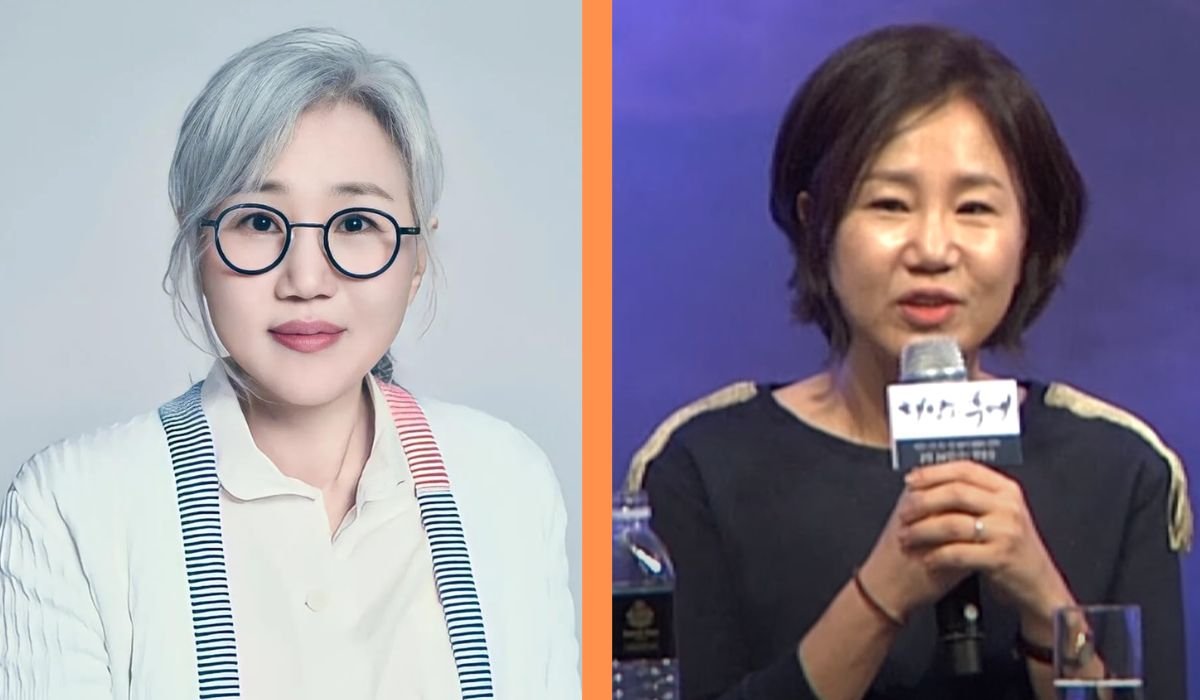
Eun Sok Kim is an electrical engineer, university professor, researcher, inventor, and specialist in Microelectromechanical Systems, commonly known as MEMS. He has built a long academic career around technologies that bring mechanical structures, sensors, acoustics, electronics, and very small devices together. Today, Eun Sok Kim holds the William M. Hogue Professorship in Electrical and Computer Engineering at the University of Southern California. His research covers acoustic MEMS, piezoelectric systems, vibration-energy harvesting, microfluidics, biomedical technologies, wearable acoustic devices, and miniature sensors. What makes his career especially interesting is the way his work has developed over time. His doctoral research involved integrating a microphone and CMOS electronics on a single chip, while his more recent projects include wearable stethoscopes, acoustic tweezers, microspeakers, energy harvesting, and advanced biomedical systems. USC records also show that he remains actively involved in research in 2026.
Quick Bio Information
| Information | Details |
|---|---|
| Full Name | Eun Sok Kim |
| Profession | Professor, Electrical Engineer, Researcher |
| Current Institution | University of Southern California |
| Department | Electrical and Computer Engineering |
| Current Title | William M. Hogue Professor |
| Main Field | Microelectromechanical Systems |
| Research Specialty | Acoustic And Piezoelectric MEMS |
| Bachelor’s Degree | UC Berkeley, 1982 |
| Master’s Degree | UC Berkeley, 1987 |
| Ph.D. | UC Berkeley, 1990 |
| Ph.D. Field | Electrical Engineering |
| USC Career Began | Fall 1999 |
| Previous University | University of Hawaii at Manoa |
| Major Book | Fundamentals of Microelectromechanical Systems (MEMS) |
| IEEE Status | Fellow |
| IOP Status | Fellow |
| NAI Status | Fellow |
| Patents | 19 Issued U.S. Patents Reported By USC |
| Research Papers | About 270 Refereed Papers Reported By USC |
| Research Group | USC MEMS Group |
USC’s current faculty information and its 2024 endowed-professorship announcement support these academic and professional details.
Education At UC Berkeley
Eun Sok Kim completed all three of his university degrees at the University of California, Berkeley. He received his bachelor’s degree in 1982, master’s degree in 1987, and Ph.D. in 1990. His USC curriculum vitae identifies his bachelor’s education as Electrical Engineering and Computer Science with an electronics specialization and high honors. His graduate study focused more closely on solid-state devices and integrated sensors. This educational path is important because it shows that his later MEMS research did not appear suddenly. His training already combined electronics, semiconductor technology, sensing, and miniature device design. At a time when integrating sensing structures with electronic circuits was becoming increasingly important, this background gave Eun Sok a strong foundation for research that would later connect microfabrication with acoustics and mechanical systems.
Doctoral Research
A particularly important part of Eun Sok Kim’s academic background was his doctoral work on an integrated microphone with LSI CMOS on a single chip. In simple terms, this research explored how a microphone and the electronic circuits needed to process its signals could be closely integrated using semiconductor manufacturing techniques. Modern users are familiar with tiny microphones inside smartphones, earbuds, medical equipment, and wearable electronics, but creating small sensors that work effectively with integrated circuitry requires knowledge from several areas of engineering. Kim’s doctoral research therefore provides a useful early connection to the work that later became central to his career. His master’s research was also closely related, involving an IC-processed piezoelectric microphone. Together, these projects show a consistent early interest in miniature acoustic devices rather than a later change of research direction.
Early Academic Career
Before joining USC, Eun Sok Kim gained experience in both industry and university research. His official biography states that he worked at IBM Research Laboratory in San Jose, NCR Corporation in San Diego, and Xicor in Milpitas in roles including co-op student, design engineer, and summer student engineer. He then joined the Department of Electrical Engineering at the University of Hawaii at Manoa, where he served as a faculty member from spring 1991 until fall 1999. This period helped establish his career as both a researcher and educator. In 1996, while at the University of Hawaii, he received an Outstanding Electrical Engineering Faculty of the Year Award. His move from industrial engineering environments into university research also gave him experience with both practical technology development and academic investigation.
Career At USC
Eun Sok Kim joined the University of Southern California in fall 1999 and became part of what is now the Ming Hsieh Department of Electrical and Computer Engineering. USC has remained the main base for his research for more than two decades. His responsibilities have extended beyond laboratory work to teaching, graduate supervision, academic administration, publishing, and technology development. A major career milestone came on January 1, 2024, when his appointment as the William M. Hogue Professor of Electrical and Computer Engineering took effect. Endowed professorships are normally used by universities to recognize established faculty members whose research, teaching, and professional contributions have had significant impact. As of 2026, USC continues to list Eun Sok Kim under this title.
Academic Leadership
Kim has also played an important leadership role within USC Electrical and Computer Engineering. From July 2009 through June 2018, he chaired the Electrophysics division. According to his USC biography, the division expanded during his time as chair in areas including tenure-track faculty, non-tenure-track faculty, administrative staffing, and laboratory space. USC reports that laboratory space grew by more than 4,000 square feet during this period. Leadership at this level involves far more than managing personal research. A division chair can influence hiring, facilities, academic planning, student opportunities, research priorities, and the general environment in which faculty members work. Kim’s nine-year period as chair therefore represents a major part of his academic career alongside his technical achievements.
MEMS Research
The subject most closely connected with Eun Sok is Microelectromechanical Systems. MEMS are extremely small devices that can combine mechanical structures with electrical components. They may sense movement, pressure, sound, acceleration, chemicals, or other physical conditions, and some can also perform mechanical actions. Common examples of MEMS technology include accelerometers, pressure sensors, micromirrors, and miniature microphones. Kim’s work focuses particularly on acoustic MEMS, piezoelectric transducers, microfluidic systems, vibration-energy harvesting, and related sensors. His research shows how MEMS can move beyond a single application. The same basic ideas of miniature structures and precise energy control can be applied to hearing technology, medical systems, fluid manipulation, sensing, communications, and power generation.
Acoustic Technology
Acoustics is one of the strongest themes running through Eun Sok Kim’s research career. His laboratory has explored microphones, microspeakers, acoustic transducers, resonators, droplet ejectors, micromixers, and acoustic tweezers. These projects use sound or ultrasonic energy in ways that go far beyond ordinary listening. For example, acoustic energy can be used to move small objects or droplets without direct mechanical contact. USC’s research listings include self-focusing acoustic transducers, acoustic beam steering, microfluidic applications, speech recognition in noisy environments, and acoustic manipulation. In 2026, Kim and collaborators published work involving a continuously wearable stethoscope based on a MEMS resonant microphone array, showing that his long-standing expertise in microphones and acoustics continues to develop toward practical wearable applications.
Piezoelectric Systems
Piezoelectric technology is another important part of Kim’s work. Piezoelectric materials can generate an electrical response when mechanically stressed and can also change shape when an electrical signal is applied. This ability makes them useful for sensors, actuators, microphones, resonators, and ultrasonic devices. Kim’s early master’s research on an IC-processed piezoelectric microphone already reflected this interest, and his later work continued to explore piezoelectric MEMS and acoustic transducers. The importance of this field comes from its ability to connect mechanical movement with electrical signals at very small scales. That connection is essential in systems that must detect weak vibrations, generate controlled acoustic waves, or operate efficiently while taking up very little physical space.
Microfluidics And Acoustic Tweezers
One of the more unusual areas connected with Eun Sok Kim is microfluidics, which deals with controlling extremely small quantities of liquid. His USC research group has investigated acoustic droplet ejectors, micromixers, liquid drivers, and acoustic tweezers. Acoustic tweezers use carefully controlled sound waves to manipulate small particles or biological materials without conventional mechanical gripping. This can be valuable because direct physical contact is not always practical when working with delicate samples. The field continues to develop. A 2026 refereed paper involving Kim described single-transducer tweezers based on bulk acoustic waves without standing waves. The publication illustrates how his group continues to refine methods of controlling small objects through acoustic energy.
Energy Harvesting
Another major area of Eun Sok Kim’s research is vibration-energy harvesting. The idea is to capture energy that already exists in movement or vibration and convert some of it into electrical power. His research has examined electromagnetic and piezoelectric approaches to this problem. One goal identified by his USC group is generating useful power from human movement without significantly restricting or loading the person. This type of technology could become particularly useful for small sensors and wearable systems that need to operate for long periods. Instead of depending completely on batteries that must eventually be replaced or recharged, an energy-harvesting system may obtain part of its required power from its surrounding environment. This connects Kim’s MEMS research with the growing need for low-power and battery-less electronic devices.
Biomedical Applications
Kim’s research also extends into biomedical engineering. USC identifies biomedical technologies based on self-focusing acoustic transducers as one of his current interests. His research materials have discussed focused ultrasound for areas such as neural stimulation and cancer-related therapeutic research. These technologies investigate how controlled acoustic energy might interact with biological tissue or perform specialized medical functions. It is important to describe such work carefully because experimental biomedical research should not automatically be interpreted as an established clinical treatment. The larger significance is that MEMS and acoustic engineering can give researchers precise ways to generate, focus, detect, and control energy at small scales. That precision opens possibilities for wearable diagnostic systems, laboratory devices, and future medical technologies.
Publications And Patents
Eun Sok Kim has produced a large body of technical work. USC reported in its 2024 announcement that he had published about 270 refereed papers, held 19 issued U.S. patents, and had five additional U.S. patents pending. These figures offer a more useful picture of his academic output than a constantly changing citation count. Patents are particularly relevant to his profile because MEMS research often sits between fundamental science and engineering applications. A new transducer, microphone structure, energy harvester, resonator, or microfluidic mechanism may have practical value as well as academic importance. USC also states that Kim has secured approximately $20 million as contact principal investigator in non-equipment research grants, with about $18 million identified as his portion. This reflects the scale and continuity of his research program.
Book And Recognition
Eun Sok Kim is also the author of Fundamentals of Microelectromechanical Systems (MEMS), a textbook published in 2021. USC materials describe it as a 416-page work. A technical textbook represents a different type of contribution from a research paper because its purpose is to organize a broad field into material that students and engineers can learn from systematically. Kim has also received substantial professional recognition. USC identifies him as a Fellow of the Institute of Electrical and Electronics Engineers, the Institute of Physics, and the National Academy of Inventors. Earlier honors include a National Science Foundation Research Initiation Award, an NSF CAREER Award, and an IEEE Transactions on Automation Science and Engineering Best New Application Paper Award. He also serves as an editor for the IEEE/ASME Journal of Microelectromechanical Systems.
Teaching And Mentorship
Research universities depend heavily on professors who develop future researchers, and mentorship is an important part of Eun Sok Kim’s USC role. The USC MEMS Group includes doctoral students and researchers working on miniature acoustic devices, sensing, resonators, and related technologies. Its alumni records show former doctoral students moving into organizations including Apple, TDK InvenSense, Precision Neuroscience, Iota Biosciences, and other technology-focused employers. A 2026 alumnus listed by the group joined Apple after completing his doctorate. This gives another perspective on Kim’s academic impact. Research papers and patents measure technical output, but training engineers who later carry their knowledge into industry and research institutions can extend a professor’s influence far beyond a university laboratory.
Current Research In 2026
Eun Sok Kim remains involved in active research rather than being known only for earlier achievements. USC’s 2026 publication list includes work on a continuously wearable stethoscope built around a MEMS resonant microphone array, single-transducer bulk acoustic-wave tweezers, and MEMS microspeaker designs. His current research profile also lists semiconductor-chip tamper detection, GHz bulk acoustic-wave resonators, wearable hearing and listening systems, acoustic tweezers, biomedical acoustic transducers, and energy generation from human movement. Viewed together, these projects reveal an important pattern in his career: the core scientific interests remain consistent, but their applications continue to change. Microphones have developed into wearable medical sensing, acoustic devices into object manipulation, and miniature transducers into biomedical and communication technologies.
Final Thoughts
Eun Sok Kim’s biography is ultimately the story of a long and focused engineering career built around miniature systems, acoustics, sensors, and the connection between mechanical and electrical technology. From his education at UC Berkeley and early integrated-microphone research to his faculty years at the University of Hawaii and more than two decades at USC, he has remained closely involved with the evolution of MEMS. His work now reaches into wearable health technology, acoustic manipulation, energy harvesting, microfluidics, semiconductor security, and high-frequency devices. His professorship, patents, research papers, textbook, professional fellowships, and student mentorship show different sides of the same career. For readers researching Eun Sok in 2026, perhaps the most useful way to understand his work is not simply through publication numbers, but through the continuing link between fundamental MEMS engineering and technologies designed to solve practical problems.
FAQs About Eun Sok Kim
Who Is Eun Sok Kim?
Eun Sok Kim is an electrical engineer, researcher, inventor, and professor at the University of Southern California. He specializes in Microelectromechanical Systems, particularly acoustic MEMS, piezoelectric devices, microfluidics, sensors, and vibration-energy harvesting.
Where Does Eun Sok Kim Work?
He works at the University of Southern California in Los Angeles. As of 2026, USC lists him as the William M. Hogue Professor of Electrical and Computer Engineering in the Ming Hsieh Department of Electrical and Computer Engineering.
Where Did Eun Sok Kim Study?
He completed his B.S., M.S., and Ph.D. at the University of California, Berkeley. He received the degrees in 1982, 1987, and 1990 respectively, with his graduate studies focused on electrical engineering, solid-state devices, and integrated sensors.
What Does Eun Sok Kim Research?
His work includes MEMS, acoustic and piezoelectric transducers, wearable acoustic systems, vibration-energy harvesting, acoustic tweezers, microfluidic technologies, biomedical acoustic devices, resonators, sensing systems, and semiconductor-chip authenticity detection.
What Is Eun Sok Kim Known For?
He is particularly known for his research on acoustic and piezoelectric MEMS. His career includes work on integrated microphones, acoustic transducers, energy harvesters, microfluidic systems, wearable sensing devices, and other miniature engineering technologies.
Has Eun Sok Kim Written A Book?
Yes. He authored Fundamentals of Microelectromechanical Systems (MEMS), published in 2021. The textbook presents core principles of MEMS and reflects his long experience in microsystem engineering and education.
Is Eun Sok Kim An IEEE Fellow?
Yes. USC identifies him as an IEEE Fellow. He is also a Fellow of the Institute of Physics and the National Academy of Inventors, reflecting professional recognition of his work in engineering, research, and invention.
Is Eun Sok Kim Still Conducting Research In 2026?
Yes. USC’s 2026 publication records include new work involving wearable MEMS stethoscope technology, acoustic-wave tweezers, and MEMS microspeakers. This shows that he and his research group remain active in developing new microsystem and acoustic technologies.
Learn more and explore exciting content on: Bita Jafarpour Biography: Education, Research Career, and Scientific Work






Leave a Reply