
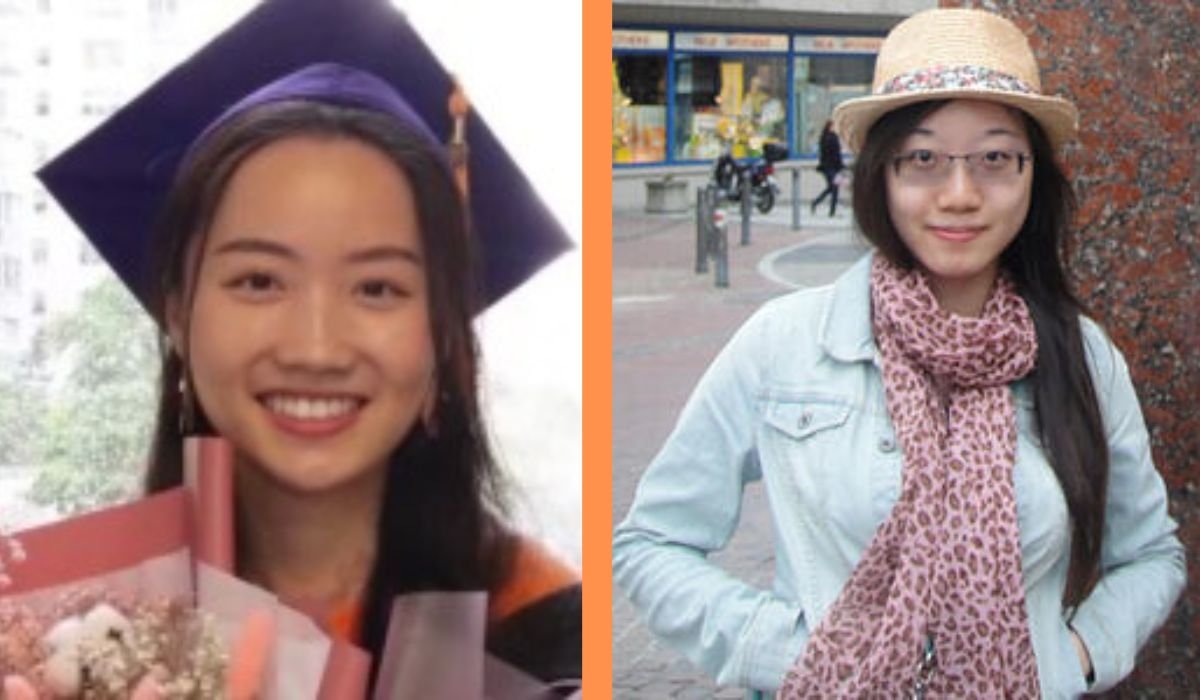
Yi-Hsien Du is a theoretical physicist whose research explores some of the most challenging questions in modern quantum physics. Her work sits at the meeting point of Condensed Matter Physics, Quantum Many-Body Systems, Quantum Field Theory, and Quantum Materials. As of 2026, Yi-Hsien Du is associated with the Massachusetts Institute of Technology as an Ultra-Quantum Matter postdoctoral researcher. Her academic path has taken her through leading research institutions, including Imperial College London, the University of Chicago, and MIT. What makes her research especially interesting is the way she uses advanced field-theory ideas to understand collective behavior in quantum matter. Rather than studying particles only as isolated objects, her work looks at what happens when large numbers of quantum particles interact and produce new physical states. This article explains Yi-Hsien Du’s education, academic career, research interests, publications, and growing contribution to theoretical physics in clear and accessible language.
Quick Bio Information
| Information | Details |
|---|---|
| Full Name | Yi-Hsien Du |
| Professional Name | Yi-Hsien Du |
| Field | Theoretical Physics |
| Specialization | Condensed Matter Theory |
| Current Institution | Massachusetts Institute of Technology |
| Current Role | Ultra-Quantum Matter Postdoctoral Researcher |
| Ph.D. Institution | University of Chicago |
| Ph.D. Field | Physics |
| Ph.D. Year | 2024 |
| Ph.D. Dissertation | Field Theory of Quantum Matter |
| Ph.D. Advisor | Dam Thanh Son |
| Master’s Institution | Imperial College London |
| Main Research Area | Quantum Many-Body Systems |
| Other Research Areas | Quantum Field Theory And Quantum Materials |
| Research Topics | Fractional Quantum Hall Physics And Non-Fermi Liquids |
| Current Research Interest | Moiré Quantum Materials And Chern Bands |
| Academic Approach | Analytical And Theoretical Methods |
| MIT Research Community | Simons Collaboration On Ultra-Quantum Matter |
Who Is Yi-Hsien Du?
Yi-Hsien Du is a researcher in theoretical condensed matter physics. Her work focuses on understanding unusual forms of matter that appear when quantum interactions become very strong. In ordinary materials, electrons are often described as individual particles moving through a solid. In many quantum systems, however, this simple picture is not enough. Large numbers of particles may interact in such a coordinated way that completely new behavior appears. Yi-Hsien Du studies these collective effects using ideas from quantum field theory, symmetry, geometry, and mathematical physics. Her University of Chicago research profile identified Dam Thanh Son as her doctoral advisor, while MIT’s Senthil Todadri research group currently lists her as an Ultra-Quantum Matter postdoc. These institutional records provide a clear picture of her path from graduate research into advanced postdoctoral work.
Educational Background
Yi-Hsien Du developed her academic foundation through advanced study in theoretical physics. Before completing her doctorate, she studied at Imperial College London, where her academic work helped build experience in areas connected with quantum field theory and mathematical approaches to physics. She later moved to the United States for doctoral study at the University of Chicago, an institution with a strong tradition in theoretical and condensed matter physics. This educational route placed her in environments where researchers work across particle physics, field theory, quantum matter, and strongly correlated systems. Her later publications show how this broad theoretical background became useful: instead of limiting herself to one narrow problem, Du has worked on questions involving Fermi surfaces, quantum Hall systems, collective excitations, symmetries, noncommutative field theories, and quantum materials.
Ph.D. At The University Of Chicago
One of the most important stages in Yi-Hsien Du’s career was her Ph.D. in Physics at the University of Chicago. She completed her doctoral dissertation in 2024 under the guidance of Dam Thanh Son. The dissertation was titled Field Theory of Quantum Matter. According to the University of Chicago’s official dissertation record, the thesis brought together six related research stories showing how field-theory methods can be applied across several areas of condensed matter physics. Its central themes included symmetry, diffeomorphisms, noncommutativity, Fermi liquids, non-Fermi liquids, and fractional quantum Hall physics. The dissertation also lists Michael Levin, Cheng Chin, and Clay Córdova as committee members, reflecting the wide theoretical scope of the work. This doctoral research provides one of the clearest ways to understand Du’s scientific identity: she is interested not simply in one material or one experiment, but in theoretical structures that can explain many kinds of quantum behavior.
Work With Dam Thanh Son
Working with Dam Thanh Son gave Yi-Hsien Du the opportunity to develop research within a broad theoretical framework. Son is known for research spanning fractional quantum Hall physics, quantum field theory, cold atoms, gauge-gravity ideas, and other areas of theoretical physics. Du’s doctoral research reflects several of these connections, particularly her interest in fractional quantum Hall systems and field-theory descriptions of quantum matter. Academic mentorship is especially important in theoretical physics because difficult problems often require learning how to connect mathematical tools with physical intuition. Du’s publications from this period show a repeated effort to take complicated theoretical ideas and use them to describe collective states, excitations, and symmetries in condensed matter systems.
Academic Career At MIT
By 2026, Yi-Hsien Du is part of the theoretical condensed matter community at the Massachusetts Institute of Technology. MIT physicist Senthil Todadri’s research group lists her as an Ultra-Quantum Matter Post-doc. This position places her in a research setting focused on some of the most unusual and strongly entangled forms of quantum matter. MIT has been one of the institutions participating in the Simons Collaboration on Ultra-Quantum Matter, an initiative created to study quantum phases that cannot be understood using simple descriptions of individual particles. The collaboration brings together expertise from condensed matter physics, quantum field theory, quantum information, and atomic physics. For Du, this environment is closely aligned with the themes that already appeared throughout her Ph.D. work.
Quantum Many-Body Systems
A major part of Yi-Hsien Du’s research concerns Quantum Many-Body Systems. This term describes physical systems containing many interacting quantum particles. The difficulty is that the behavior of the whole system cannot always be predicted simply by understanding each particle separately. Strong interactions can create collective states with properties that individual particles do not possess on their own. These can include unusual conductivity, fractionalized excitations, topological behavior, and complex forms of quantum entanglement. Many-body physics is therefore one of the central challenges of modern condensed matter theory. Du approaches such systems using field theory and other mathematical tools that allow researchers to describe collective behavior without tracking every microscopic particle independently.
Quantum Field Theory Research
Quantum Field Theory is another central theme in Yi-Hsien Du’s work. Although field theory is often associated with particle physics, it is also extremely powerful in condensed matter research. Instead of describing every electron separately, physicists can use fields to represent the important collective degrees of freedom of a material. Du’s dissertation shows how field-theory concepts can connect problems that at first appear very different. Symmetries, geometry, and noncommutativity can provide a common mathematical language for studying Fermi liquids, non-Fermi liquids, quantum Hall states, and collective excitations. This approach is valuable because it can reveal deeper relationships between physical systems and help researchers develop theories that apply more broadly than a model designed for only one material.
Fractional Quantum Hall Physics
Yi-Hsien Du has also worked extensively on Fractional Quantum Hall Physics, one of the most important subjects in modern condensed matter theory. Quantum Hall systems arise when electrons moving in two dimensions are placed under conditions where quantum effects dominate their collective motion. In fractional quantum Hall states, interactions between electrons can generate remarkable phenomena that cannot be explained through ordinary single-particle physics. These states can support unusual collective excitations and topological properties. Du’s research has examined theoretical structures associated with such systems, including gauge symmetry and collective modes. Her later work on a chiral graviton theory of fractional quantum Hall states continues this direction by investigating how geometric collective excitations can be described within an effective theoretical framework.
Fermi And Non-Fermi Liquids
Another important theme in Du’s research is the difference between Fermi Liquids and Non-Fermi Liquids. Fermi-liquid theory successfully explains the behavior of electrons in many ordinary metals by treating interacting electrons as effective quasiparticles. However, some strongly interacting materials behave in ways that do not fit this framework. These are often described as non-Fermi liquids. Yi-Hsien Du’s doctoral research explored nonlinear bosonization as a method for studying Fermi surfaces and both Fermi and non-Fermi-liquid behavior. The goal is to develop a language that captures collective motion around a Fermi surface while also including nonlinear effects connected to its geometry. This is important because understanding non-Fermi liquids remains a major open challenge in condensed matter physics.
Moiré Quantum Materials
By 2026, one of the particularly interesting directions in Yi-Hsien Du’s work involves Moiré Quantum Materials. Moiré systems can form when very thin layers of material are stacked with a small twist or structural mismatch. The resulting long-wavelength pattern can dramatically change how electrons move and interact. These systems have become important platforms for studying strong correlation and topology. Du’s recent research on Skyrmion Chern Bands examines how topological electronic bands can emerge in such materials and how their quantum geometry influences collective dynamics. This research reflects a broader shift in condensed matter physics toward materials in which geometry, topology, and interactions are deeply connected. It also shows how Du’s earlier interests in field theory and collective quantum behavior are being applied to new generations of quantum materials.
Important Publications
Yi-Hsien Du’s publication record covers several related areas of modern theoretical physics. Her work includes research on nonlinear bosonization of Fermi surfaces, noncommutative gauge symmetry in the fractional quantum Hall effect, Tkachenko modes, nonlinear Lifshitz theories, vortex lattices, fractional quantum Hall collective behavior, and moiré quantum materials. Two of her newer research directions are especially relevant in 2026. One concerns Chiral Graviton Theory Of Fractional Quantum Hall States, while another is Controlled Theory Of Skyrmion Chern Bands In Moiré Quantum Materials: Quantum Geometry And Collective Dynamics. Together, these projects show a continuing interest in collective excitations, topology, quantum geometry, and effective field theories.
Research Methods And Scientific Style
Yi-Hsien Du’s work is mainly theoretical rather than experimental. Theoretical physicists develop mathematical models that explain physical behavior and generate predictions that can later be compared with experiments. Her research frequently uses symmetry principles, effective field theories, geometric ideas, and analytical calculations. One strength of these approaches is that they can sometimes reveal universal behavior that does not depend on every microscopic detail of a material. Her dissertation is a good example because it connects multiple condensed matter problems through recurring ideas such as symmetry and noncommutativity. This style of research can help physicists understand why apparently different quantum systems may share similar underlying structures.
Ultra-Quantum Matter Research
Yi-Hsien Du’s current MIT environment is particularly relevant because Ultra-Quantum Matter refers to systems in which quantum entanglement and collective effects remain important even at scales containing many particles. The Simons Collaboration on Ultra-Quantum Matter was established to classify such phases, understand their physical properties, and develop theories that may guide future experimental discoveries. Examples include topologically ordered systems, fractionalized states, and unconventional metals. These subjects match Du’s existing expertise remarkably well. Her work on fractional quantum Hall states, strongly interacting systems, and topological quantum materials naturally fits into the collaboration’s wider goal of understanding matter that behaves in ways ordinary particle-based theories cannot easily describe.
Academic Activity In 2026
Yi-Hsien Du’s academic schedule also shows continued involvement in the wider theoretical physics community. Her professional homepage lists a group seminar at MIT in May 2026 and participation in the Aspen Center for Physics Summer Program in July 2026. It also lists a planned visit to the Institute for Advanced Study in Princeton during September and October 2026, followed by participation in a KITP program focused on fractionalization in quantum many-body systems. A further KITP program concerning quantum geometry, correlation, symmetry breaking, and topology is listed for March 2027. These activities show how closely her current research connects with major questions being discussed across condensed matter and quantum physics.
Why Yi-Hsien Du’s Research Matters
The importance of Yi-Hsien Du’s work comes from the larger questions it addresses. Modern quantum physics increasingly deals with systems where interactions create behavior that cannot be understood by examining particles independently. Researchers need new mathematical languages for topology, strong correlation, collective excitations, quantum geometry, and unconventional metallic states. Du’s work contributes to this effort by using quantum field theory and related methods to connect these subjects. Although much of this research is fundamental rather than immediately commercial, understanding strongly correlated and topological systems is also relevant to the long-term development of quantum materials and quantum technologies. More importantly, it expands scientific understanding of how complex behavior can emerge from basic quantum laws.
Contribution To Modern Theoretical Physics
Yi-Hsien Du represents a generation of physicists working across traditional boundaries between condensed matter theory, field theory, topology, and quantum materials. Her doctoral work demonstrated how common theoretical structures can connect several different quantum systems, while her postdoctoral research is extending these ideas toward current problems involving Chern bands, quantum geometry, and strongly interacting materials. Her path from advanced study to the University of Chicago and then MIT also places her within research communities that have played major roles in developing modern theories of quantum matter. Her career is still developing, so it would be premature to describe its final impact. What can be said clearly in 2026 is that her work addresses active and important questions at the frontier of theoretical condensed matter physics.
Conclusion
Yi-Hsien Du has built an academic career around understanding the collective behavior of quantum matter. After advanced training in theoretical physics and completing her 2024 Ph.D. at the University of Chicago, she moved into postdoctoral research at MIT, where she is connected with Ultra-Quantum Matter research. Her scientific interests include Quantum Many-Body Systems, Quantum Field Theory, Fractional Quantum Hall Physics, Fermi and Non-Fermi Liquids, Moiré Quantum Materials, Chern Bands, topology, and quantum geometry. What makes her work especially valuable is its ability to connect difficult mathematical ideas with real questions about how quantum matter behaves. As research into strongly correlated and topological systems continues to grow, Yi-Hsien Du’s work provides an interesting example of how modern theoretical physics is developing new tools for understanding some of nature’s most complex quantum systems.
FAQs About Yi-Hsien Du
Who Is Yi-Hsien Du?
Yi-Hsien Du is a theoretical physicist working mainly in condensed matter theory. Her research focuses on quantum many-body systems, quantum field theory, fractional quantum Hall physics, and quantum materials. As of 2026, she is listed as an Ultra-Quantum Matter postdoctoral researcher at MIT.
Where Does Yi-Hsien Du Work?
Yi-Hsien Du is currently associated with the Massachusetts Institute of Technology. MIT’s theoretical condensed matter research group lists her as an Ultra-Quantum Matter postdoc.
Where Did Yi-Hsien Du Earn Her Ph.D.?
She earned her Ph.D. in Physics from the University of Chicago in 2024. Her doctoral dissertation was titled Field Theory Of Quantum Matter, and Dam Thanh Son served as her advisor.
What Does Yi-Hsien Du Research?
Her research covers Quantum Many-Body Systems, Quantum Field Theory, Fractional Quantum Hall States, Fermi and Non-Fermi Liquids, topological systems, Moiré Quantum Materials, Chern Bands, and collective quantum dynamics.
What Was Yi-Hsien Du’s Ph.D. Dissertation About?
Her dissertation explored how field-theory ideas can be applied to several condensed matter problems. It connected topics including nonlinear bosonization, Fermi surfaces, fractional quantum Hall physics, symmetry, and noncommutative structures.
What Are Moiré Quantum Materials?
Moiré Quantum Materials are layered materials in which a small twist or mismatch between layers creates a larger repeating pattern. This structure can strongly change electronic behavior and produce unusual correlated or topological quantum states.
Why Is Yi-Hsien Du’s Research Important?
Her research helps physicists understand systems in which many quantum particles interact strongly. These systems can display behavior that ordinary theories of independent electrons cannot explain, making them central to modern studies of quantum matter.
Is Yi-Hsien Du Still Active In Research In 2026?
Yes. Her academic homepage lists research activities during 2026, including an MIT seminar, participation in the Aspen Center for Physics program, and planned research visits and programs connected with quantum many-body systems and quantum geometry.
Learn more and explore exciting content on: C Robert Cargill Biography: Movies, Books, Career, and Personal Life










Leave a Reply