
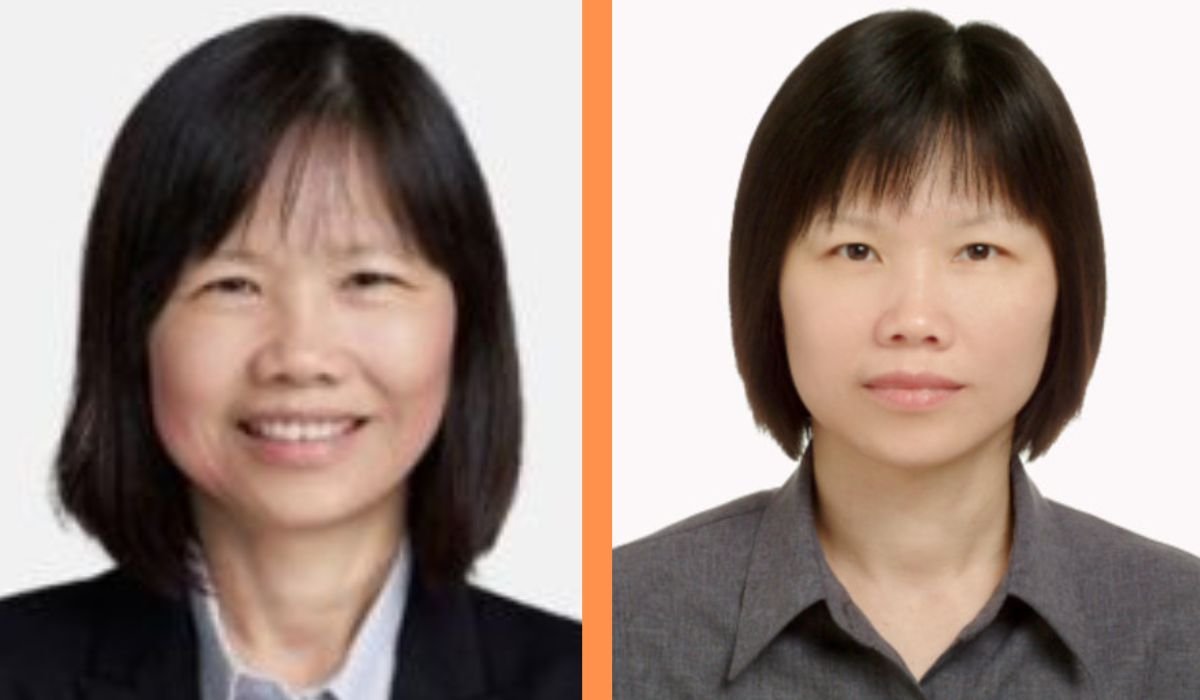
Aw Ai Ti is a Singapore-based artificial intelligence researcher and research leader whose career has closely followed the evolution of modern language technology. She is best known for her work at ASTAR’s Institute for Infocomm Research, commonly called I²R, where she has contributed to Natural Language Processing, Machine Translation, Speech Recognition, Speech Generation, Audio Analytics, Question Answering, and Multilingual Artificial Intelligence. Her work is especially important because Singapore and Southeast Asia present a complex language environment in which people regularly use different languages, accents, and local expressions. Rather than treating language AI as a purely academic problem, Aw Ai Ti has spent decades helping turn research into practical technologies. Her career began at ASTAR in 1997, and she later became Head of I²R’s Aural And Language Intelligence Department, where she leads work covering audio, speech, and language research strategies.
Quick Bio Information
| Information | Details |
|---|---|
| Full Name | Aw Ai Ti |
| Published Name Variations | Ai Ti Aw, AiTi Aw, Aiti Aw |
| Profession | AI Researcher And Research Leader |
| Country | Singapore |
| Organization | A*STAR |
| Institute | Institute For Infocomm Research, I²R |
| Current Department | Aural And Language Intelligence |
| Leadership Role | Department Head |
| Career At A*STAR | Started In 1997 |
| Main Field | Human Language Technologies |
| Key Specialization | Natural Language Processing |
| Major Research Area | Machine Translation |
| Speech Research | Speech Recognition And Speech Generation |
| Other Research | Audio Analytics |
| Language Applications | Question Answering And Dialogue Technology |
| Additional Area | Text Summarization |
| Major Translation Project | SG Translate |
| Modern AI Focus | Audio Large Language Models And Multimodal AI |
| Regional Focus | Singapore And Southeast Asian Languages |
Aw Ai Ti’s official A*STAR profile identifies Human Language Technologies, Audio Analytics, Speech Recognition, Speech Generation, Machine Translation, Question Answering, Dialogue Technology, and Summarization among her main research areas.
Aw Ai Ti Biography And Professional Background
Unlike many public figures, Aw Ai Ti has maintained a professional profile centered largely on research rather than personal publicity. Public institutional information provides extensive details about her scientific work but relatively little verified information about her birth date, early family background, or formal education. For that reason, those details should not be guessed. What is well documented is her long-standing association with A*STAR. She began working there in 1997 and helped establish capabilities in Natural Language Processing and Machine Translation. Her official profile credits her with pioneering research and development in Southeast Asian language processing and Machine Translation capabilities in Singapore. That long career makes her particularly interesting because she has worked through several major generations of language technology, from rule-based systems and statistical methods to neural networks and today’s Large Language Models.
Early Career In Natural Language Processing
Aw Ai Ti’s interest in language technology began even before her formal ASTAR career. In an ASTAR interview, she explained that her first Natural Language Processing project, during the early 1990s, involved text summarization. At that time, NLP systems were far less powerful than today’s AI assistants, and useful commercial applications were harder to identify. Her interest later shifted strongly toward Machine Translation after discussions about the need to overcome communication barriers. One of her first Machine Translation projects involved developing a rule-based system that translated Malay into English. This early experience is important because it shows that multilingual communication has been central to her work for decades rather than becoming a recent interest following the rise of Generative AI.
Career At The Institute For Infocomm Research
At Singapore’s Institute for Infocomm Research, Aw Ai Ti progressed from working directly on language technology to leading larger research programs. She is listed as Head of the Aural And Language Intelligence Department, which develops technologies involving audio, speech, and written language. Her leadership role includes guiding A*STAR’s research and development strategies in these fields. This means her responsibilities extend beyond publishing academic papers. Research leadership involves identifying important problems, coordinating multidisciplinary teams, developing useful technologies, evaluating systems, and connecting scientific research with practical applications. Her position also places her at the intersection of Computer Science, Linguistics, Machine Learning, Speech Processing, and Artificial Intelligence.
Aw Ai Ti And Natural Language Processing
Natural Language Processing is the field that teaches computers to work with human language, and it forms the foundation of much of Aw Ai Ti’s career. NLP technology supports familiar tools such as translation software, search engines, chatbots, automatic summarizers, voice assistants, and question-answering systems. Aw’s research record demonstrates how broad the field can be. Her publications have covered areas including terminology extraction, language understanding, conversational question answering, and automatic educational question generation. For example, she co-authored research on automatically extracting meaningful terminology from text and later contributed to work exploring automatic True/False question generation for education. More recent research has examined conversational question-answering evaluation and Few-Shot Spoken Language Understanding. Together, these projects demonstrate a career that has continuously adapted NLP methods to new tasks and forms of interaction.
Parsing And Structured Language Research
Some academic profiles strongly associate Aw Ai Ti with Parsing and Treebank research. These subjects belong to an earlier but still important part of computational language research. Parsing involves analyzing how words fit together grammatically within sentences, while a Treebank is a collection of sentences that has been annotated with grammatical structures. Such resources help computers learn relationships between words and phrases. Earlier Machine Translation systems often depended heavily on structured linguistic information because researchers needed explicit ways to represent sentence grammar. Aw’s earlier work in structured language processing reflects this period of NLP development. Looking at these studies in the context of her broader career is more useful than describing her only as a Parsing or Treebank researcher, because her later work expanded far beyond those areas into neural Machine Translation, speech systems, multimodal AI, and Large Language Models.
Machine Translation Research
Machine Translation became one of the most important themes of Aw Ai Ti’s career. Translation is particularly challenging in multilingual regions because meaning depends not only on dictionary definitions but also on culture, context, terminology, grammar, and local usage. Aw’s research evolved alongside the field itself. Early approaches often relied on manually created linguistic rules. Statistical Machine Translation later learned translation patterns from bilingual datasets. Neural Machine Translation eventually allowed deep learning systems to model language relationships more naturally. Aw’s career across these periods gives her work unusual continuity. Her focus has consistently been practical: reducing language barriers and helping people exchange information more effectively. A*STAR specifically credits her with building Machine Translation capability in Singapore and pioneering technology for Southeast Asian language processing.
Aw Ai Ti And SG Translate
One of Aw Ai Ti’s most visible practical contributions is SG Translate, a locally relevant neural Machine Translation engine developed by A*STAR’s I²R together with Singapore’s Ministry of Communications and Information. Aw served as the Principal Investigator responsible for the project’s overall research, development, and delivery. SG Translate was designed around Singapore’s language environment instead of relying solely on generic international translation data. It supports Singapore English, Singapore Chinese, Singapore Malay, and Singapore Tamil. Localized training data helps the system understand expressions relating to Singaporean daily life, culture, government programs, and public communication. The technology became available for government agencies and also supported translation of public information.
Why Localized Translation Matters
SG Translate illustrates a larger idea that has become increasingly important in modern AI: a model can be technically powerful yet still perform poorly when it does not understand local context. A phrase associated with Singaporean government policy, local culture, or everyday speech may not translate correctly through a model trained mostly on global web data. Aw Ai Ti and her colleagues approached this challenge by using localized translation material and carefully evaluating system output. For languages where high-quality bilingual data was limited, additional AI techniques were used to expand and improve training resources. During the COVID-19 period, SG Translate was also used to help create multilingual public communications. This practical use shows how language technology can move beyond research papers and support real communication needs in a multilingual society.
Speech Recognition And Audio Intelligence
As language AI developed, Aw Ai Ti’s work increasingly expanded from written text into spoken communication. Her department covers Audio Analytics, Speech Recognition, and Speech Generation. Speech Recognition converts spoken language into a form computers can analyze, while Speech Generation allows machines to produce spoken responses. Audio Analytics goes further by examining information contained in sound. Modern speech systems need to understand not only words but also speakers, accents, emotions, background conditions, and other audio signals. This area is especially challenging in Southeast Asia because people may switch between languages or use local pronunciation and varieties such as Singlish. Aw’s leadership in this field reflects a broader move toward AI systems that understand human communication through both text and sound.
From Traditional NLP To Large Language Models
Perhaps the most interesting perspective on Aw Ai Ti’s career is how clearly it reflects the history of NLP itself. Her earliest work involved summarization and rule-based Machine Translation. Later research incorporated statistical and structured approaches. Neural Machine Translation then became central to projects such as SG Translate. Today, her research environment includes Large Language Models and Audio Large Language Models. Few researchers have careers that visibly span so many stages of language technology. This evolution also shows that new AI systems have not completely replaced earlier research questions. The central problems remain familiar: How can machines understand meaning? How can they translate accurately? How can technology handle limited data? How can systems understand different languages, accents, cultures, and communication styles?
AudioBench And Modern Audio Large Language Models
Aw Ai Ti is also involved in research evaluating modern Audio Large Language Models. She was among the authors of AudioBench, presented at NAACL 2025. AudioBench was created as a broad benchmark for examining how well AudioLLMs perform across speech understanding, audio-scene understanding, and paralinguistic understanding. The benchmark covers eight tasks and 26 datasets. Researchers found that no single evaluated model performed best across every task, showing that AudioLLMs still have important limitations. Aw also co-authored IFEval-Audio, research focused on testing whether audio-based Large Language Models can correctly follow instructions. Such projects are valuable because stronger evaluation methods help researchers identify weaknesses before AI systems are deployed widely.
MERaLiON And Singapore-Focused AI
Another major direction is MERaLiON, an effort to develop multimodal AI suited to Singapore and the broader Southeast Asian context. Aw Ai Ti is identified as a Principal Investigator connected with MERaLiON research. One important development, MERaLiON-AudioLLM, focuses on speech and language understanding with particular attention to Singlish. The model was trained for tasks such as Automatic Speech Recognition, Spoken Question Answering, Speech Translation, and Paralinguistic Analysis. This represents an important shift from general-purpose AI toward models designed to understand regional linguistic realities. In 2026, the wider MERaLiON research effort also included work on speech characteristics across English and Southeast Asian languages, showing continued development of regionally focused speech AI.
Research Beyond Translation And Speech
Aw Ai Ti’s publication history shows that her research interests are broader than a single AI application. She has co-authored work on medical report generation, Spoken Language Understanding, conversational Question Answering, educational question generation, explainable fact-checking, and multilingual model reliability. A 2021 NAACL industry paper investigated AI-based radiology report generation. Research published in 2025 explored improving explainable fact-checking by better connecting claims with supporting evidence. Other recent work has examined how multilingual Large Language Models can reduce hallucinations, particularly when dealing with lower-resource languages. These projects show a continuing interest in making AI systems not only powerful but also useful, explainable, and better adapted to real communication environments.
Contributions To Singapore And Southeast Asian AI
Aw Ai Ti’s larger contribution can be understood through the regional focus of her work. Much of mainstream AI development has historically concentrated on English and other languages with enormous digital datasets. Southeast Asian languages and local varieties often have fewer resources, making it harder to train equally capable systems. Singapore adds another challenge because multilingual communication and code-switching are common. By developing translation engines, speech technologies, localized datasets, and multimodal systems, Aw and her research teams are helping reduce this gap. Her work demonstrates that successful regional AI requires more than translating an existing global model. Researchers must understand local languages, pronunciation, cultural references, data availability, and real user needs.
Research Leadership And Lasting Impact
Aw Ai Ti’s influence also comes from leadership. As Head of A*STAR I²R’s Aural And Language Intelligence Department, she guides teams working across several interconnected technologies. Her department has been associated with international research achievements and benchmark competitions, while her own projects have connected academic research with public-sector applications. Her career therefore illustrates a model of applied scientific leadership: fundamental research is important, but its value increases when technology can move into systems that people and organizations actually use. SG Translate is a particularly clear example because years of language research eventually supported a government-scale translation platform.
Final Thoughts
Aw Ai Ti’s biography is ultimately the story of how language technology has changed over more than three decades. From early text summarization and rule-based Malay-to-English translation to Neural Machine Translation, Speech AI, AudioLLMs, and Singapore-focused multimodal models, her work has developed alongside major advances in Artificial Intelligence. Her contribution is especially valuable because she has consistently focused on multilingual communication and Southeast Asian language needs, areas that can receive less attention from global AI systems. As AI becomes increasingly conversational, multimodal, and culturally aware, the problems Aw Ai Ti has worked on throughout her career are becoming even more important. Her professional record offers a useful example of how long-term research, regional knowledge, and practical deployment can work together to create AI that better understands the people it is meant to serve.
FAQs About Aw Ai Ti
Who Is Aw Ai Ti?
Aw Ai Ti is an Artificial Intelligence researcher and research leader at A*STAR’s Institute for Infocomm Research in Singapore. She specializes in Human Language Technologies, including Natural Language Processing, Machine Translation, Speech Recognition, Speech Generation, Audio Analytics, Question Answering, and Multilingual AI.
Where Does Aw Ai Ti Work?
Aw Ai Ti works at the Institute for Infocomm Research, or I²R, which is part of Singapore’s Agency for Science, Technology and Research, known as A*STAR. She is Head of its Aural And Language Intelligence Department.
When Did Aw Ai Ti Join A*STAR?
According to her official institutional profile, Aw Ai Ti started her career with A*STAR in 1997. Her work initially focused on building Natural Language Processing and Machine Translation capabilities.
What Is Aw Ai Ti Known For?
She is especially known for research in Natural Language Processing, Machine Translation, speech and audio technologies, and multilingual Artificial Intelligence. She has also played a major role in Singapore-focused language technology such as SG Translate and modern MERaLiON research.
What Is SG Translate?
SG Translate is a neural Machine Translation engine jointly developed by Singapore’s Ministry of Communications and Information and A*STAR’s Institute for Infocomm Research. It was adapted using localized data and supports Singapore’s four official languages: English, Chinese, Malay, and Tamil.
What Was Aw Ai Ti’s Role In SG Translate?
Aw Ai Ti served as the Principal Investigator overseeing the research, development, and delivery of SG Translate. Her role included supervising data preparation, examining translation errors, and guiding continued improvement of the engine.
Is Aw Ai Ti Involved In Large Language Model Research?
Yes. Her recent research includes Audio Large Language Models, multilingual models, speech-language systems, and MERaLiON-related projects. She was among the authors of AudioBench, a major 2025 benchmark designed to evaluate AudioLLMs.
Why Is Aw Ai Ti’s Research Important?
Her research addresses one of AI’s major challenges: making technology work well across languages, accents, cultures, and communication styles. This is particularly important in Singapore and Southeast Asia, where multilingual communication is common and high-quality training resources may be uneven across languages.
Learn more and explore exciting content on: Yi-Hsien Du Biography: Education, Research, and Academic Career









Leave a Reply