
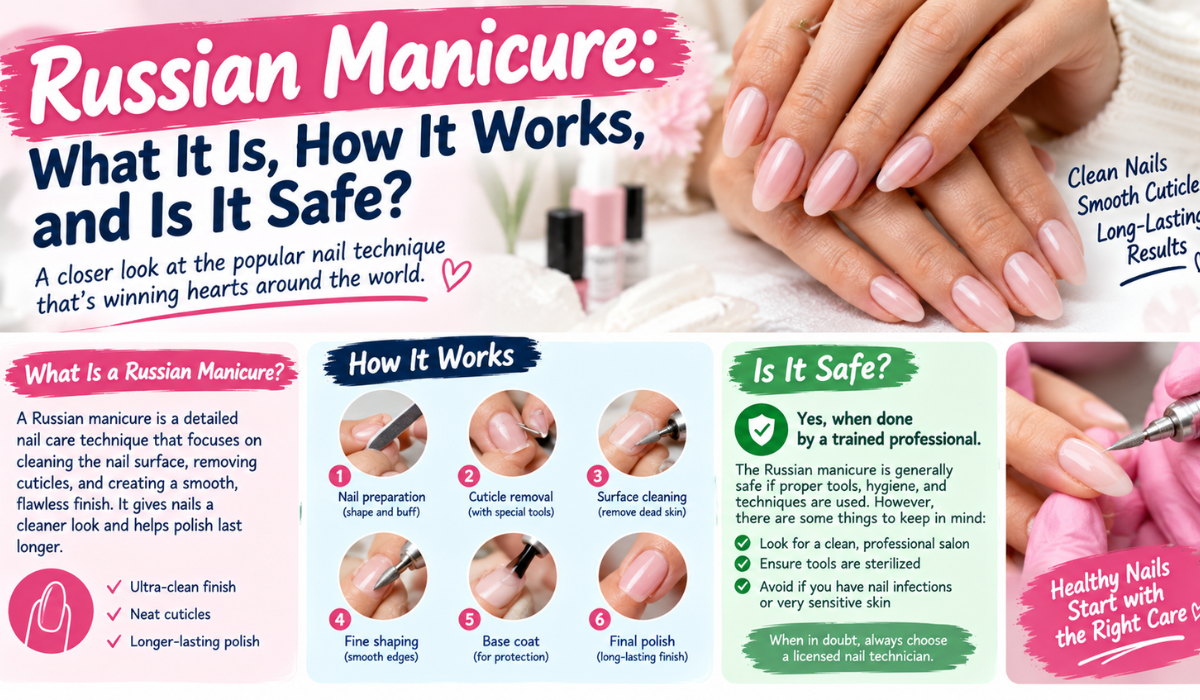
The Russian Manicure Has Become One Of The Most Talked-About Nail Trends In The Beauty Industry. Known For Its Clean Cuticle Lines, Smooth Finish, And Carefully Applied Polish, This Technique Has Gained Attention Through Social Media, Professional Nail Salons, And Beauty Creators. Many People Love The Way It Makes Their Nails Look Neat And Polished, Even When They Choose Simple Nude Or Natural Colors.
However, There Is More To A Russian Manicure Than Its Beautiful Appearance. The Technique Often Uses An Electric Nail File To Prepare The Nail Area With Great Precision. While This Can Produce Impressive Results, Improper Filing Or Excessive Cuticle Removal Can Damage The Skin And Natural Nails.
Understanding How A Russian Manicure Works, What Benefits It Offers, And Which Risks To Consider Can Help You Decide Whether It Is The Right Choice For You.
Quick Bio Information: Russian Manicure
|
Feature |
Details |
|---|---|
|
Technique Name |
Russian Manicure |
|
Also Known As |
E-File Manicure, Dry Manicure |
|
Main Purpose |
Detailed Nail And Cuticle-Area Preparation |
|
Origin Association |
Eastern Europe |
|
Popularity |
Beauty Salons And Social Media |
|
Main Tool |
Electric Nail File (E-File) |
|
Other Tools |
E-File Bits, Nail Files, Cuticle Scissors |
|
Water Soaking |
Usually Not Required |
|
Preparation Method |
Dry Nail Preparation |
|
Common Nail Products |
Gel Polish And Builder Gel |
|
Main Appeal |
Precise, Clean-Looking Cuticle Lines |
|
Potential Benefit |
Neat Polish Application |
|
Skill Level |
Requires Specialized Training |
|
Possible Risks |
Skin Injury, Nail Damage, Infection |
|
Cuticle Function |
Helps Protect The Nail-Fold Area |
|
Safety Priority |
Gentle Technique And Proper Hygiene |
|
Suitable For Everyone? |
No, Nail And Skin Conditions Matter |
|
Aftercare |
Moisturizing And Gentle Nail Care |
|
Maintenance |
Depends On Nail Growth And Product Type |
|
Best Advice |
Choose A Trained Technician Who Prioritizes Nail Health |
What Is A Russian Manicure?
A Russian Manicure Is A Detailed Nail Preparation Technique That Usually Uses An Electric Nail File, Also Known As An E-File, To Clean And Prepare The Area Around The Nails. Unlike Many Traditional Manicures, It Is Generally Performed Without Soaking The Hands In Water Before Cuticle Preparation.
The Technician Uses Specialized E-File Bits To Work Around The Nail Folds And Remove Loose Dead Skin Or Surface Buildup. Some Technicians Also Use Manual Tools, Such As Cuticle Scissors, When Appropriate. The Aim Is To Create A Neat Nail Outline And Prepare The Surface For Polish Or Other Nail Products.
The Technique Is Often Combined With Gel Polish Or Builder Gel, Although Neither Product Is Essential To The Definition Of A Russian Manicure. The Main Difference Is The Detailed Preparation Method.
It Is Also Important To Understand That The Cuticle And The Surrounding Living Skin Are Not The Same Thing. The Cuticle Helps Seal The Gap Between The Nail Plate And The Skin. Removing This Protective Tissue Too Aggressively Can Increase The Risk Of Irritation And Infection.
Where Did The Russian Manicure Originate?
Russian Manicure Is Associated With Eastern European Nail Artistry, Where Detailed Nail Preparation And Precise Polish Application Have Become Popular In Professional Beauty Services. The Technique Existed Before Its Recent Rise On Social Media, Although Its Exact Origin And Date Of Invention Are Not Clearly Established.
Platforms Such As Instagram, TikTok, And Pinterest Have Helped Introduce The Style To A Wider Audience. Close-Up Videos Often Show Technicians Working Carefully Around The Nail Folds Before Applying Gel Polish Near The Base Of The Nail.
These Videos Have Contributed To The Technique’s Reputation For Producing Exceptionally Clean-Looking Results. However, A Beautiful Video Does Not Always Show The Full Procedure Or Explain The Possible Risks.
As The Trend Has Grown, Professional Nail Education Has Also Become More Important. Learning To Use An E-File Requires Knowledge Of Nail Anatomy, Tool Selection, Pressure, Speed, And Safe Working Angles. The Technique Should Not Be Judged By Appearance Alone.
How Does A Russian Manicure Work?
A Russian Manicure Usually Begins With An Inspection Of The Natural Nails And Surrounding Skin. The Technician Checks For Broken Skin, Redness, Swelling, Nail Damage, Or Other Problems That Could make the procedure unsuitable. If There Are Signs Of Infection Or Significant Irritation, Nail Treatment Should Be Postponed Until The Problem Has Been Assessed.
The Technician Then Prepares The Dry Nail Area Using Suitable E-File Bits. Different Bits Have Different Shapes And Purposes, Allowing A Trained Professional To Work Around The Nail Folds And Remove Loose Dead Tissue. The Correct Technique Depends On The Condition Of The Nails And The Amount Of Preparation Needed.
Some Procedures Include Gently Moving Back Loose Tissue Or Using Scissors To Trim Suitable Dead Skin. However, The Goal Should Not Be To Remove All The Skin Around The Nail. The Living Cuticle And Surrounding Skin Provide Protection And Should Not Be Aggressively Filed Or Cut.
After Preparation, The Technician Shapes The Nails And Gets Them Ready For The Chosen Coating. If Gel Polish Or Builder Gel Is Used, It Must Be Applied Carefully And Kept Off The Surrounding Skin. Depending On The Product, It Is Cured Under An Appropriate Nail Lamp.
What Tools Are Used For A Russian Manicure?
The Electric Nail File Is One Of The Main Tools Used In A Russian Manicure. It Holds A Small Rotating Bit That Allows A Trained Technician To Perform Detailed Preparation. Different Bits Are Designed For Different Tasks, And Their Suitability Depends On Their Material, Shape, Abrasiveness, And Intended Use.
Manual Tools May Also Be Used. A Cuticle Pusher Can Help Move Loose Tissue When Appropriate, While Scissors Or Nippers May Be Used To Trim Certain Loose Pieces Of Dead Skin. Nail Files Help Shape The Free Edge, And Buffers May Be Used When Surface Preparation Is Necessary.
Hygiene Equipment Is Equally Important. Reusable Instruments Must Be Properly cleaned and sterilized according to applicable professional standards. Single-use items should not be reused, and tools should never be shared between clients without the required processing.
High-Quality Equipment Does Not Automatically Make A Russian Manicure Safe. A Powerful E-File In Untrained Hands Can Cause More Harm Than A Basic Manual Tool. Training, Good Judgment, Suitable Equipment, And Careful Technique Matter More Than The Price Or Appearance Of The Tools.
What Are The Benefits Of A Russian Manicure?
One Of The Main Reasons People Choose A Russian Manicure Is Its Precise Appearance. Detailed Preparation Can Create A Clean-Looking Outline Around The Nail, Making The Finished Manicure Look Neat And Refined. This Style Is Particularly Popular With People Who Prefer Minimalist Colors, Glossy Finishes, And Carefully Shaped Nails.
Another Potential Benefit Is Precise Polish Application. A Skilled Technician May Be Able To Apply Gel Polish Close To The Nail Fold Without Touching The Skin. This Can Create The Appearance Of A Seamless Finish When The Manicure Is Fresh.
Appropriate Nail Preparation Can Also Support Product Adhesion. However, A Russian Manicure Does Not Guarantee That Gel Polish Will Last Longer Or That Lifting Will Never Occur. Results Depend On The Condition Of The Natural Nail, Product Quality, Application Technique, Daily Activities, And Aftercare.
The Technique Also Appeals To People Who Enjoy Detailed Nail Artistry. Even Simple Colors Can Look Professional When The Nail Shape, Surface, And Polish Application Are Carefully Managed.
Nevertheless, A Precise Finish Is Not Worth Damaging Healthy Skin. The Best Manicure Is One That Balances Appearance With The Long-Term Health Of The Natural Nails.
Russian Manicure Vs. Traditional Manicure
A Traditional Manicure Can Include Nail Shaping, Cuticle Care, Moisturizing, And Polish Application. Depending On The Salon, It May Involve Soaking The Hands In Water, Although Many Traditional Manicures Are Also Performed Without Soaking.
A Russian Manicure Usually Focuses More Heavily On Detailed Preparation Around The Nail Folds. An E-File Is Commonly Used, Sometimes Alongside Manual Tools, To Create A Precise Finish. This Preparation Often Takes More Time And Requires Specific Training.
The Appearance Can Differ, But Neither Method Is Automatically Better. A Skilled Technician Can Produce Beautiful Results With Either Technique. Similarly, A Traditional Manicure Can Cause Injury If The Cuticles Are Cut Aggressively Or The Nails Are Filed Too Much.
The Main Safety Consideration Is How The Procedure Is Performed. Gentle Nail Care That Preserves The Protective Skin Is Generally Preferable To Any Technique That Prioritizes An Extremely Tight Cuticle Line Over Nail Health.
Is A Russian Manicure Safe?
A Russian Manicure Can Carry Risks, Particularly When The Technician Removes Too Much Protective Tissue Or Uses An E-File Incorrectly. It Would Be Misleading To Describe The Procedure As Completely Safe Simply Because It Is Performed In A Professional Salon.
Excessive Filing Can Cause Cuts, Abrasions, Burning, Or Damage To The Nail Plate. If The Surrounding Skin Is Broken, Microorganisms Can Enter And Cause An Infection. Repeated Aggressive Preparation May Also Leave The Natural Nail Thin, Weak, Or Sensitive.
A Published Medical Case Report Has Described Acute Paronychia, An Infection And Inflammation Around The Nail, Following A Russian Manicure. The Report Also Described Temporary Disruption Of Nail Growth. A Single Case Cannot Tell Us How Common These Complications Are, But It Demonstrates That Problems Can Occur.
Nail Products Introduce Separate Risks. Gel Products Can Cause Irritation Or Allergic Reactions, Particularly When Uncured Product Contacts The Skin. Improper Removal Can Also Damage The Natural Nail.
Choosing A Trained Technician, Maintaining Proper Instrument Hygiene, And Avoiding Unnecessary Cuticle Removal Can Reduce Some Risks. However, No Technique Can Eliminate Every Possibility Of Injury.
Why Is The Cuticle Important For Nail Health?
The Cuticle Plays An Important Role In Protecting The Area Where The Natural Nail Meets The Surrounding Skin. It Helps Seal The Gap Between The Nail Plate And The Nail Fold, Limiting The Entry Of Bacteria And Other Microorganisms.
The Loose, Dead Tissue That Collects On The Nail Plate Is Different From The Living Skin Around The Nail. These Areas Can Be Difficult To Distinguish Without Proper Training, Which Is One Reason Advanced Cuticle Work Requires Care.
Removing The Protective Cuticle Completely Can Weaken The Natural Barrier. Cuts And Tiny Breaks In The Skin May Allow Microorganisms To Enter, Increasing The Risk Of Paronychia. This Condition Can Cause Pain, Redness, Swelling, And Sometimes Pus Around The Nail.
Dermatology Guidance Generally Advises Against Cutting The Cuticle Because Of Its Protective Function. People Who Want A Neat Manicure Can Ask For Gentle Preparation That Focuses On Loose Dead Tissue Rather Than Removing Healthy Skin.
Healthy Cuticles Do Not Need To Look Perfectly Bare To Indicate Good Nail Care. Preserving Their Protective Function Is More Important Than Achieving An Extremely Close Finish.
Who Should Avoid A Russian Manicure?
People With Open Cuts, Broken Skin, Or Recent Injuries Around Their Nails Should Avoid Cuticle Manipulation Until The Area Has Healed. Filing Or Cutting Already Damaged Skin Can Make Irritation Worse And Increase The Possibility Of Infection.
Anyone Experiencing Redness, Swelling, Warmth, Tenderness, Or Pus Around A Nail Should Postpone The Procedure. These Symptoms Can Indicate An Infection That Needs Medical Assessment Rather Than Cosmetic Treatment.
People With Very Thin, Brittle, Peeling, Or Damaged Nails May Also Benefit From Choosing A Gentler Manicure. Aggressive Surface Preparation Can Worsen Existing Nail Damage.
Those With Persistent Skin Conditions Around The Nails Or Repeated Nail Infections Should Consider Seeking Advice From A Healthcare Professional Before Undergoing Intensive Nail Treatments.
There Is No Single Rule That Makes A Russian Manicure Suitable For Everyone. The Decision Should Consider The Current Condition Of The Nails, The Surrounding Skin, And The Amount Of Preparation Required.
How To Choose A Safe Russian Manicure Salon
Choosing The Right Technician Is One Of The Most Important Steps For Anyone Considering A Russian Manicure. Look For Someone With Relevant E-File Training And A Clear Understanding Of Nail Anatomy. A Technician Should Be Able To Explain The Procedure And Answer Questions About Safety Without Making Unrealistic Promises.
Pay Attention To Cleanliness. Reusable Instruments Should Be Properly Cleaned And Sterilized Between Clients, While Single-Use Items Should Be Discarded After Use. The Workstation And The Technician’s Hands Should Also Be Clean.
Observe How The Technician Handles The E-File. The Procedure Should Not Involve Unnecessary Pressure, Repeated Aggressive Filing, Or Deliberate Injury To The Surrounding Skin. Significant Pain, Burning, Cuts, Or Bleeding Are Reasons To Stop The Service.
It Is Also Reasonable To Ask Whether The Technician Can preserve the protective cuticle rather than remove it completely. A responsible professional should prioritize healthy nails instead of promising that the closest possible cuticle line will always produce the best result.
Does A Russian Manicure Hurt Or Damage Natural Nails?
A Russian Manicure Should Not Cause Significant Pain. Some People May Notice Mild Sensations During Nail Preparation, But Burning, Sharp Pain, Or Bleeding Should Not Be Treated As Normal Parts Of The Procedure.
Damage Can Occur When The E-File Is Used Incorrectly. Excessive Pressure, An Unsuitable Bit, Or Repeated Filing In The Same Area Can Thin The Nail Plate. Damaged Nails May Become More Flexible, Sensitive, Brittle, Or Prone To Peeling.
Cuticle Damage Is Another Concern. Removing Too Much Tissue Can Leave The Skin Sore And Vulnerable To Infection. Repeated Trauma Around The Nail Fold May Also Affect Healthy Nail Growth.
If Your Nails Are Already Weak, Explain This Before The Appointment And Ask The Technician To Use A Gentle Approach. You Can Also Choose A Simpler Manicure That Requires Less Surface Preparation.
How Long Does A Russian Manicure Last?
The Length Of Time A Russian Manicure Looks Fresh Depends On Several Factors. Natural Nail Growth, The Condition Of The Nails, Product Quality, Application Technique, And Everyday Activities All Influence The Result.
The Precise Cuticle Line May Make The Manicure Look Neat When It Is Freshly Done. However, Natural Nails Continue To Grow, So A Gap Eventually Appears Between The Polish And The Skin. A Russian Manicure Cannot Stop This Normal Process.
When Gel Polish Is Used, Its Durability Depends On The Product And How Well It Is Applied and maintained. Some People Experience Chipping Or Lifting Earlier Than Others, And No Particular Preparation Technique Guarantees A Fixed Number Of Weeks.
Follow The Technician’s Advice About Maintenance And Safe Removal. Avoid Peeling Or Pulling Off Gel Polish Because Doing So Can Remove Layers Of The Natural Nail And Leave It Weaker.
Russian Manicure Aftercare: How To Keep Your Nails Healthy
Good Aftercare Helps Maintain Comfortable Skin And Healthy Natural Nails. Applying Cuticle Oil Or A Suitable Moisturizer Regularly Can Help Reduce Dryness Around The Nail Folds. Gentle Care Is Especially Important After A Detailed Manicure.
Avoid Picking At The Cuticles Or Peeling Nail Products. If You Have Gel Polish, Use An Appropriate Removal Method Instead Of Pulling It Off. Aggressive Removal Can Damage The Nail Plate Even If The Original Manicure Was Performed Carefully.
When Cleaning Or Washing Frequently, Protect Your Hands From Prolonged Exposure To Water And Harsh Cleaning Products. Wearing Suitable Gloves During Household Cleaning Can Help Reduce Dryness And Irritation.
If The Nails Become Thin, Painful, Or Damaged, Consider Taking A Break From Intensive Nail Treatments. Seek Medical Advice If You Notice Increasing Redness, Swelling, Warmth, Pain, Or Pus Around A Nail.
Russian Manicure Vs. Gel Manicure: Are They The Same?
Russian Manicure And Gel Manicure Describe Two Different Things. A Russian Manicure Refers To A Preparation Technique That Commonly Uses An E-File To Work Around The Nail Folds. A Gel Manicure Refers To The Application Of A Gel-Based Nail Coating That Is Cured Under A Suitable Lamp.
The Two Services Are Often Combined Because Precise Preparation Can Help A Technician Apply Gel Polish Neatly. However, A Russian Manicure Does Not Automatically Require Gel Polish. Other Nail Coatings May Be Used Depending On The Service.
Gel Products Have Their Own Safety Considerations. Product That Touches The Skin Can Trigger Irritation Or Allergic Reactions In Some People. Proper Application And Complete Curing According To The Manufacturer’s Instructions Are Important.
Removal Matters As Well. Peeling Off Gel Polish Or Filing Away Too Much Of The Natural Nail Can Cause Damage. Understanding The Difference Between Nail Preparation And Nail Coating Helps Consumers Make More Informed Choices.
Final Thoughts
A Russian Manicure Can Create A Beautifully Precise Nail Finish, Which Helps Explain Its Popularity In Modern Nail Salons. Its Detailed Preparation And Clean Appearance Appeal To People Who Appreciate Carefully Finished Nails, Particularly When Gel Polish Is Applied With Precision.
However, The Visual Result Should Never Come At The Expense Of Healthy Skin. Aggressive Filing, Unnecessary Cuticle Removal, Poor Instrument Hygiene, And Improper Gel Application Can Lead To Avoidable Problems.
If You Decide To Try A Russian Manicure, Choose A Trained Technician Who Understands Nail Anatomy, Maintains Proper Hygiene, And Respects The Cuticle’s Protective Role. Ask Questions Before The Appointment And Do Not Continue If The Procedure Becomes Painful.
Ultimately, Healthy Nails Matter More Than A Perfectly Tight Cuticle Line. A Beautiful Manicure Should Leave Your Nails Looking Good While Keeping Their Natural Protective Structures As Healthy As Possible.
Frequently Asked Questions About Russian Manicures
Is A Russian Manicure Better Than A Regular Manicure?
A Russian Manicure May Appeal To People Who Want A Particularly Precise Cuticle Line And Detailed Nail Preparation. However, It Is Not Automatically Better Than A Traditional Manicure. Both Techniques Can Produce Attractive Results, And The Best Choice Depends On Your Preferences, Nail Condition, And The Technician’s Skill.
Can A Russian Manicure Damage Natural Nails?
Yes, Damage Is Possible If The Technician Uses Excessive Pressure, Files The Nail Plate Too Much, Or Removes Protective Tissue Aggressively. This Can Leave Nails Thin, Sensitive, Or Prone To Peeling. Careful Technique Can Reduce Some Risks, But Preserving Healthy Nail Tissue Should Always Be The Priority.
Is A Russian Manicure Painful?
It Should Not Cause Significant Pain. Burning, Sharp Discomfort, Cuts, Or Bleeding May Indicate That The Procedure Is Injuring The Skin Or Nail. Ask The Technician To Stop If These Symptoms Occur, And Seek Medical Advice If Pain Or Inflammation Continues.
Can You Get A Russian Manicure Without Gel Polish?
Yes. Russian Manicure Describes The Nail Preparation Method, Not The Type Of Polish Used. Gel Polish Is A Common Choice, But The Technique Can Be Followed By Other Nail Coatings Or Used As Part Of A Nail Care Service Without Gel.
How Often Should You Get A Russian Manicure?
There Is No Universal Schedule That Suits Everyone. The Appropriate Timing Depends On Nail Growth, Product Type, Nail Condition, And Whether The Surrounding Skin Has Recovered. Avoid Repeated Treatments If Your Nails Become Weak Or Your Cuticles Remain Irritated.
Should The Cuticle Be Completely Removed?
No. The Cuticle And Surrounding Skin Help Protect The Area Where The Nail Meets The Skin. Removing Them Completely Can Increase The Risk Of Irritation And Infection. Gentle Preparation That Avoids Unnecessary Removal Of Protective Tissue Is The Better Approach.
What Should You Do If Your Nail Becomes Red Or Swollen After A Manicure?
Avoid Further Cuticle Work And Watch For Signs Of Infection. Increasing Pain, Warmth, Swelling, Or Pus Around The Nail Should Be Assessed By A Healthcare Professional. Do Not Attempt To Cut Into The Affected Area Or Treat A Suspected Infection With More Nail Products.
Learn more and explore exciting content on: A Guide to Property Investment in Manchester for First-Time Investors







Leave a Reply