
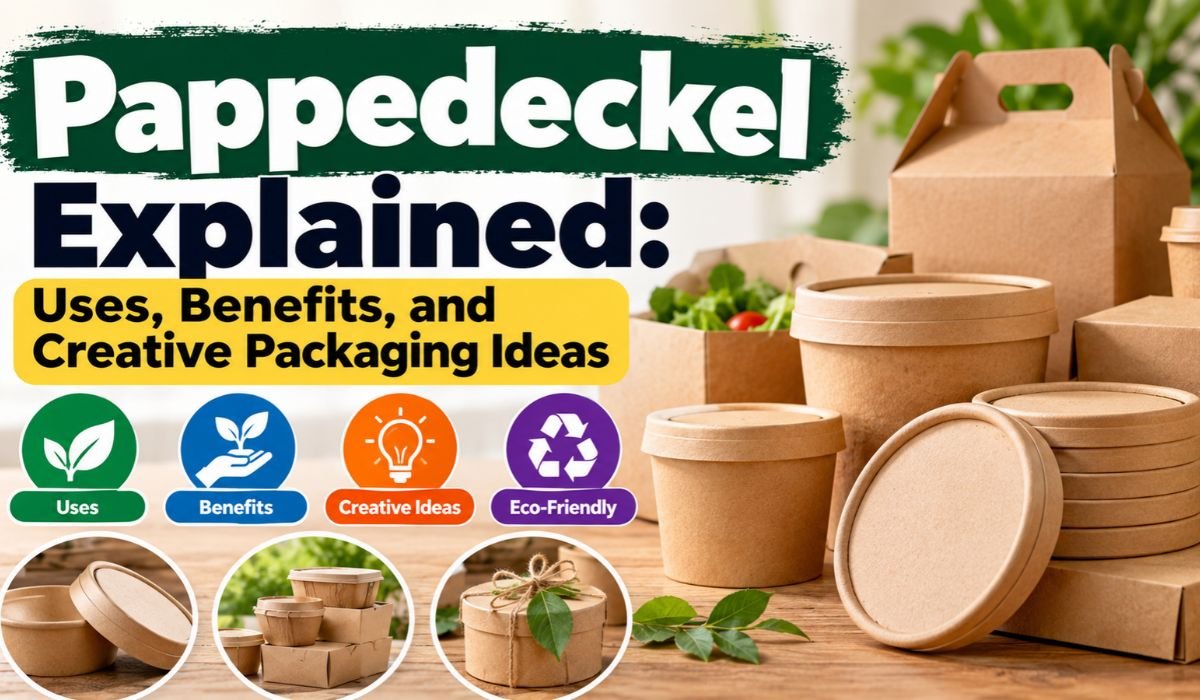
Packaging Plays An Important Role In How People See, Handle, And Remember A Product. A Simple Lid Or Cardboard Cover May Seem Like A Small Detail, But It Can Help Protect Items, Improve Presentation, And Give A Business More Opportunities To Show Its Brand Identity. This Is Where Pappedeckel Becomes An Interesting Topic For Food Businesses, Retailers, And Packaging Designers.
Pappedeckel Is A German-Related Term Associated With Cardboard Covers, Lids, And Pieces Of Stiff Paperboard. Its Exact Meaning Depends On The Context In Which It Is Used. In Food Packaging, The Term Can Describe Paperboard Lids Or Covers Designed For Suitable Containers. These Products Can Be Simple And Practical Or Customized With Colors, Logos, Patterns, And Decorative Finishes.
However, Attractive Packaging Needs To Do More Than Look Good. It Must Fit Properly, Suit The Product, And Perform Reliably During Storage, Handling, And Transportation. Understanding These Details Helps Businesses Choose Packaging That Balances Appearance, Convenience, Cost, And Environmental Considerations.
Quick Bio Information
The Following Quick Facts Summarize The Main Characteristics And Considerations Associated With Pappedeckel.
| Information | Details |
|---|---|
| Term | Pappedeckel |
| Language Context | German-Related |
| General Meaning | Cardboard Cover Or Lid, Depending On Context |
| Common Material | Cardboard Or Paperboard |
| Main Packaging Role | Covering Or Closing Suitable Products And Containers |
| Common Applications | Boxes, Selected Food Containers, And Retail Packaging |
| Design Options | Plain, Printed, Textured, Or Custom-Shaped |
| Branding Possibilities | Logos, Brand Names, Colors, And Illustrations |
| Surface Finishes | Matte, Glossy, Embossed, Or Debossed |
| Decorative Features | Patterns, Foil Details, And Selected Window Designs |
| Material Choices | Virgin Fibre, Recycled Fibre, Or Combined Materials |
| Moisture Resistance | Depends On Construction And Protective Treatments |
| Heat Resistance | Depends On Product Specifications |
| Food-Contact Suitability | Must Be Verified For The Intended Application |
| Main Functional Consideration | Correct Fit And Reliable Performance |
| Potential Environmental Benefit | Fibre-Based Material And Possible Recycling |
| Recycling Requirements | Depend On Coatings, Contamination, And Local Facilities |
| Customization Cost | Depends On Quantity, Printing, And Finishing |
| Suitable Buyers | Food Businesses, Retailers, And Packaging Designers |
| Best Selection Method | Compare Specifications And Test Samples |
What Is Pappedeckel?
Pappedeckel Refers To A Cardboard Or Stiff Paperboard Cover, Although Its Meaning Can Vary According To The German-Language Context. It Is Not The Name Of One Standard Material Or A Single Universal Packaging Product. Instead, It Can Refer To Different Types Of Cardboard Covers And Lids.
In Packaging, A Pappedeckel May Be Used To Cover A Box, Close A Suitable container, Or Provide A Finished Surface For Printed Branding. Some Designs Are Plain And Functional, While Others Are Created To Match A Product’s Shape, Size, And Visual Identity.
The Material Is Generally Selected According To Its Intended Purpose. A Cover For A Dry Retail Product May Need Different Properties From A Lid Intended For A Warm Takeaway Meal. This Difference Matters Because ordinary Paperboard Does Not Automatically Resist Water, Oil, Heat, Or Liquid Leakage.
How Pappedeckel Is Used
Pappedeckel Can Be Relevant To Several Packaging Applications. In Food Service, Suitable Paperboard Covers may be used with compatible containers for bakery items, snacks, takeaway meals, and certain other products. In retail, cardboard covers can help close boxes, organize packaged goods, and provide a surface for product information.
Gift Packaging Offers Another Opportunity. A Carefully Designed Cardboard Cover Can Make A Gift Box Look More Complete Without Requiring Complicated Decoration. Businesses Can Match The Cover With The Box, Add A Printed Message, Or Choose A Finish That Fits The Product’s Style.
The Most Important Consideration Is Compatibility. A Cardboard Cover Designed For A Dry Product Should Not Automatically Be Used For Soup, Hot Drinks, Or Greasy Food. The Material, Closure, And Intended Conditions Must Match The Application.
Types Of Pappedeckel
Different Pappedeckel Designs Serve Different Needs. Flat Cardboard Covers Offer A Simple Appearance And May Suit Boxes Or Containers Designed Around Their Dimensions. Their Performance Depends On The Stiffness Of The Board And How Securely The Cover Fits.
Food Cup And Bowl Lids Require More Careful Selection. They Must Match The Container’s Rim And Be Suitable For The Temperature And Type Of Food. Some Paper-Based Lids Include Protective Barriers Or Other Materials To Improve Their Performance.
Decorative Covers Focus More On Presentation. They May Feature Printed Artwork, Textured Surfaces, Embossed Logos, Or Special Colors. Custom-Cut Covers Offer Another Option When A Standard Shape Does Not Match The Packaging Design. Each Style Should Be Chosen According To Both Appearance And Practical Requirements.
Benefits Of Pappedeckel
One Advantage Of Paperboard Packaging Components Is Their Relatively Lightweight Construction. Depending On Their Design, They Can Help Businesses Cover Products Without Adding Excessive Packaging Weight. This May Make Handling And Storage More Convenient.
Customization Is Another Benefit. Paperboard Surfaces Can Often Support Printing, Allowing Businesses To Display A Logo, Product Name, Instructions, Or Other Relevant Information. This Helps Create A Consistent Look Across Different Packaging Items.
Pappedeckel Can Also Support Neat Product Presentation And Practical Packaging Design. However, Its Benefits Depend On The Material And Manufacturing Quality. A Poorly Fitted Lid Or An Unsuitable Board Grade Can Cause Problems Even If The Design Looks Attractive. Businesses Should Evaluate Functionality And Appearance Together Rather Than Treating Them As Separate Decisions.
How Pappedeckel Improves Food Packaging Appeal
Food Packaging Often Creates A First Impression Before Customers Taste The Product. A Clean, Well-Fitted Lid With Consistent Branding Can Make A Takeaway Order Look More Professional. For Cafés, Bakeries, And Restaurants, This Helps Connect The Packaging With The Business’s Overall Identity.
Design Consistency Is Particularly Useful. When A Brand Uses Similar Colors, Typography, And Logo Placement Across Its Cups, Boxes, And Covers, Customers Can Recognize Its products more easily. Even A Simple Kraft-Style Cover Can Look Professional When The Design Is Clear And Appropriate For The Brand.
Packaging Should Still Protect The Food And Make Handling Convenient. A Beautiful Cover Is Not A Good Choice If It Opens During Delivery Or Cannot Handle The Intended Temperature. The Best Food Packaging Design Combines Visual Appeal With A Suitable Material, Reliable Fit, And A Good Customer Experience.
Creative Pappedeckel Design Ideas
Creative Packaging Does Not Always Require Expensive Materials Or Complicated Artwork. A Clear Design With A Recognizable Logo, Balanced Colors, And A Suitable Finish Can Be Enough To Make A Product Stand Out. The Best Approach Is To Choose Details That Support The Brand Instead Of Adding Decorations Without A Purpose.
Logo And Brand Printing
A Printed Logo Helps Customers Identify The Business Behind A Product. Businesses Can Place Their Logo In A Visible Area And Combine It With A Short Brand Message Or Product Name. The Text Should Remain Readable At The Actual Size Of The Lid. Too Many Words Or Oversized Graphics Can Make A Small Packaging Surface Look Crowded.
Colors And Patterns
Colors Help Communicate A Brand’s Style. Green Is Often Associated With Nature, While Brown Can Suggest A Natural Or Traditional Appearance. Red And Orange May Create A Strong Visual Impression, And Blue Is Frequently Used In Designs That Aim To Feel Calm Or Dependable. These Associations Are Not Universal, So The Final Choice Should Match The Audience And Product.
Patterns Can Add Personality Without Overcomplicating The Design. Geometric Shapes Can Create A Modern Look, While Botanical Illustrations May Suit Certain Organic Or Plant-Based Products. Seasonal Artwork Can Also Give Limited-Edition Packaging A Fresh Appearance.
Special Finishes And Windows
Matte And Glossy Finishes Change How Light Reflects From A Surface. Embossing Creates Raised Details, While Debossing Presses A Design Into The Material. Metallic Foil Can Highlight A Logo Or Brand Name, Although It May Increase Production Costs And Affect Recycling Depending On The Materials Used.
Window Cut-Outs Can Let Customers see selected products through the packaging. However, Openings may reduce protection against dust, moisture, or spills. They should only be used when the product and packaging design allow them. Every decorative feature should be evaluated for cost, practicality, and suitability before production.
Materials Used In Pappedeckel
Paperboard Is Available In Different Grades, Thicknesses, And Surface Treatments. The Right Option Depends On Whether The Cover Needs To Stay Flat, Support Printing, Resist Handling Damage, Or Protect A Product From Particular Environmental Conditions. A Stiff Board May Suit A Decorative Box Cover, While Another Construction May Be Better For A Lightweight Packaging Application.
Some Products Use Virgin Paper Fibres, Recycled Fibres, Or A Combination Of Materials. These Choices Can Affect Appearance, Strength, Consistency, And Environmental Performance. Recycled Content Does Not Automatically Make A Material Suitable For Direct Food Contact, So The Intended Use And Relevant Safety Requirements Must Be Checked.
Coatings And Liners May Help Improve Resistance To Moisture Or Grease. However, These Treatments Vary In Composition And Performance. Businesses Should Ask Manufacturers For Material Specifications Rather Than Assuming That Every Paperboard Product has the same protective qualities.
Food Safety And Performance
Food Packaging Must Be Appropriate For The Food It Contacts. A Plain Cardboard Cover May Work Well For Certain Dry Products But Perform Poorly When Exposed To Hot Liquids, Oil, Steam, Or Prolonged Moisture. A Suitable Barrier Or Specialized Construction May Be Needed For More Demanding Applications.
The Fit Between The Lid And Container Is Equally Important. A Cover That Is Too Loose May Come Off During Transport, While One That Is Too Tight May Be Difficult To Remove Or Could Damage The Container. For Food Delivery, Businesses Should Test Packaging Under Realistic Conditions, Including Movement, Stacking, And The Expected Time Between Packing And Consumption.
Manufacturers Should Provide Clear Information About Intended Use, Temperature Limits, And Food-Contact Compliance Where Applicable. In Markets Such As The European Union, Food-Contact Materials Are Subject To Rules Intended To Protect Consumers And Prevent Harmful Substances From Migrating Into Food. Businesses Should Follow The Requirements Of The Countries In Which Their Products Are Sold.
Sustainability And Disposal
Pappedeckel May Support Certain Sustainable Packaging Goals Because Paperboard Can Be Made From Fibre-Based Materials And Is Often Lightweight. However, The Environmental Impact Depends On More Than The Main Material. Fibre Sourcing, Manufacturing, Transportation, Product Lifespan, And End-Of-Life Treatment All Matter.
Recycling Is One Important Consideration. Clean Paperboard May Be Accepted By Local Recycling Systems, But Food Residue, Plastic Liners, Moisture Barriers, And Other Combined Materials Can Affect Whether A Particular Item Is Recyclable. Customers Should Follow Local Waste-Collection Guidance Instead Of Assuming That Every paper-based lid belongs in the same recycling stream.
Recyclable, Biodegradable, And Compostable Are Different Terms. A Product May Be Recyclable Without Being suitable for home composting, and a compostable product may require specific treatment conditions. Businesses Should Look For Reliable Product Information And Avoid Broad Environmental Claims That Cannot Be Supported.
Where Businesses Can Use Pappedeckel
Restaurants And Takeaway Services May Use Suitable Paperboard Covers To Complete Packaging For Selected Meals And Dry Food Items. The Main Priorities Are Reliable Fit, Convenient Handling, And Compatibility With The Food. Packaging Used For Hot Or Liquid Dishes Requires More Careful Material Selection.
Cafés And Beverage Businesses May Consider Paper-Based Lids Where The Product Is Specifically Designed For The Cup And Drink. Heat Resistance, Drinking Safety, And Secure Closure Are Essential. Bakeries And Dessert Shops May Use Cardboard Covers To Protect Suitable Pastries, Cookies, And Other Items While Presenting Their Brand In A Consistent Way.
Retailers And Gift Businesses Can Use Decorative Paperboard Covers To Make Boxes Look More Complete And Professional. Small Businesses May Benefit From Simple Printed Designs That Communicate Their Identity Without Requiring Expensive Finishes. Across All These Industries, The Best Packaging Choice Depends On The Product, Customer Needs, Budget, And Operating Conditions.
How To Choose The Right Pappedeckel
Start By Identifying What The Packaging Needs To Do. A Cover For A Dry Retail Item Has Different Requirements From One Intended For Warm Food. Consider The Product’s Dimensions, Weight, Moisture Level, Temperature, And How Long It Will Remain Packaged.
Next, Check Material Quality And Compatibility. Ask Suppliers About Board Thickness, Barrier Treatments, Printing Options, Food-Contact Suitability, And Relevant Product Testing. A Sample Can Reveal Problems That Are Difficult To Spot In A Photograph, Such As A Loose Fit, Weak Edges, Smudged Printing, Or An Awkward Opening Experience.
Cost Also Deserves Attention. Custom Shapes, Special Finishes, And Small Production Runs May Increase The Unit Price. Businesses Should Compare The Full Cost, Including Setup, Printing, Transport, Storage, And Potential Waste. Ordering A Sample Or A Small Trial Batch Before Committing To A Large Order Can Help Reduce Avoidable Mistakes.
Common Mistakes To Avoid
One Common Mistake Is Choosing Packaging Based Only On Appearance. A Beautiful Design Cannot Make Up For A Lid That Fails To Fit Or A Material That Cannot Handle The Product. Testing The Actual Packaging With The Intended Contents Is A Better Way To Evaluate Performance.
Another Problem Is Using Too Many Decorative Elements. Excessive Text, Competing Colors, And Large Graphics Can Make The Brand Difficult To Recognize. A Clear Logo, Readable Typography, And A Consistent Color Scheme Often Create A Stronger Result.
Businesses Should Also Avoid Assuming That All Cardboard Is Waterproof, Heat-Resistant, Or Environmentally Friendly. These Qualities Depend On The Specific Construction And Local Disposal Options. Checking Supplier Information, Testing Samples, And Reviewing Applicable Requirements Can Prevent Expensive Errors.
The Future Of Pappedeckel Packaging
Packaging Design Continues To Explore Ways To Balance Convenience, Brand Presentation, Material Efficiency, And Environmental Responsibility. Paperboard Manufacturers And Packaging Designers May develop new barrier treatments, printing methods, and structures to meet changing product needs. However, The Availability And Performance Of Any Particular Innovation Should Be Verified With The Manufacturer.
Digital Printing Can Help Some Businesses Produce Shorter Runs Or Test Different Designs, Depending On The Supplier’s Equipment And Pricing. Simplified Artwork And Better Material Planning May Also Help Reduce Unnecessary Packaging Complexity. These Approaches Can Be Especially Relevant To Smaller Brands That Want To Improve Their Presentation While Managing Costs.
The Future Of Pappedeckel Is Not Simply About Making Lids Look More Attractive. It Is About Finding Practical Designs That Protect Products, Communicate Brand Identity, Meet Applicable Safety Standards, And Support Appropriate End-Of-Life Options. Businesses That Evaluate All These Factors Are Better Positioned To Make Informed packaging decisions.
Final Thoughts
Pappedeckel Shows How A Simple Cardboard Cover Can Serve A Practical Purpose While Contributing To A Product’s Overall Presentation. Depending On Its Construction, It Can Help Cover Suitable Items, support consistent branding, and provide opportunities for creative packaging design.
For Businesses, The Most Effective Choice Is Not Necessarily The Most Decorative Or Expensive One. It Is The Design That Fits Properly, Uses Suitable Materials, Meets Relevant Safety Requirements, And Supports The Brand’s Needs. Environmental Considerations Should Also Be Evaluated Carefully, Especially When Coatings And Mixed Materials Affect Recycling.
By Understanding The Meaning, Uses, Materials, And Limitations Of Pappedeckel, Buyers And Designers Can Make More Informed Packaging Decisions. A Well-Designed Cover Brings Together Appearance And Function, Helping Packaging Work Better For Both The Business And The Customer.
Frequently Asked Questions About Pappedeckel
What Does Pappedeckel Mean?
Pappedeckel Is A German-Related Term Used For A Cardboard Cover, Lid, Or Piece Of Stiff Cardboard, Depending On Context. In Packaging Discussions, It Can Refer To Paperboard Covers Used With Suitable Boxes Or Containers. The Exact Meaning Should Be Understood From The Product And Situation Being Described.
What Is Pappedeckel Made Of?
Pappedeckel Can Be Made From Cardboard Or Paperboard Produced Using Paper Fibres. Depending On Its Intended Use, The Material May Contain Virgin Fibres, Recycled Fibres, Or Protective Coatings. The Specific Construction Determines Its Strength, Appearance, And Suitability For Different Packaging Applications.
Is Pappedeckel Suitable For Food Packaging?
Some Pappedeckel Products Are Designed For Food Packaging, But Not Every Cardboard Cover Is Suitable For Direct Food Contact. Businesses Need To Check The Manufacturer’s Specifications, Food-Contact Compliance, Temperature Limits, And Compatibility With The Intended Food. Hot, Wet, And Oily Products May Require Specialized Materials.
Is Pappedeckel Environmentally Friendly?
It Can Be An Appropriate Option In Some Packaging Systems, Particularly When The Material Is Responsibly Sourced And Accepted By Local Recycling Facilities. However, Coatings, Liners, Food Contamination, Manufacturing, And Disposal All Affect Environmental Performance. The Most Responsible Choice Depends On The Complete Packaging System Rather Than The Material Name Alone.
Can Pappedeckel Be Customized?
Yes, Suitable Paperboard Covers Can Often Be Customized With Logos, Printed Colors, Patterns, Different Shapes, And Selected Surface Finishes. Some designs can also include embossing, debossing, or foil details. Customization Options Depend On The Supplier, Material, Production Method, Order Quantity, And Intended Use.
Can Pappedeckel Protect Food From Water And Grease?
Plain Paperboard Has Limited Resistance To Moisture And Grease. Some Products Include Specialized Coatings Or Liners That Improve Their Barrier Performance. Buyers Should Confirm Whether A Specific Lid Is Suitable For The Expected Contact Time, Food Type, And Temperature Instead Of Assuming That All Cardboard Covers Offer The Same Protection.
How Can A Business Choose The Right Pappedeckel?
A Business Should Start With The Product’s Dimensions, Temperature, Moisture Level, And Packaging Requirements. It Should Then Compare Material Specifications, Closure Fit, Customization Options, Cost, And Relevant Safety Information. Testing Samples With The Actual Product Before Ordering In Large Quantities Can Help Identify Problems Early.
Is Pappedeckel Expensive?
The Cost Depends On The Material Grade, Dimensions, Order Quantity, Printing, Special Finishes, And Manufacturing Method. A Plain Standard Cover May Cost Less Than A Custom-Printed Design With Foil Or Embossing. Businesses Should Compare Total Costs And Product Performance Rather Than Selecting Packaging Based Only On The Lowest Unit Price.
Learn more and explore exciting content on: Windstrebe Explained: Meaning, Uses, Types, and Benefits





Leave a Reply