
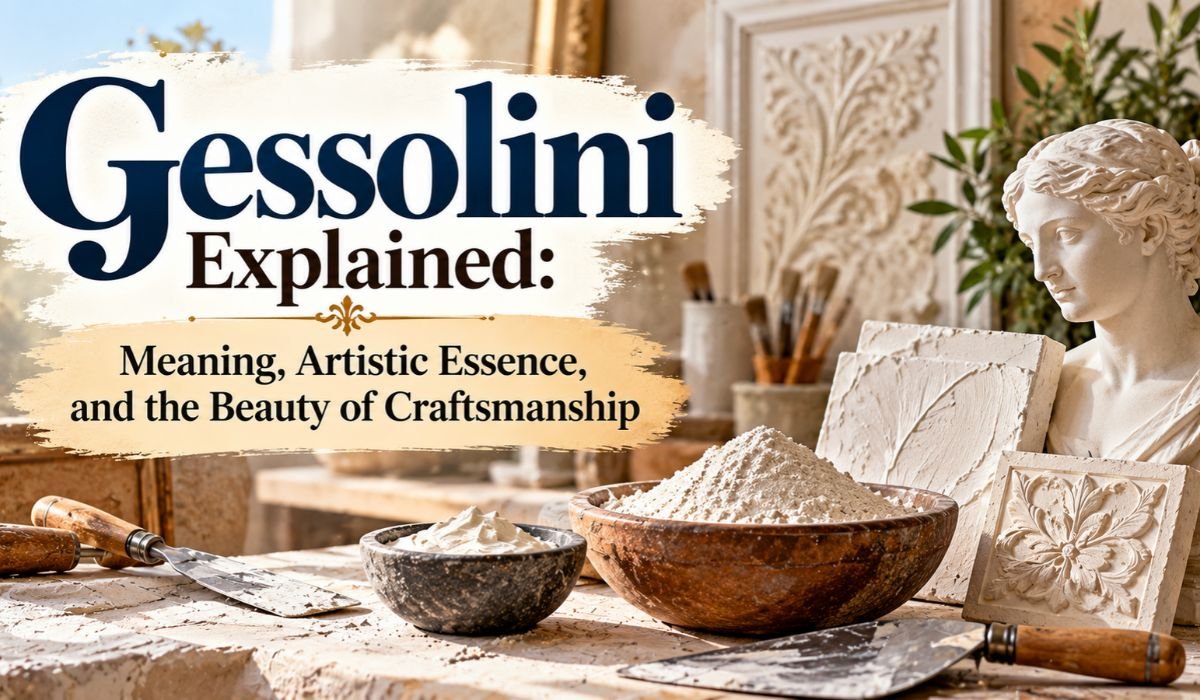
Gessolini Is A Term Associated With Creativity, Artistic Expression, And The Beauty Of Careful Craftsmanship. It Brings To Mind The Process Of Turning Simple Materials Into Something Meaningful Through Imagination, Patience, And Attention To Detail. Whether Someone Is Interested In Handmade Decorations, Sculpture, Interior Design, Or Traditional Art, The Ideas Associated With Gessolini Offer An Interesting Way To Explore The Relationship Between Creativity And Skilled Work.
However, Understanding Gessolini Requires A Little Care. The Available Information Does Not Establish It As A Formally Recognized Historical Art Movement, A Standardized Crafting Technique, Or A Specific Artistic Material. Instead, The Term Is Used In Some Online Discussions As A Broad Concept Connected With The Art Of Making And Its Creative Value.
This Distinction Makes The Topic Particularly Interesting. By Exploring Gessolini Alongside Established Principles Of Craftsmanship, Material Selection, And Artistic Design, Readers Can Better Understand Its Meaning, Possible Applications, And Relevance To Modern Creative Work.
Quick Bio Information About Gessolini
The Following Overview Summarizes The Main Details Readers Should Understand About Gessolini. Because Its Formal Definition And Origins Remain Uncertain, These Facts Focus On The Available Description And The Established Principles Of Craftsmanship That Help Explain It.
Name
Gessolini
General Description
A Term Presented Online In Connection With Creativity And Craftsmanship.
Main Theme
Artistic Expression And The Careful Process Of Making.
Verified Origin
Not Established By The Available Evidence.
Possible Creative Applications
Sculpture, Decorative Objects, Mixed Media, And Design Inspiration.
Related Art Concepts
Craftsmanship, Surface Texture, Material Selection, And Finishing.
Craft Techniques
Carving, Sculpting, Molding, Engraving, And Polishing Are General Examples.
Sustainability Connection
Responsible Material Use, Durability, And Repair.
Modern Technology
Digital Planning And Modern Production Tools Can Support Creative Work.
Relationship To Gesso
A Possible Linguistic Association Does Not Establish That The Terms Are Equivalent.
Standardized Method
No Official Gessolini Method Has Been Established By The Available Sources.
Important Design Elements
Form, Proportion, Color, Texture, And Finishing.
Skills Involved
Patience, Practice, Material Knowledge, And Attention To Detail.
Quality Considerations
Appropriate Materials, Careful Execution, And Suitable Finishing.
Creative Value
Encourages Exploration Of The Relationship Between Ideas And Physical Objects.
Research Limitation
A Definitive Historical Or Technical Classification Has Not Been Verified.
Modern Relevance
The Broader Principles Of Craftsmanship Remain Relevant To Contemporary Art And Design.
What Is Gessolini?
Gessolini Is Commonly Presented In Online Discussions As A Concept Connected With Artistic Creativity, Refinement, And The Careful Process Of Making Objects. The Article Published On SlideShare Under The Title Gessolini: The Craft Of Making And Its Artistic Essence Associates The Term With The Relationship Between Creative Ideas And Skilled Execution. However, This Description Should Not Be Mistaken For An Official Definition Accepted Across The Art World.
In Practical Terms, Gessolini Can Be Explored Through The Broader Ideas Of Craftsmanship And Artistic Expression. These Include Choosing Appropriate Materials, Developing A Design, Working Carefully Through Each Stage, And Refining The Final Result. A Handmade Sculpture, A Carefully Finished Wooden Object, Or A Decorative Piece Can Illustrate These Principles Without Necessarily Being Classified As Gessolini. Understanding This Difference Helps Readers Explore The Concept Without Confusing A General Artistic Interpretation With A Verified Technical Discipline.
The Origins And Background Of Gessolini
The Historical Origins Of Gessolini Remain Unclear. The Available Source Does Not Provide Enough Independently Verified Evidence To Establish When The Term First Appeared, Where It Originated, Or Whether It Belongs To A Longstanding Artistic Tradition. Although Its Presentation May Suggest Connections With Traditional Craftsmanship, Such Connections Alone Cannot Prove A Specific Historical Background.
One Possible Source Of Confusion Is The Italian Word Gesso, Which Refers To Gypsum Or Chalk-Based Materials In Artistic Contexts. Gesso Is Widely Associated With Preparing Surfaces For Painting, Although Traditional And Modern Formulations Can Differ. The Similarity Between Gesso And Gessolini May Encourage Readers To Connect The Terms, But Similar Spelling Does Not Establish That They Have The Same Meaning Or Origin. A Reliable Explanation Of Gessolini Should Therefore Separate Established Art History From Possible Linguistic Associations And Interpretations Found Online.
The Artistic Essence Of Gessolini
The Artistic Essence Associated With Gessolini Centers On The Relationship Between Imagination And Execution. A Creative Idea May Begin As A Simple Thought, A Memory, A Natural Pattern, Or An Interest In A Particular Shape. Turning That Idea Into A Physical Object Requires Decisions About Form, Color, Texture, Materials, And Presentation. Each Decision Influences How The Finished Work Looks And Feels.
Attention To Detail Is Equally Important. A Small Change In Proportion Can Make A Sculpture Look More Balanced, While A Carefully Chosen Surface Texture Can Give A Decorative Object Greater Character. Personal Expression Also Plays A Major Role Because Two Artists Can Work With Similar Materials Yet Produce Very Different Results. These Principles Help Explain Why Craftsmanship Involves More Than Following Instructions. It Combines Technical Skill With Judgment, Experimentation, And The Ability To Communicate An Idea Through A Finished Creation.
The Importance Of Craftsmanship
Craftsmanship Is The Ability To Create, Shape, Or Finish Something With Care, Knowledge, And Skill. It Develops Through Practice Rather Than Appearing Automatically With Natural Talent. A Craftsperson Learns How Materials Behave, Which Tools Are Appropriate, And How Small Errors Can Affect The Final Product. These Lessons Become Particularly Important When Working With Fragile, Expensive, Or Difficult Materials.
The Ideas Associated With Gessolini Draw Attention To This Human Side Of Making. Consider A Wooden Decorative Object That Requires Accurate Cutting, Smooth Edges, And A Protective Finish. The Basic Design May Be Simple, But Poor Measurements Or Rushed Sanding Can Reduce Its Quality. Careful Work Produces A More Refined Result And Can Improve Durability. This Does Not Mean Every Handmade Object Is Better Than A Factory-Made Alternative. Instead, It Shows Why Skill, Appropriate Methods, And Quality Control Matter When The Goal Is To Create Something Beautiful And Functional.
Materials Used In Artistic Creations
Materials Influence Nearly Every Part Of An Artistic Project, From Its Appearance To Its Weight, Strength, Cost, And Maintenance Needs. Wood Offers Natural Grain And Warmth, Making It Suitable For Carving, Furniture, And Decorative Objects. Clay Can Be Shaped Into Sculptures, Pottery, And Textured Forms, While Stone Is Often Used For Durable Sculptural Work. Each Material Has Its Own Limits And Requires Different Tools And Techniques.
Metal, Fabric, Plaster, And Mixed Media Provide Additional Creative Possibilities. Metal Can Support Strong Structures And Fine Decorative Details, While Fabric Introduces flexibility, Pattern, And Color. Plaster Can Be Used For Molding And Decorative Reliefs, Depending On Its Formulation And Intended Purpose. Choosing A Material Requires Understanding The Project Rather Than Simply Selecting The Most Attractive Option. Artists Must Consider Working Time, Safety, Environmental Conditions, And The Expected Lifespan Of The Object. These Are General Principles Of Craftsmanship, Not A Fixed List Of Materials Required For Gessolini.
Techniques That Reflect The Craft Of Making
Artistic Techniques Help Transform Materials Into Finished Creations. Carving Involves Removing Material To Reveal A Shape, While Sculpting Can Include Adding, Removing, Or Modeling Material To Develop A Form. Molding Uses A Form Or Cavity To Produce A Particular Shape, And Layering Builds Up Surfaces Through Repeated Applications Of Material. These Methods are Common Across Many Artistic Traditions.
Engraving And Texturing Add Detail By Creating Lines, Patterns, Or Surface variations. Finishing Techniques Such As Sanding, Polishing, Painting, And Sealing Can improve appearance and, where appropriate, protect the object. Each process requires an understanding of the material being used. A method suitable for wood may be unsuitable for soft clay or a delicate plaster surface. Although these techniques can illustrate the craftsmanship associated with Gessolini, there is no verified evidence that they form a unique or standardized Gessolini method.
Gessolini And Modern Design
Modern Design Often Combines Practical Needs With A Desire For Individuality. This Creates Opportunities To Apply General Craftsmanship Principles To Decorative Objects, Sculptures, Furniture, And Interior Spaces. A Textured Wall Panel, A Hand-Finished Vase, Or A Small Sculptural Feature Can Introduce Visual Interest Without Overwhelming A Room. The Success Of Such Work Depends On How Its Materials, Colors, Scale, And Surroundings Fit Together.
A Refined Design Does Not Always Need Complex Decoration. Simple Forms, Natural Textures, And Carefully Chosen Finishes Can Produce A Strong Visual Effect. Designers May Also Combine Traditional Handwork With Contemporary Shapes To Create Something That Feels Both Familiar And New. These Examples Show How The Artistic Ideas Associated With Gessolini Can Be Used As Inspiration For Modern Creative Projects. They Should Not, However, Be Interpreted As Evidence That Gessolini Is An Established Interior Design Style With Official Rules.
Traditional Craftsmanship And Modern Technology
Technology Has Changed The Way Artists Plan And Produce Their Work. Digital Drawing Programs Allow Designers To Experiment With Shapes And Colors Before Committing To Physical Materials. Three-Dimensional Modeling Can Help Visualize Complex Forms, While Computer-Controlled Cutting And Printing Equipment Can Produce Shapes With A High Degree Of Repeatability. These Tools Can Be Especially Useful For Projects That Require Accurate Measurements Or Repeated Components.
Traditional Skills Remain Valuable Because technology does not automatically provide artistic judgment. A digital model still depends on thoughtful design, and a precisely manufactured object may need careful finishing to achieve its intended appearance. Many creators combine digital planning with hand carving, painting, sanding, or assembly. This approach can bring together accuracy and personal expression. The important question is not whether traditional or modern methods are superior, but which combination best serves the project’s purpose, materials, and desired quality.
The Role Of Texture, Detail, And Finishing
Texture, Detail, And Finishing Can Change How People Experience An Object. A Smooth Surface May Create A Clean And Modern Impression, While A Rough Or Layered Surface Can Feel More Natural And Expressive. Patterns And Small Decorative Features Can Draw Attention To Particular Areas, But Too Many Details May Make A Design Look Crowded. Balance Is Often More Effective Than Decoration Without Purpose.
Finishing Also Has Practical Importance. Sanding Can Smooth Suitable Wooden Surfaces, While An Appropriate Sealant May Help Protect Certain materials from moisture or everyday wear. Paints and coatings must be selected according to the surface and intended use. In painting, surface preparation can affect how a ground or coating performs, so artists should follow product instructions rather than assume every material works the same way. These details demonstrate how thoughtful craftsmanship combines appearance with function. They also provide a practical way to understand the refinement often associated with the Gessolini concept.
Gessolini, Sustainability, And Responsible Craftsmanship
Sustainability Is An Important Consideration In Contemporary Art And Design. Making An Object Responsibly Can Involve Reducing Waste, Selecting Materials Carefully, And Creating Products That Are Easier To Maintain Or Repair. Planning A Project Before Cutting Or Shaping Materials can help reduce unnecessary offcuts. Reusing suitable leftover materials can also be useful, provided their condition and safety are appropriate for the intended purpose.
Durability Is Another Important Factor. An Object That Remains useful for many years may require fewer replacements than one that breaks quickly, although its overall environmental impact also depends on production, transportation, maintenance, and disposal. Handmade Products Are Not Automatically More Sustainable Than Mass-Produced Alternatives. The Amount Of Energy Used, The Source Of The Materials, And The Efficiency Of The Process All Matter. Applying Responsible Craftsmanship To Projects Inspired By Gessolini Means Evaluating These Factors Honestly Instead Of Assuming That Artistic Or Handmade Work Is Always Environmentally Friendly.
Benefits And Limitations Of The Gessolini Concept
Approaching Creative Work Through Craftsmanship Can Encourage Patience, Originality, And A Greater Appreciation For Materials. It Can Help Artists Think Carefully About The Purpose Of Each Detail Instead Of Focusing Only On The Speed Of Production. For People Who Enjoy Making Objects By Hand, This Approach Can Also Provide A Sense Of Achievement As Their Skills Improve Through Practice.
There Are Practical Limitations To Consider. Detailed Handwork May Require More Time And Labor Than automated production, and specialized materials or tools can increase costs. Beginners may need repeated attempts before achieving consistent results. Some projects also demand technical knowledge that cannot be replaced by enthusiasm alone. These Limitations Do Not Reduce The Value Of Craftsmanship; They Simply Show Why Planning, Training, And Realistic Expectations Are Important. Gessolini Is Most Useful As A Topic For Exploring These Ideas, Rather Than As A Label That Automatically Guarantees Artistic Quality.
Common Misconceptions About Gessolini
One Common Misconception Is That Gessolini Refers To A Verified Historical Art Movement. The Available Source Does Not Establish Such A Status. Another Is That Gessolini Must Be A Particular Plaster Formula Because Its Name Resembles The Word Gesso. Without reliable linguistic or technical evidence, that conclusion would be premature.
It Is Also Important Not To Assume That Every Handmade Object, Decorative Surface, Or Sculptural Creation belongs to a formal Gessolini tradition. Carving, molding, painting, and finishing are established techniques used across many different fields. They can help explain the broader artistic ideas associated with the term, but they do not prove that a distinct Gessolini discipline exists. Understanding These Differences Allows Readers To Appreciate The Creative Concept While Remaining Careful About Claims That Have Not Been Independently Verified.
Exploring Gessolini Through Your Own Creative Work
Anyone Interested In The Ideas Behind Gessolini Can Begin With A Small, Manageable Project. A Simple Clay Shape, A Hand-Finished Wooden Decoration, Or A Mixed-Media Artwork Can Provide An Opportunity To Explore Form, Texture, And Material Choice. The Goal Should Be To Understand The Creative Process Rather Than To Reproduce An Official Technique, Since No Standardized Gessolini Method Has Been Established By The Sources Discussed Here.
Start By Sketching An Idea And Choosing Materials Suitable For Your Experience And Budget. Learn The Basic Tools And Safety Requirements Before Beginning. Work Slowly, Review The Shape As It Develops, And Make Adjustments Where Necessary. After The Main Form Is Complete, Consider Whether Sanding, Painting, Polishing, Or Another Suitable Finishing Method Would Improve The Result. Over Time, Experimenting With Different Materials And Techniques Can Help You Develop Your Own Style. This Practical Approach Turns The Broad Ideas Of Craftsmanship Into Skills That Can Be Learned And Improved.
Final Thoughts On Gessolini
Gessolini Offers An Interesting Starting Point For Exploring Creativity, Craftsmanship, And The Care That Goes Into Making Artistic Objects. Its Online Description Emphasizes Refinement, Imagination, Material Choices, And Attention To Detail. These Ideas Connect Naturally With Established Craft Practices, Even Though The Available Evidence Does Not Confirm Gessolini As A Distinct Historical Tradition Or Standardized Artistic Technique.
The Most Useful Way To Understand The Topic Is To Look Beyond The Name And Consider The Principles Behind It. Thoughtful Design, Skilled Execution, Appropriate Materials, And Careful Finishing Can Turn An Ordinary Idea Into A Meaningful Creation. Modern Technology Can Support That Process, While Responsible Material Use Can Help Reduce Waste And Improve Durability.
Ultimately, The Beauty Of Craftsmanship Comes From The Relationship Between The Creator, The Materials, And The Intended Result. By Exploring These Connections Carefully, Readers Can Appreciate The Artistic Ideas Associated With Gessolini Without Confusing Interpretation With Established Fact.
FAQs About Gessolini
What Does Gessolini Mean?
Gessolini Is Used In Some Online Content As A Term Associated With Creativity, Artistic Expression, And Craftsmanship. However, Its Meaning Has Not Been Established Through A Widely Recognized Technical Or Historical Definition. It Is Best Understood In The Context Of The Source In Which It Appears.
Where Did Gessolini Originate?
The Exact Origin Of Gessolini Has Not Been Reliably Established By The Available Evidence. Claims About A Particular Country, Historical Period, Or Traditional Artisan Community Should Be Treated Cautiously Unless Supported By Credible Historical Records Or Independent Research.
Is Gessolini Related To Gesso?
The Words May Appear Related Because Of Their Similarity, But That Does Not Prove They Have The Same Origin Or Meaning. Gesso Is An Established Art Term Associated With Materials Used To Prepare Surfaces For Painting. Gessolini Has Not Been Verified As A Synonym For Gesso Or As A Specific Gesso-Based Product.
What Materials Are Used In Gessolini?
No Standardized Material List Has Been Established For Gessolini. General Craftsmanship Projects May Involve Wood, Clay, Stone, Metal, Fabric, Plaster, Or Mixed Media. The Best Material Depends On The Object Being Created, Its Intended Use, The Desired Appearance, And The Creator’s Skills.
Is Gessolini A Traditional Art Technique?
The Available Evidence Does Not Establish Gessolini As A Recognized Traditional Art Technique With Formal Rules Or A Documented History. It Is More Accurate To Discuss The General Craftsmanship Principles Associated With The Term While Separately Explaining Established Techniques Such As Carving, Sculpting, Molding, And Engraving.
Can Gessolini Be Used In Modern Interior Design?
The Ideas Associated With Gessolini Can Inspire Decorative Projects And Interior Design Through Careful Material Selection, Texture, Proportion, And Handcrafted Details. However, These Are Possible Applications Of Broader Artistic Principles, Not Verified Uses Of A Formally Established Gessolini Design System.
What Makes Craftsmanship Important In Art?
Craftsmanship Helps Artists Turn Ideas Into Well-Executed Objects. Knowledge Of Materials, Appropriate Tools, Accurate Measurements, And Careful Finishing can improve both appearance and function. Practice also helps creators solve problems, develop individual styles, and produce more consistent results.
Is Gessolini Environmentally Friendly?
There Is Not Enough Evidence To Classify Gessolini Itself As An Environmentally Friendly Material Or Process. A Creative Project Inspired By Craftsmanship may support sustainability through responsible sourcing, efficient material use, durability, and repair. Its actual environmental impact depends on the materials, production methods, and maintenance involved.
Learn more and explore exciting content on: PASONET Technologies: Everything to Know About the IT Services Company











Leave a Reply