
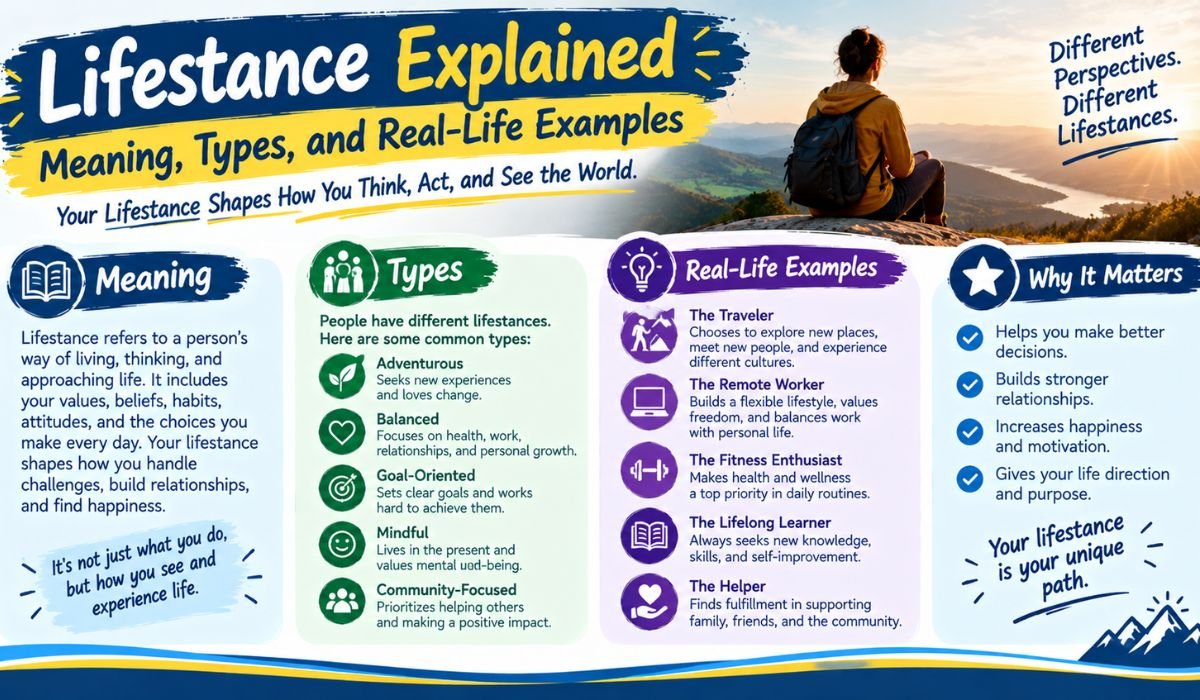
Every Person Has Beliefs And Values That Influence How They Understand The World, Make Decisions, And Decide What Matters Most In Life. These Beliefs May Come From Family, Culture, Religion, Education, Personal Experiences, Or Individual Reflection. The Combination Of These Ideas Can Form What Is Known As A Lifestance.
Lifestance Is A Broad Concept That Includes Both Religious And Non-Religious Ways Of Understanding Life. For Some People, Faith And Spiritual Traditions Provide Direction. Others Rely More On Reason, Human Values, Personal Responsibility, Or Philosophical Ideas. Many People Develop Their Own Outlook By Combining Different Influences.
Understanding Lifestance Helps Explain Why People Make Different Choices, Follow Different Moral Principles, And Find Meaning In Different Ways. It Also Encourages Respectful Conversations Between People Who May Not Share The Same Beliefs. By Exploring Its Meaning, History, Types, And Real-Life Examples, We Can Better Understand How A Lifestance Shapes Everyday Life.
Quick Bio Information
| Detail | Information |
|---|---|
| Term | Lifestance Or Life Stance |
| Meaning | A Framework Of Fundamental Beliefs, Values, And Commitments |
| Main Focus | What A Person Considers Ultimately Important |
| Related Concept | Worldview |
| Another Related Concept | Belief System |
| Historical Context | British Educational And Humanist Discussions |
| Period Of Emergence | Mid-1970s |
| Important Figure | Harry Stopes-Roe |
| Educational Milestone | Birmingham’s 1975 Agreed Syllabus For Religious Education |
| Later Development | Wider Promotion During The Late 1980s |
| Religious Examples | Christianity, Buddhism, And Pagan Traditions |
| Non-Religious Examples | Secular Humanism, Existentialism, And Freethought |
| Ethical Emphasis | Values, Morality, And Responsibility |
| Practical Influence | Decisions, Relationships, And Daily Behavior |
| Possible Influences | Family, Culture, Education, And Experience |
| Can It Change? | Yes, Beliefs May Develop Over Time |
| Must It Include Religion? | No |
| Central Idea | Beliefs And Commitments Can Shape How People Live |
What Is Lifestance?
A Lifestance Is A Person’s Or Community’s Relationship With What They Consider Ultimately Important. It Includes Fundamental Beliefs, Values, Assumptions, And Commitments That Influence How They Think And Live. These Beliefs May Address Questions About Human Existence, Morality, Purpose, Responsibility, And The Nature Of Reality.
For Example, Someone Who Values Compassion Above Personal Gain May Make Decisions That Prioritize Helping Others. Another Person May Focus On Religious Duties, While Someone Else May Emphasize Scientific Reasoning And Individual Freedom. Each Outlook Can Influence Everyday Choices And Long-Term Goals. A Lifestance Is More Than An Individual Opinion Because It Connects Important Beliefs With A Broader Approach To Living.
Lifestance Meaning In Simple Terms
In Simple Language, Lifestance Means The Beliefs And Values That Guide How Someone Lives. It Helps Explain Why A Person Considers Certain Things Important And Uses Particular Principles When Making Decisions. These Principles May Influence Relationships, Career Choices, Family Responsibilities, And Responses To Difficult Situations.
Imagine Two People Who Both Volunteer To Help Their Community. One May Be Motivated By Religious Teachings About Charity, While The Other May Believe That Helping People Is An Ethical Responsibility Shared By All Humans. Their Reasons Differ, But Their Actions May Reflect Similar Values. This Example Shows That A Lifestance Does Not Have To Be Identical To Someone Else’s To Encourage Kindness, Fairness, Or Cooperation.
History And Origin Of Lifestance
The Expression Life Stance Became Prominent In British Educational And Humanist Discussions During The 1970s. Its Development Was Connected To Debates About How Schools Should Teach Children About Religion And Non-Religious Approaches To Life. The Term Offered A Broader Way To Discuss Fundamental Beliefs Without Treating Religion As The Only Framework For Understanding Values And Purpose.
An Important Development Occurred In Birmingham, England, With The City’s 1975 Agreed Syllabus For Religious Education. The Syllabus Included The Systematic Study Of Non-Religious Approaches To Living, Such As Humanism. Harry Stopes-Roe, Who Was Associated With The Rationalist Press Association And The British Humanist Movement, Later Helped Promote Wider Acceptance Of The Term During The Late 1980s. The Concept Became A Useful Way To Discuss Religious And Non-Religious Beliefs Within A Shared Framework.
How Is A Lifestance Defined?
Harry Stopes-Roe Described Lifestance Through The Relationship An Individual Or Community Has With What Matters Most, Including The Assumptions And Commitments That Follow From That Relationship. His Approach Emphasized That Beliefs Have Practical Consequences. A Person’s Understanding Of What Is Important Can Influence Their Conduct, Priorities, And Responsibilities.
The British Humanist Association Also Offered An Analytical Definition That Focused On Beliefs With Sufficient Importance, Coherence, And Connection To Life, Morality, Values, And Behavior. Although Definitions May Differ, Their Central Idea Is Similar: A Lifestance Provides A Meaningful Framework For Understanding What Matters And How To Act Accordingly. However, Having A Lifestance Does Not Automatically Mean That Every Belief Within It Is Correct Or That Every Decision Will Be Consistent With Those Beliefs.
Main Types Of Lifestance
Lifestances Can Be Grouped Broadly Into Religious And Non-Religious Approaches, Although Real-Life Beliefs Are Often More Complex Than These Categories Suggest. Religious Lifestances May Draw On Faith, Sacred Traditions, Spiritual Experiences, And Moral Teachings. Non-Religious Lifestances May Rely On Reason, Ethical Principles, Human Welfare, Or Philosophical Reflection Without Requiring Religious belief.
Some People Follow An Established Tradition, While Others Develop Their Outlook Gradually Through Personal Experience And Study. A Person May Also Share Certain Values With People From Different Traditions Without Accepting All Their Beliefs. Understanding This Variety Helps Avoid The Mistake Of Assuming That Everyone Within A Religious Or Philosophical Group Thinks In Exactly The Same Way.
Religious Lifestances
Religious Lifestances Often Connect Everyday Life With Spiritual Beliefs, Moral Teachings, Rituals, And Community Traditions. Religion May Offer Followers An Understanding Of Human Purpose, Responsibilities Toward Others, And Questions About Life And Death. Religious Practices Can Include Prayer, Meditation, Worship, Festivals, Charity, And Participation In A Faith Community.
Christianity, Buddhism, And Various Pagan Traditions Illustrate The Diversity Of Religious Approaches. Christianity Commonly Emphasizes Faith In God, Love, Forgiveness, And Service To Others. Buddhist Traditions Often Explore Suffering, Compassion, Mindfulness, And Wisdom. Some Pagan Traditions Emphasize Nature, Seasonal Cycles, Spiritual Practices, Or Relationships With Deities. These Traditions Differ Significantly, And Individual Followers May Interpret Their Teachings In Different Ways.
Non-Religious Lifestances
Non-Religious Lifestances Provide Ways To Understand Life, Morality, And Human Responsibility Without Necessarily Relying On Belief In A Deity. They May Emphasize Evidence, Critical Thinking, Individual Freedom, Ethical Cooperation, Or The Importance Of Human Welfare. Some People Adopt A Non-Religious Outlook Because Of Philosophical Reflection, While Others Develop One Through Education Or Personal Experience.
Atheism, Agnosticism, Secular Humanism, Existentialism, Skepticism, And Freethought Are Relevant Examples, Although They Do Not All Describe Complete Lifestances On Their Own. Atheism Concerns Belief In Gods, While Agnosticism Concerns Knowledge Or Whether Such Questions Can Be Known. Secular Humanism Provides A More Developed Ethical And Philosophical Framework, While Existentialism Explores Freedom, Responsibility, And Meaning. These Distinctions Matter Because A Person’s Position On Religion Does Not Automatically determine Their Entire Moral Outlook.
Humanism As A Lifestance
Humanism Places Importance On Human Welfare, Reason, Ethical Responsibility, And The Possibility Of Improving Life Through Thoughtful Action. Secular Humanism Commonly Emphasizes Human Dignity And Critical Inquiry Without Requiring Belief In Supernatural Forces. It Encourages People To Consider The Consequences Of Their Actions And Work Toward A More Just And Compassionate Society.
The Relationship Between Humanism And Religion Has Been Discussed For Many Years. Some Humanists Have Objected To Describing Humanism As A Religion, While Others Have Explored Broader Understandings Of Religious Or Ethical Life. Harry Stopes-Roe Supported The Term Lifestance Partly Because It Allowed Humanism To Be Discussed Alongside Religious Perspectives Without Forcing It Into A Religious Category. In This Context, Humanism Is A Particularly Important Example Of A Lifestance Centered On Ethics And Human Values.
Real-Life Examples Of Lifestance
A Lifestance Becomes Easier To Understand When We See How It Influences Ordinary Decisions. Someone Who Values Honesty May Admit A Mistake At Work Even When Doing So Is Uncomfortable. A Person Guided By Compassion May Spend Time Supporting A Friend During A Difficult Period. Another Person Who Values Environmental Responsibility May Reduce Waste Or Choose More Sustainable Habits.
Different Lifestances Can Lead To Similar Actions For Different Reasons. A Religious Person May Donate To Charity Because Of A Spiritual Duty, While A Secular Humanist May Do So Because They Believe Reducing Suffering Is Ethically important. These Examples Show That A Lifestance Is Not Simply An Abstract Idea. It Can Influence How People Treat Others, Spend Their Time, Handle Conflict, And Decide Which Responsibilities Deserve Priority.
Lifestance Vs. Worldview Vs. Belief System
Lifestance, Worldview, And Belief System Are Related Terms, But They Emphasize Slightly Different Things. A Worldview Describes How Someone Understands Reality And The World As A Whole. A Belief System Is A Connected Set Of Ideas That Someone Accepts About Particular Questions Or Broader Subjects. A Lifestance Places Special Emphasis On What A Person Considers Ultimately Important And How Those Commitments Influence Their Life.
Religion And Philosophy Can Both Contribute To A Lifestance. For Example, A Person’s Worldview May Include Beliefs About Science And Human Nature, While Their Lifestance Also Includes Commitments To Honesty, Family, Or Social Responsibility. These Concepts Overlap, So The Differences Are Not Absolute. Understanding Them Helps Readers Describe Personal Beliefs More Precisely Without Treating The Terms As Completely Separate Categories.
How Does A Lifestance Develop?
A Lifestance Often Develops Through A Combination Of Family Influence, Culture, Education, Relationships, Personal Experiences, And Reflection. Children May Initially Adopt Beliefs Common In Their Households Or Communities. As They Grow Older, They May Question Some Of Those Ideas, Explore Different Traditions, Or Develop A More Independent Understanding Of What Matters To Them.
Education And Exposure To Different Perspectives Can Also Influence This Process. Reading Philosophy, Learning About Other Cultures, Studying Science, Or Experiencing New Situations May encourage someone to reconsider earlier assumptions. However, Development Does Not Always Involve Rejecting Previous Beliefs. Some People Strengthen Their existing commitments after reflection, while others combine familiar values with new ideas. There Is No Single Path That Every Person Must Follow.
Can A Person Change Their Lifestance?
Yes, A Person’s Lifestance Can Change Over Time. Important Life Events, New Knowledge, Relationships, And Personal Reflection May Lead Someone To Reconsider Their Understanding Of Morality, Purpose, Religion, Or Responsibility. A Person May Move From A Religious To A Non-Religious Outlook, Adopt A Different Spiritual Tradition, Or Strengthen Their Existing Beliefs.
Change Can Also Be Gradual Rather Than Dramatic. Someone May Continue To Value Compassion And Honesty While Revising Their Opinions About Other Questions. Another Person May Discover That Some Long-Held Assumptions No Longer Match Their Experiences. Changing A Lifestance Does Not Automatically Mean That Earlier Beliefs Were Insincere. It Can Reflect An Ongoing Effort To Understand Life More Thoughtfully And Make Decisions That Match Current Convictions.
Why Understanding Your Lifestance Matters
Understanding Your Lifestance Can Help You Recognize Why Certain Goals, Relationships, And Principles Matter To You. It Can Make Decision-Making More Deliberate By Giving You A Clearer Sense Of The Values You Want To Follow. When Difficult Choices Arise, Reflecting On Those Values Can Help You Consider The Possible Consequences Of Different Actions.
It Can Also Improve Communication With People Who Hold Different Beliefs. Recognizing That Someone Else May Have Different Reasons For Supporting The Same Ethical principle encourages more thoughtful conversations. Understanding Lifestance Does Not Require Agreeing With Everyone, Nor Does It Guarantee Happiness Or Success. Instead, It Provides An Opportunity To Examine Personal Assumptions, Understand Other Perspectives, And Live More Consistently With One’s Commitments.
Common Misunderstandings About Lifestance
One Common Misunderstanding Is That A Lifestance Must Be Religious. In Reality, The Concept Includes Both Religious And Non-Religious Approaches. Another Mistake Is Assuming That Everyone Who Belongs To The Same Religion Shares Identical Values Or Interprets Teachings In The Same Way. Personal Experiences And Individual Judgments Can Lead To Differences Even Within The Same Community.
It Is Also Inaccurate To Treat Atheism As A Complete Moral Philosophy. Atheism Addresses Belief In Gods, But It Does Not Automatically Tell Us Whether Someone Values Equality, Compassion, Freedom, Or Environmental Protection. Similarly, A Lifestance Is Not Necessarily Permanent. People Can Reconsider Their Beliefs As They Learn And Experience More Of The World. Recognizing These Differences makes the concept more useful and prevents unnecessary assumptions about other people.
Final Thoughts
Lifestance Offers A Useful Way To Understand The Connection Between What People Believe And How They Live. It Includes Religious Traditions, Non-Religious Philosophies, And Ethical Approaches That Help People Decide What Matters Most. Its History Also Reflects An Effort To Discuss Different Belief Systems Without Assuming That One Category Must Be Favored Over Another.
A Person’s Lifestance May Influence Their Relationships, Responsibilities, Goals, And Responses To Difficult Situations. It Can Remain Steady Throughout Life Or Develop Through Learning And Experience. Ultimately, Understanding Lifestance Is Not About Proving That One Outlook Is Best For Everyone. It Is About Examining Our Own Values, Recognizing Differences In Others, And Thinking Carefully About The Principles That Guide The Way We Live.
FAQs About Lifestance
What Is The Meaning Of Lifestance?
Lifestance Means The Fundamental Beliefs, Values, And Commitments That Influence How A Person Understands Life And Decides What Matters Most. It Can Shape Moral Choices, Relationships, Goals, And Responsibilities. A Lifestance May Be Based On Religion, Philosophy, Ethical Principles, Or A Combination Of Different Influences.
What Is An Example Of A Lifestance?
Secular Humanism Is One Example. It Commonly Emphasizes Human Welfare, Reason, Critical Thinking, And Ethical Responsibility Without Requiring Belief In A Deity. A Religious Lifestance, Such As One Informed By Christianity Or Buddhism, Can Also Guide A Person’s Values And Everyday Decisions.
Is Lifestance The Same As Religion?
No. Religion Can Provide The Foundation For A Lifestance, But Lifestance Is A Broader Concept. It Also Includes Non-Religious Approaches Such As Secular Humanism And Other Philosophical Perspectives. The Term Allows Religious And Non-Religious Beliefs To Be Discussed Within The Same General Framework.
Can Someone Have A Lifestance Without Believing In God?
Yes. Someone Can Develop A Lifestance Around Human Welfare, Reason, Personal Responsibility, Ethics, Or Environmental Values Without Believing In A Deity. Secular Humanism Is One Example. However, A Person’s Lack Of Belief In God Does Not Automatically Determine Their Complete Philosophy Or Moral principles.
Who Helped Develop The Concept Of Lifestance?
Harry Stopes-Roe Was An Important Figure In Developing And Promoting The Concept Within The British Humanist Movement. The Term Emerged In Educational Discussions During The 1970s, Particularly Around Approaches To Religious And Non-Religious Education. Stopes-Roe Later Campaigned For Its Wider Acceptance During The Late 1980s.
What Is The Difference Between Lifestance And Worldview?
A Worldview Describes How Someone Understands Reality And The World As A Whole. Lifestance Places Particular Emphasis On What They Consider Ultimately Important And How Their Beliefs Influence Their Actions. The Two Concepts Overlap, And A Person’s Lifestance Can Form Part Of Their Broader Worldview.
Can A Person Have More Than One Lifestance?
A Person Can Draw On Ideas From Several Religious, Ethical, And Philosophical Traditions. For Example, Someone May Value A Religious Tradition While Also Appreciating Environmental Ethics Or Philosophical Skepticism. Some Beliefs May Conflict, So People Often Need To Reflect On How Different Commitments Fit Together.
Why Is Lifestance Important In Everyday Life?
Lifestance Can Help People Understand Their Priorities, Evaluate Difficult Decisions, And Explain Why They Consider Certain actions Right Or Meaningful. It Can Also Help People Recognize That Others May Follow Different principles for thoughtful reasons. Understanding These Differences Can Encourage Self-Awareness, Respectful Discussion, And More Deliberate Choices.
Learn more and explore exciting content on: elgooG: Explore Google’s Hidden Easter Eggs, Games, and Tricks











Leave a Reply