
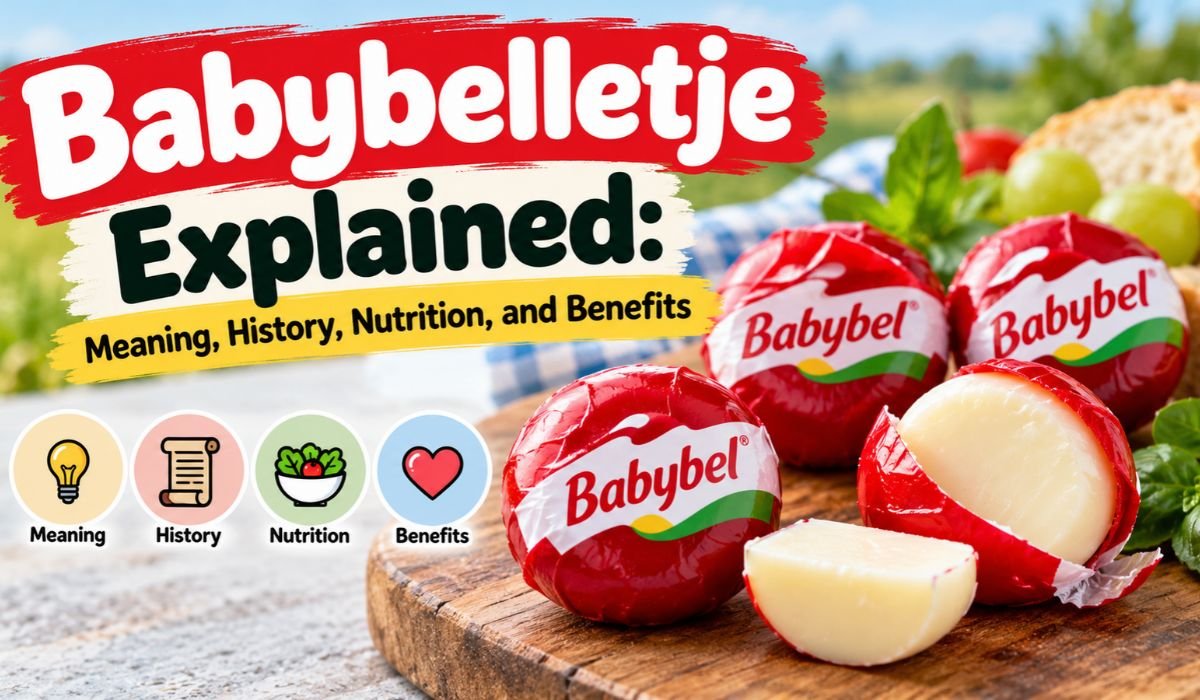
Some snacks become popular because of their taste, while others stand out because of their appearance. Babybelletje manages to do both. With its small round shape, creamy cheese, and recognizable red wax coating, this little snack has become a familiar choice for families and cheese lovers around the world.
Babybelletje is commonly associated with Mini Babybel, a popular cheese product known for its convenient size and mild flavor. It’s easy to pack in a lunchbox, enjoy between meals, or serve alongside fruits and crackers.
But there’s more to Babybelletje than its playful appearance. Behind the familiar red coating is a history rooted in French cheesemaking, along with nutritional qualities that make it an interesting everyday food.
This guide explores the meaning of Babybelletje, its origins, ingredients, nutrition, health benefits, varieties, and practical uses.
Quick Bio Information About Babybelletje
| Information | Details |
|---|---|
| Common Name | Babybelletje |
| Official Product Name | Mini Babybel |
| Product Category | Cheese Snack |
| Brand | Babybel |
| Manufacturer | Bel Group |
| Country of Origin | France |
| Brand Origins | 1931 |
| Official Brand Establishment | 1934 |
| Mini Version Introduced | 1976 |
| Main Dairy Ingredient | Pasteurized Cow’s Milk |
| Cheese Style | Edam-Inspired |
| Typical Shape | Small Round Wheel |
| Famous Packaging | Red Wax Coating |
| Original Flavor | Mild and Creamy |
| Common Serving Size | 20 Grams |
| US Original Calories | 70 Per Piece |
| US Original Protein | 4 Grams Per Piece |
| Common Uses | Snacking, Lunchboxes, and Simple Meals |
Product information and nutritional values refer primarily to Mini Babybel Original. Ingredients, serving sizes, and available varieties can differ by country.
What Is Babybelletje?
Babybelletje is an informal name associated with the small, individually wrapped cheese commonly sold as Mini Babybel. It’s a real dairy cheese made primarily from pasteurized cow’s milk, with a smooth texture and mild, slightly tangy flavor.
The cheese is shaped into a small round portion and protected by a wax coating. Original Mini Babybel is especially recognizable because of its red wax, although other varieties may use different packaging.
Unlike many strong-flavored cheeses, Babybelletje has a gentle taste that makes it approachable for people who prefer milder dairy products.
Its convenient size also makes it useful for packed lunches, afternoon snacks, and simple meals. Rather than cutting cheese from a large block, consumers can open an individual portion whenever they want something savory.
Meaning of Babybelletje
The meaning of Babybelletje is closely connected to the Dutch language. In Dutch, the suffix -tje is commonly added to words to express something small or affectionate.
When applied to Babybel, this ending creates a playful expression that can be understood as “little Babybel.”
However, Babybelletje should not be confused with a separately established cheese brand. Mini Babybel is the official commercial product name, while Babybelletje is better understood as an informal or affectionate variation.
The name fits the product’s appearance particularly well. Its tiny size, rounded shape, and colorful packaging naturally create a friendly impression.
History and Origin of Babybelletje
The history of Babybel begins in France, where Bel Group developed a long tradition of producing convenient dairy products.
According to the company’s historical information, Babybel’s origins date to 1931, with the brand becoming officially established in 1934. Its distinctive round shape and red wax coating drew inspiration from Edam-style cheese.
The product became available throughout France in 1952, during a period when packaged foods and self-service shopping were changing consumer habits.
A major development arrived in 1976 with the introduction of Mini Babybel. The smaller format made the cheese particularly convenient for individual snacking.
Mini Babybel entered the American market in 1979 and eventually expanded internationally. Today, the Babybel brand is distributed in more than 50 countries, demonstrating how a simple cheese snack developed into a globally recognized product.
What Type of Cheese Is Babybelletje?
Babybelletje is associated with an Edam-style cheese developed for convenient individual portions.
Its texture sits between soft and firm, allowing it to hold its rounded shape while remaining smooth enough to bite comfortably.
The UK manufacturer describes Mini Babybel Original as a semi-hard cheese, while the American manufacturer describes its version as semisoft. These descriptions reflect regional product classifications.
Babybelletje is generally milder than aged cheddar and less crumbly than many mature cheeses. It can be eaten directly without additional preparation, making it particularly suitable for simple snacks.
What Is Babybelletje Made Of?
The ingredients used in Mini Babybel Original are relatively straightforward. The American version lists pasteurized cultured milk, salt, and microbial enzymes.
The UK version lists pasteurized milk, salt, lactic ferments, and vegetarian rennet.
Milk supplies the main proteins and fats, while bacterial cultures help develop the cheese’s flavor and structure. Enzymes assist in turning milk into curds, and salt contributes flavor.
Because the original dairy product contains milk, it is unsuitable for people with a milk allergy.
Mini Babybel Original is genuine cheese rather than an imitation cheese snack. The manufacturer also states that its Original product contains no added artificial colors, flavors, or preservatives.
How Is Babybelletje Cheese Made?
Making Babybelletje involves traditional cheesemaking principles adapted for consistent production.
The process begins with pasteurized milk. Cheesemakers introduce cultures and coagulating ingredients that help separate the milk into curds and liquid whey.
The curds are processed and shaped into small portions. The cheese can then undergo salting or brining, which contributes to its flavor and preservation.
After preparation, each cheese portion receives its protective wax coating and outer packaging.
This method produces a recognizable product with a consistent size, mild taste, and convenient serving format.
Although the process is familiar to cheesemaking, the exact production methods may vary between manufacturing locations and product varieties.
Why Is Babybelletje Covered in Red Wax?
The red wax surrounding Babybelletje is more than a decorative feature. It helps protect the cheese from moisture loss, contamination, and unwanted changes during storage.
According to the UK manufacturer, the coating is made from paraffin-based wax. It forms a protective barrier around the cheese and helps maintain freshness.
The bright red appearance also makes Mini Babybel instantly recognizable among other packaged cheese snacks.
However, the wax is not intended to be eaten. It should be completely removed before enjoying or cooking the cheese.
The coating helps preserve the product, but it does not eliminate the need to follow appropriate storage instructions.
Types and Flavors of Babybelletje
Babybelletje is commonly associated with the Original variety, but Babybel offers several products designed for different preferences.
Original Mini Babybel has a mild, creamy flavor that works well as an everyday snack. Reduced Fat or Light versions provide alternatives for people seeking different nutritional options.
Depending on the country, shoppers may also find White Cheddar, Mozzarella, Gouda, Monterey Jack, Emmental, or other varieties.
The brand has also developed plant-based cheese alternatives. These contain different ingredients from traditional dairy cheese and should not be assumed to provide identical amounts of protein or other nutrients.
Product availability changes between markets, so the specific packaging remains the best place to confirm ingredients and nutrition.
Babybelletje Nutrition Facts and Calories
Babybelletje provides several nutrients commonly found in dairy cheese.
A 20-gram serving of the American Mini Babybel Original contains approximately 70 calories, 4 grams of protein, 5 grams of fat, 3.5 grams of saturated fat, and 150 milligrams of sodium.
The same portion provides around 140 milligrams of calcium and contains no carbohydrates listed on its US nutrition label.
These nutrients play different roles in the body. Protein helps maintain muscle tissue, while calcium supports healthy bones and teeth.
However, cheese also contains saturated fat and sodium, making portion awareness important.
Nutritional values can differ internationally. For example, the UK Mini Babybel Original contains approximately 59 calories per 20-gram portion.
This difference highlights why nutrition information should always be connected to a specific variety and market.
Health Benefits of Babybelletje
One important benefit of Babybelletje is its protein content. Protein contributes to muscle maintenance and helps make snacks more satisfying when combined with other foods.
Calcium is another nutritional advantage. This mineral is essential for maintaining healthy bones and teeth and plays a role in normal muscle function.
Its small serving size also makes portions easier to manage. A single cheese wheel can be paired with fruit, vegetables, or whole-grain crackers to create a more varied snack.
Since Original Mini Babybel contains very little carbohydrate, it may also suit certain lower-carbohydrate eating patterns.
Still, Babybelletje should not be considered a complete nutritional solution. The healthiest approach is to enjoy it alongside a balanced variety of foods.
Is Babybelletje Healthy for Everyday Eating?
Babybelletje can be part of a healthy daily diet when eaten in suitable portions.
Its combination of calcium, protein, and convenient serving size makes it a useful alternative to some highly sweetened snacks.
However, the Original variety contains saturated fat and sodium. People managing their intake of these nutrients should consider how the cheese fits into their overall diet.
For someone seeking a lighter option, Reduced Fat Mini Babybel may be worth comparing with the Original version.
Babybelletje is also not a substitute for vegetables, fruits, whole grains, or other nutrient-rich foods.
The practical benefit comes from using it as one part of a varied eating routine rather than depending on it as a primary source of nutrition.
Is Babybelletje Good for Kids and Adults?
Babybelletje can appeal to different age groups because of its gentle flavor and manageable portions.
For schoolchildren, it can be packed alongside fruit, vegetables, and other lunch foods. The individual packaging makes serving convenient, although proper refrigeration remains important.
Parents should remember that young children can choke on food. The manufacturer recommends cutting Mini Babybel into bite-sized pieces for children under four and supervising them while eating.
Adults may enjoy Babybelletje at work, between meals, or after physical activity as part of a balanced snack.
Its convenience is especially helpful when preparing food in advance, provided the cheese is transported and stored safely.
Popular Uses and Creative Ways to Enjoy Babybelletje
Babybelletje is enjoyable straight from its packaging, but it also works well in simple meals.
For a refreshing snack, pair the cheese with sliced apples, grapes, or berries. The mild, savory taste complements the sweetness of fresh fruit.
It can also be cut into pieces and added to salads, sandwiches, or wraps. Whole-grain crackers and vegetables make another practical combination.
When preparing warm meals, Babybelletje can be used in toasted sandwiches, omelets, or baked dishes. It melts when heated, although its texture may differ from cheeses commonly used for pizza.
Always remove the wax completely before cooking.
For gatherings, small cheese portions can also be served on snack boards with vegetables, fruit, and bread.
How to Store Babybelletje Properly
Proper storage helps maintain Babybelletje’s flavor, texture, and safety.
The American manufacturer recommends keeping Mini Babybel refrigerated when it is not being consumed. For short trips, its guidance generally allows two to four hours outside refrigeration.
Storage advice differs between markets and conditions, so consumers should follow their product packaging and local food-safety recommendations.
Once the wax is removed, the cheese is best eaten promptly because exposure to air can dry its surface.
Freezing is generally discouraged because thawing can significantly change the texture and eating quality.
It’s also important to check the date printed on the package and avoid consuming cheese that shows unusual spoilage.
Final Thoughts on Babybelletje
Babybelletje shows how a simple food can become memorable through a combination of taste, convenience, and recognizable design.
Its French origins, Edam-inspired characteristics, protective wax coating, and individual portions have helped Mini Babybel become a familiar cheese snack around the world.
Beyond its appearance, Babybelletje offers protein and calcium that can contribute to everyday nutrition. At the same time, its saturated fat, sodium, and dairy content deserve consideration.
Whether enjoyed with fruit, packed for lunch, or added to a quick meal, Babybelletje remains a practical choice for people who appreciate mild cheese.
The best way to enjoy it is simple: choose the variety that suits your needs, follow proper storage guidance, and include it as part of a balanced diet.
FAQs About Babybelletje
Is Babybelletje the Same as Mini Babybel?
Babybelletje is an informal, Dutch-style expression associated with Mini Babybel. Mini Babybel is the official commercial product name. The term Babybelletje does not identify a separate established cheese variety.
Is Babybelletje Vegetarian?
Mini Babybel Original sold in the US and UK is suitable for lacto-vegetarian diets. These products use microbial enzymes or vegetarian rennet rather than animal-derived rennet. Always confirm the ingredients when purchasing other varieties or products from different markets.
Can People With Lactose Intolerance Eat Babybelletje?
The UK manufacturer identifies Mini Babybel Original as naturally lactose-free. However, formulations and labels vary by country. Lactose intolerance is also different from milk allergy, and dairy Babybel products contain milk proteins.
Is Babybelletje Safe During Pregnancy?
Mini Babybel Original is made from pasteurized milk, and properly stored pasteurized semi-hard cheese is generally considered suitable during pregnancy. Pregnant consumers should follow local food-safety recommendations and consult their healthcare provider when uncertain.
Is Babybelletje Halal?
Halal certification depends on the product and country. The American and UK manufacturers state that their products in those markets are not halal-certified. Consumers who require certification should examine the packaging or confirm the status with the local manufacturer.
Can You Eat the Red Wax on Babybelletje?
No. The protective red wax is made for safe contact with food, but it is not intended for consumption. Remove the entire coating before eating, slicing, or heating the cheese.
Can Babybelletje Help With Weight Management?
Babybelletje can fit into a weight-management eating plan because it comes in convenient individual portions and provides protein. However, weight management depends on overall food intake, activity, and individual needs rather than any single snack.
Can Babybelletje Be Frozen or Melted?
Mini Babybel can melt when heated, making it useful in certain cooked dishes once the wax is removed. Freezing is not recommended by the manufacturer because it can negatively affect the cheese’s texture and overall quality.
Learn more and explore exciting content on: icpfit: false Explained: Meaning, Causes, and Easy Fixes









Leave a Reply