
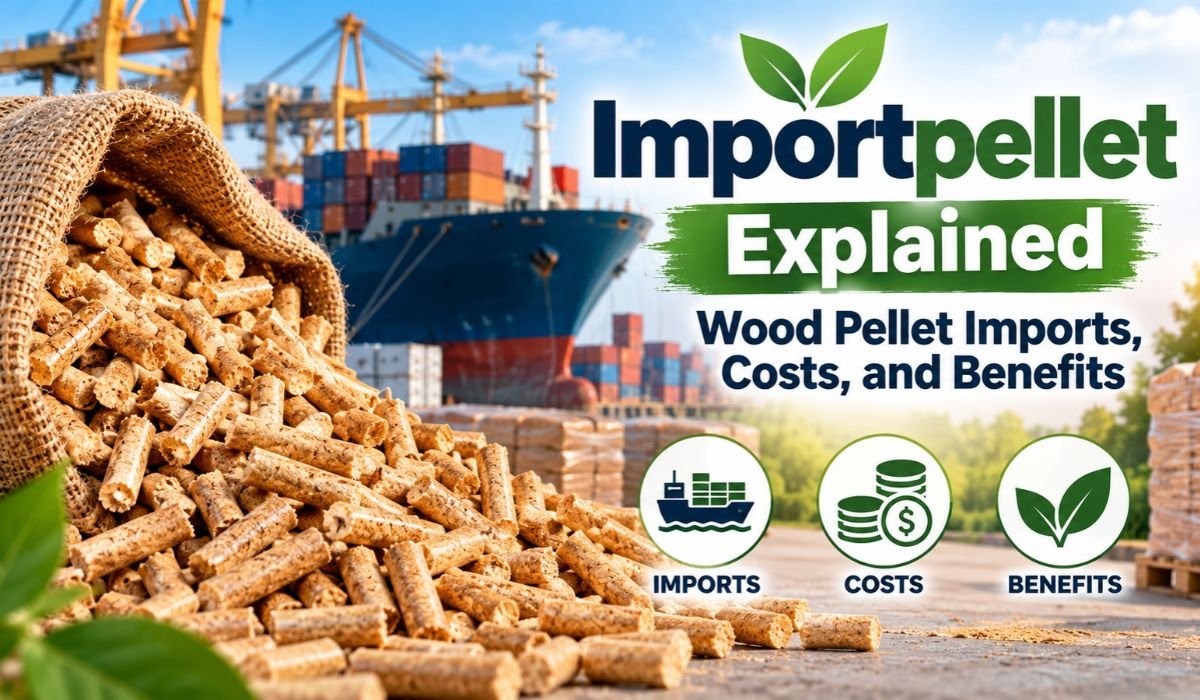
As energy costs change and industries search for dependable fuel sources, wood pellets have become an important part of the global energy market. These small, compressed pieces of wood are used in household heating systems, commercial boilers, and industrial facilities. Their convenient size, consistent fuel properties, and suitability for automated equipment make them attractive to many energy users.
Importpellet is a term associated with the international trade of wood pellets. It covers the process of purchasing biomass fuel from overseas suppliers, arranging transportation, checking quality, and delivering products to buyers. However, successful importing requires more than finding an affordable manufacturer. Businesses must consider shipping expenses, quality standards, customs requirements, and environmental responsibility.
This guide explains how Importpellet works in 2026, including its benefits, costs, quality requirements, common challenges, and role in sustainable energy.
Quick Bio Information About Importpellet
| Information | Details |
|---|---|
| Main Term | Importpellet |
| General Meaning | International Importing of Pellet Products |
| Main Product | Wood Pellets |
| Industry | Biomass Fuel and Energy |
| Common Raw Materials | Sawdust, Wood Shavings, Woody Residues |
| Manufacturing Method | Drying and Compression |
| Main Applications | Heating and Industrial Energy |
| Residential Equipment | Pellet Stoves and Boilers |
| Commercial Equipment | Biomass Heating Boilers |
| Industrial Applications | Large Energy Installations |
| Important Standard | ISO 17225-2 |
| Quality Certification | ENplus |
| Common Quality Classes | A1, A2, and B |
| Main Quality Factors | Moisture, Ash, Durability, Dimensions |
| Shipping Methods | Bulk Cargo and Containers |
| Major Cost Factors | Product, Freight, Duties, Delivery |
| Main Storage Concern | Moisture and Gas Accumulation |
| Sustainability Consideration | Responsible Sourcing and Lifecycle Emissions |
What Is Importpellet?
Importpellet generally refers to importing pellet products, particularly compressed wood pellets used as biomass fuel. It is a descriptive term rather than a universally recognized international certification or officially established trading system.
Wood pellets are manufactured from suitable woody materials, including sawdust, wood shavings, and forestry residues. These materials are processed into small cylindrical pieces that can be stored, transported, and burned in compatible heating equipment.
International pellet importing connects manufacturers in producing countries with businesses and energy users in importing markets. Buyers may include fuel distributors, heating companies, industrial facilities, and energy producers.
The main purpose of Importpellet is to help buyers obtain suitable wood pellets from international suppliers while managing quality, pricing, and delivery requirements.
How Wood Pellets Are Manufactured
Wood pellet production begins with collecting suitable raw materials. Manufacturers commonly use sawdust, wood-processing residues, and other approved woody feedstocks. The material must be prepared carefully because moisture, particle size, and contamination can affect the finished product.
During manufacturing, wood is dried to an appropriate moisture level and ground into smaller particles. The prepared material passes through a pellet mill, where pressure and friction help compress it into dense cylinders. Natural lignin in the wood contributes to binding the particles together.
After compression, pellets are cooled and screened to remove excess dust and broken material. They are then packaged in bags or prepared for bulk transportation.
Well-controlled manufacturing helps produce pellets with consistent dimensions, mechanical durability, and heating performance. These characteristics are especially important when pellets are used in automated heating systems.
Why Wood Pellet Imports Matter
Wood pellet imports help connect regions with substantial manufacturing capacity to markets where demand exceeds available domestic supply.
The United States and Canada are established pellet-producing and exporting countries. European and Asian markets also play important roles in international biomass trade, although production and consumption patterns differ between countries.
Importing gives buyers access to additional manufacturers, product grades, and purchasing arrangements. It can also help businesses diversify their suppliers instead of depending entirely on domestic production.
However, international sourcing is not automatically cheaper. Freight charges, currency changes, customs costs, and delivery distances can reduce the financial advantage of imported fuel.
Businesses should therefore compare the complete cost and reliability of imported pellets with suitable local alternatives.
Types of Wood Pellets Available for Import
Imported wood pellets are generally selected according to their intended use and technical specifications.
Residential heating pellets are designed for household pellet stoves and smaller boilers. These systems often require consistent dimensions, low ash content, and limited dust to operate efficiently.
Commercial pellets serve larger heating installations, including buildings and facilities with centralized heating systems. Their requirements depend on the equipment manufacturer’s specifications.
Industrial-grade pellets are used in larger energy installations. Some industrial systems can handle fuel characteristics that would be unsuitable for residential appliances.
Pellets may also be produced from hardwood or softwood. Neither type is automatically superior. Moisture content, heating value, ash levels, and durability are usually more meaningful indicators of fuel performance.
Choosing the correct grade helps prevent equipment problems and unnecessary maintenance expenses.
How the Importpellet Process Works
The Importpellet process begins with identifying reliable manufacturers or exporters. Buyers should review production capacity, company history, product specifications, and previous trading experience before requesting quotations.
After selecting potential suppliers, importers can request representative samples and independent laboratory reports. These checks help establish whether the product meets the required quality standards.
The purchase agreement should clearly define pellet grade, quantity, acceptable tolerances, packaging, payment conditions, inspection procedures, and delivery schedules.
Shipping responsibilities must also be agreed upon. International contracts commonly use Incoterms such as FOB and CIF to allocate particular costs, risks, and responsibilities.
Once the shipment arrives, customs procedures and any required inspections must be completed before final delivery.
Careful planning throughout this process reduces the likelihood of damaged goods, unexpected expenses, and commercial disputes.
Understanding Wood Pellet Quality Standards
Quality standards help buyers compare wood pellets using measurable characteristics rather than marketing claims.
ISO 17225-2 provides specifications and quality classes for graded wood pellets. The ENplus certification scheme establishes additional requirements for certified products and relevant supply-chain activities.
ENplus A1 pellets generally have stricter ash requirements than A2 and B classes. Under established ENplus specifications, A1 pellets have a maximum ash content of 0.70% on a dry basis, compared with 1.20% for A2. Buyers should check the current applicable requirements before ordering.
Moisture content is equally important because excessive moisture can reduce useful heating performance and damage pellets during storage.
Mechanical durability indicates how well pellets resist breaking during handling. Pellet dimensions and fines content also influence feeding systems and transportation performance.
Independent testing and certification verification provide stronger evidence of quality than supplier descriptions alone.
Importpellet Costs and Wood Pellet Prices
Importpellet costs depend on several connected factors, including manufacturing expenses, product grade, shipment size, transportation distance, and destination requirements.
Raw material availability affects production costs. Energy consumption, labor, drying requirements, and packaging also influence the manufacturer’s selling price.
International freight can represent a significant expense, particularly for smaller orders. Port handling, insurance, customs charges, and inland transportation add further costs.
For example, consider a hypothetical shipment with a product cost of $180 per metric ton, freight of $35, insurance of $3, and additional destination expenses of $22. The total landed cost would be $240 per metric ton.
These figures are illustrative rather than current market quotations.
Importers should also compare fuel prices according to usable energy content, not simply weight. A cheaper pellet with lower heating value or unsuitable quality may deliver poorer overall value.
Benefits of Importpellet for Businesses
One major benefit of Importpellet is access to a wider range of suppliers. Businesses can compare manufacturers across different markets and select products that match their heating equipment and purchasing requirements.
International sourcing may offer competitive prices when production conditions and transportation arrangements are favorable.
Another advantage is supply diversification. Businesses that depend on continuous fuel deliveries may reduce disruption risks by maintaining relationships with more than one qualified supplier.
Wood pellets also offer practical handling benefits. Their standardized shape supports automated feeding systems, while their relatively consistent properties make fuel planning easier.
Nevertheless, these advantages depend on reliable contracts, appropriate storage, and consistent product quality. Importing should be evaluated as a complete supply-chain decision rather than a simple opportunity to purchase inexpensive fuel.
International Shipping and Storage
Wood pellets are commonly transported internationally in bulk cargoes or shipping containers. The preferred method depends on shipment volume, port facilities, storage infrastructure, and delivery requirements.
Bulk transportation can be practical for large industrial orders, while containers may suit smaller commercial shipments.
Moisture protection is essential throughout transportation. When pellets absorb water, they can swell, break apart, and lose their original structure.
Storage also presents important safety considerations. Wood pellets can release carbon monoxide and other gases, particularly in enclosed spaces. Dust accumulation may create fire or explosion hazards under certain conditions.
Professional handling procedures, suitable ventilation, atmospheric monitoring where required, and appropriate fire prevention measures are important.
Workers should never enter enclosed pellet storage spaces without following applicable confined-space safety procedures.
Environmental Impact and Sustainability
Wood pellets are often discussed as a renewable energy source because their raw materials originate from biological resources. However, renewable feedstock does not automatically guarantee sustainable energy production.
Environmental performance depends on forest management, feedstock origin, manufacturing energy, transportation, and combustion emissions.
Using suitable wood-processing residues can provide value from materials that might otherwise have limited applications. However, sourcing practices that damage forests or increase pressure on natural ecosystems can undermine environmental benefits.
International transportation also contributes emissions that must be considered when evaluating imported biomass.
Responsible buyers should request reliable sourcing information and review relevant sustainability certification or traceability documentation.
Wood pellet combustion releases carbon dioxide and air pollutants. Any climate benefit must be evaluated through appropriate lifecycle accounting and comparison with realistic alternative energy sources.
Common Challenges in the Wood Pellet Import Industry
International pellet importing involves commercial, technical, and logistical risks.
Supplier reliability is a major concern. Some manufacturers may struggle to maintain consistent production volumes or deliver products matching agreed specifications.
Shipping delays can occur because of port congestion, transportation disruptions, documentation errors, or adverse weather conditions.
Unexpected charges may also increase purchasing costs. Currency fluctuations, freight changes, and destination fees can affect profitability after a contract has been negotiated.
Quality problems create additional difficulties. Excessive moisture, poor durability, or unsuitable pellet dimensions can cause operational problems for customers.
Environmental regulations and sourcing requirements may differ between markets.
Businesses can reduce these risks through careful supplier verification, clear contracts, independent inspections, realistic delivery planning, and appropriate insurance arrangements.
How to Choose a Reliable Wood Pellet Supplier
Choosing a trustworthy supplier is one of the most important decisions in the Importpellet process.
Buyers should begin by verifying the manufacturer’s legal identity, business history, production facilities, and ability to supply the required quantity.
Product documentation should include relevant technical specifications and recent laboratory results. Any certification claims should be checked against the issuing organization’s records.
Comparing quotations requires attention to more than price. Pellet grade, shipment quantity, packaging, delivery terms, and quality tolerances should be consistent across offers.
Importers should also confirm payment security, inspection rights, and procedures for resolving disputes.
For unfamiliar suppliers, a smaller trial shipment may provide useful evidence of product consistency and delivery reliability before entering a larger purchasing agreement.
Common Mistakes to Avoid When Importing Wood Pellets
One frequent mistake is selecting a supplier solely because of a low advertised price. Cheap pellets may become expensive when transportation, quality problems, or unexpected charges are considered.
Another mistake is overlooking equipment compatibility. A pellet suitable for an industrial installation may not work properly in a household stove.
Buyers sometimes accept certification claims without checking their authenticity or relevance to the specific shipment.
Poorly written contracts can also create disputes over delivery dates, damaged goods, and rejected products.
Inadequate storage planning presents another risk because moisture exposure and unsafe handling can damage inventory or endanger workers.
The best approach is to verify specifications, calculate complete costs, document responsibilities, and confirm that suitable storage facilities are available before ordering.
The Future of Importpellet in 2026
The future of Importpellet depends on energy demand, international trade conditions, manufacturing developments, and environmental policy.
Wood pellets continue to serve established heating and industrial energy applications, but their future demand will vary across countries and sectors.
Some markets may support biomass use under specific sustainability requirements, while others may favor electrification or different low-emission energy technologies.
Manufacturers are also likely to face continued pressure to improve product consistency, energy efficiency, and supply-chain transparency.
For importers, reliable documentation and traceable sourcing are becoming increasingly important commercial considerations.
Rather than assuming uninterrupted market growth, businesses should monitor regional regulations, freight conditions, customer requirements, and competing energy technologies.
Final Thoughts
Importpellet represents an important part of international wood pellet trading, connecting biomass manufacturers with businesses and energy users across different markets.
Successful importing requires more than comparing prices. Buyers need to understand fuel specifications, supplier reliability, transportation arrangements, customs requirements, and safe storage practices.
Quality verification and responsible sourcing are particularly important because they affect both fuel performance and environmental outcomes.
For businesses considering imported wood pellets in 2026, the most sensible approach is to compare total landed costs, confirm equipment compatibility, and work with suppliers who provide reliable documentation.
When these factors are managed carefully, international wood pellet sourcing can become a practical option within a broader energy and procurement strategy.
FAQs About Importpellet
What Does Importpellet Mean?
Importpellet generally describes the international importing of pellet products, particularly compressed wood pellets used for heating and industrial energy. It is not, by itself, a recognized global quality certification.
What Are Imported Wood Pellets Used For?
Imported wood pellets are used in residential pellet stoves, commercial heating boilers, and industrial energy facilities. Their suitability depends on the pellet grade and the technical requirements of the equipment.
How Much Does Importpellet Cost?
Costs vary according to pellet quality, order quantity, manufacturing location, freight charges, customs expenses, and destination. Buyers should calculate total landed cost rather than relying only on the supplier’s quoted price.
How Can Buyers Check Wood Pellet Quality?
Buyers can review laboratory reports, verify applicable certifications, inspect representative samples, and compare specifications with standards such as ISO 17225-2. Independent shipment inspections can provide additional assurance.
What Is the Difference Between ENplus A1 and A2 Pellets?
ENplus A1 pellets have stricter quality requirements for certain characteristics, particularly ash content. A2 pellets permit higher ash levels and may be suitable for compatible heating equipment.
Which Countries Export Wood Pellets?
The United States and Canada are established international exporters. Other countries also participate in wood pellet production and trade. Export volumes and major destinations can change with market conditions.
Are Imported Wood Pellets Environmentally Friendly?
Their environmental impact depends on raw material sourcing, forest management, manufacturing, transportation, and combustion. Sustainable sourcing and credible lifecycle assessment are essential when evaluating environmental benefits.
How Should Imported Wood Pellets Be Stored?
Wood pellets should be kept dry in suitable storage facilities protected from water exposure. Storage areas also require appropriate safety measures because pellets can release carbon monoxide and generate combustible dust. Enclosed storage spaces should be managed according to relevant safety procedures.
Learn more and explore exciting content on: AmCoder Explained: Features, Benefits, and How It Works











Leave a Reply