
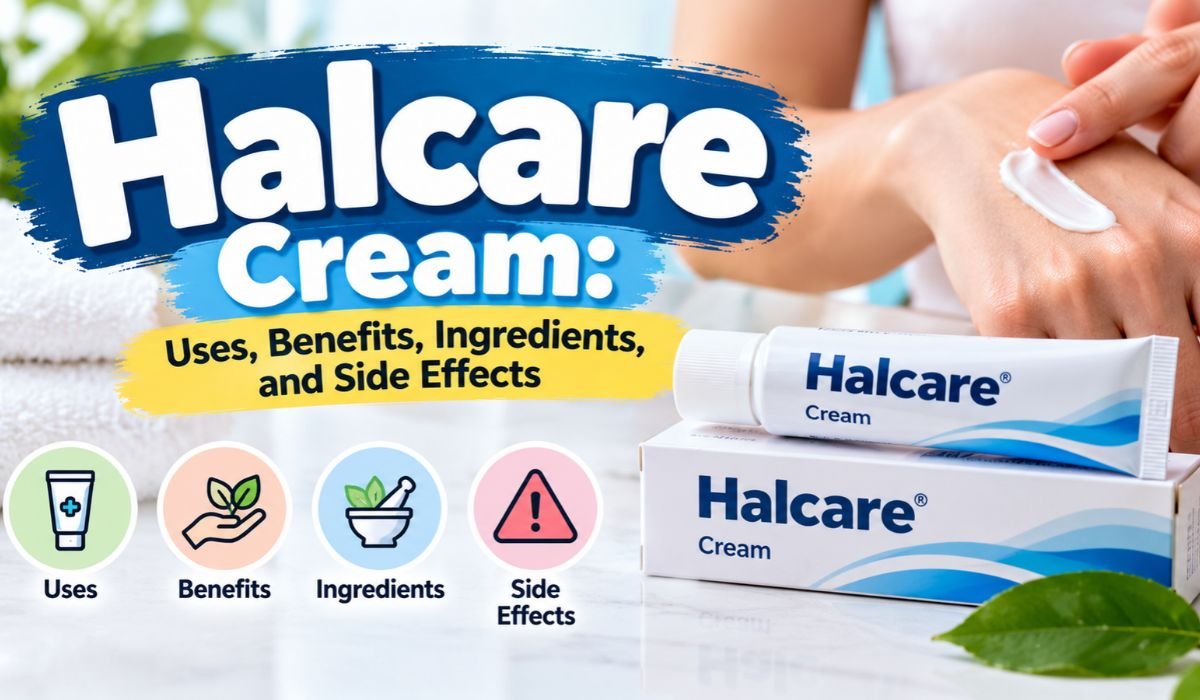
Dry feet, rough heels, and cracked skin can make everyday life uncomfortable. These problems are especially concerning for people with diabetes, who need to pay extra attention to their foot health. Using a suitable moisturizer can help keep the skin soft, comfortable, and protected from excessive dryness. Halcare Cream is one product designed for this purpose.
Halcare Cream contains moisturizing ingredients such as urea, glycerin, aloe vera, and cocoa butter. These ingredients work in different ways to improve skin hydration and soften rough areas. The cream is associated with diabetic foot care, although it is not a treatment for diabetes or serious foot conditions.
Understanding Halcare Cream uses, benefits, ingredients, and side effects can help you decide whether it suits your skincare needs. This guide explains how the cream works, how to apply it, and what precautions to follow for healthier feet in 2026.
Quick Bio Information About Halcare Cream
| Product Information | Details |
|---|---|
| Product Name | Halcare Cream |
| Manufacturer | Halberd Pharmaceuticals |
| Manufacturer Country | India |
| Product Type | Topical Moisturizing Cream |
| Main Purpose | Dry Skin and Foot Care |
| Common Uses | Dry Feet, Rough Heels, and Skin Moisturizing |
| Key Ingredient | Urea |
| Moisturizing Ingredient | Glycerin |
| Botanical Ingredient | Aloe Vera |
| Emollient Ingredient | Cocoa Butter |
| Protective Ingredients | Dimethicone and Petroleum Jelly |
| Other Ingredients | Zinc Oxide, Vitamin E, and L-Arginine |
| Application Area | Dry, Intact Skin on Feet |
| Diabetic Foot Care | May Support Skin Moisturizing |
| Application Frequency | Follow Product Label |
| Possible Side Effects | Irritation, Redness, Itching, or Rash |
| Main Precaution | Avoid Open Wounds Without Medical Advice |
| Availability | Indian Pharmaceutical Market |
What Is Halcare Cream?
Halcare Cream is a topical moisturizing product listed by Halberd Pharmaceuticals, an Indian pharmaceutical company. Its formulation contains several ingredients commonly used to manage dry, rough, and thickened skin.
Unlike a basic moisturizer containing only a few ingredients, Halcare combines humectants, emollients, and protective substances. These components help attract moisture, soften the skin, and reduce water loss.
The cream is often discussed in connection with diabetic foot care because people with diabetes may experience excessive dryness around their feet and heels. However, Halcare is primarily a skincare product. It does not control blood sugar, reverse nerve damage, or treat diabetic foot ulcers.
How Does Halcare Cream Work?
Healthy skin contains natural moisture that keeps it flexible and comfortable. When this moisture decreases, the skin may become tight, flaky, or rough. In severe cases, hard skin around the heels can develop painful cracks.
Halcare Cream addresses dryness through ingredients that perform different moisturizing functions. Urea and glycerin help the outer skin layers retain water, while cocoa butter and petroleum-based ingredients soften the skin.
Dimethicone also helps create a protective barrier that limits moisture loss. This combination may improve the appearance and texture of dry feet when used consistently.
The effectiveness of Halcare depends on individual skin conditions and its complete formulation. Although its ingredients have recognized skincare properties, specific clinical evidence demonstrating the finished cream’s effectiveness is limited.
Halcare Cream Ingredients and Their Benefits
The ingredient list is one of the most important things to understand before choosing Halcare Cream. Its manufacturer lists urea, glycerin, aloe vera, cocoa butter, zinc oxide, vitamin E, L-arginine, dimethicone, and several supporting ingredients.
Urea is particularly useful in moisturizers for thick, dry skin. At suitable concentrations, it helps attract water and soften hardened surface layers. Glycerin also supports hydration by drawing moisture into the outer skin.
Aloe vera provides skin-conditioning properties, while cocoa butter helps improve softness. White petroleum jelly and liquid paraffin reduce moisture loss by forming a protective layer.
Zinc oxide serves a skin-protective function, and vitamin E is used for its antioxidant and conditioning properties. L-arginine is an amino acid included in the formula, although its specific benefits in Halcare have not been established through published product trials.
The formula also contains propylene glycol, fatty alcohols, preservatives, and perfume. These help with texture, stability, and product performance. People with fragrance sensitivities should review the ingredients carefully.
Main Uses of Halcare Cream
Halcare Cream is mainly intended for moisturizing dry and rough skin, particularly around the feet. Its combination of hydrating and softening ingredients makes it relevant for several common skincare concerns.
People with dry feet may use Halcare to reduce tightness and flaking. Those with rough heels may find that moisturizing helps improve skin flexibility and comfort.
The cream may also help soften thickened skin caused by dryness and repeated pressure. However, heavily callused areas sometimes require professional foot care rather than moisturizer alone.
Another common use is supporting a daily foot moisturizing routine for people with diabetes. In this situation, Halcare should be applied only where appropriate and should never replace medical care for ulcers, infections, or circulation problems.
Key Benefits of Halcare Cream for Skin Health
The main potential benefit of Halcare Cream is improved skin hydration. Properly moisturized skin generally feels softer and more flexible than skin that has become excessively dry.
Urea and glycerin help maintain water within the outer skin layers, while emollients reduce roughness. Protective ingredients may help limit further moisture loss throughout the day.
Regular moisturizing can also improve skin comfort, particularly for people who spend long hours standing or wearing shoes.
Another potential advantage is support for the skin’s natural barrier. A healthy barrier helps protect against everyday environmental irritation and water loss.
These are expected benefits based on the cream’s ingredients, not guarantees. Halcare should not be described as a clinically proven treatment for infections, ulcers, or other serious foot conditions.
Halcare Cream for Diabetic Foot Care
Foot care is particularly important for people living with diabetes. Persistently high blood sugar can contribute to nerve damage and reduced circulation, increasing the risk of foot complications.
Nerve damage may reduce normal sweating and moisture production in the feet, making skin dry and more likely to crack. Some people also lose sensation, which means they may not notice small injuries.
Halcare Cream may support diabetic foot care by moisturizing dry, intact skin. However, preventing serious complications requires much more than applying cream.
The American Diabetes Association’s 2026 care standards emphasize daily foot inspections, appropriate moisturizers, and professional foot assessments. People with diabetes should also wear comfortable, well-fitting footwear and avoid treating calluses themselves.
Anyone with an ulcer, unexplained swelling, unusual warmth, or spreading redness should seek prompt medical attention.
Halcare Cream for Cracked Heels
Cracked heels develop when the skin around the heel becomes dry, thick, and less flexible. Pressure from walking or standing can cause this hardened skin to split.
Factors such as open-backed footwear, prolonged standing, and inadequate moisturizing may contribute to the problem.
Halcare contains urea and glycerin, which may help soften dry skin and improve hydration. Petroleum jelly and cocoa butter can further support moisture retention.
For mild surface dryness, regular moisturizing may improve comfort and reduce roughness. However, deep cracks require greater care, especially if they bleed or become painful.
People with diabetes should not attempt to cut away hard skin or use strong chemical callus removers without professional guidance.
How to Use Halcare Cream Correctly
Proper application matters when using any foot moisturizer. Start by washing your feet gently with mild soap and warm water. Avoid very hot water because it can worsen dryness or cause burns, particularly when sensation is reduced.
Dry your feet carefully using a clean towel. Pay special attention to the spaces between your toes.
Apply Halcare Cream gently to dry areas of intact skin, following the directions on its packaging. The heels and other rough areas are common application sites.
People with diabetes should generally avoid applying moisturizer between their toes because trapped moisture may encourage fungal infections.
There is no verified universal application schedule for Halcare, so follow the label or advice from your healthcare professional. Stop using the product if it causes irritation.
How Long Does Halcare Cream Take to Work?
The time required to notice improvement depends on the condition of your skin, the product formulation, and how consistently it is used.
Some moisturizing creams make skin feel softer shortly after application. However, improving persistent roughness or dryness may take longer because the skin needs repeated care to maintain hydration.
Mild dryness may respond differently from thickened heels or long-standing skin problems. Footwear, environmental conditions, and underlying medical conditions may also influence results.
Halcare’s manufacturer does not provide sufficient published clinical evidence to promise a specific improvement timeline.
If dryness continues, cracks worsen, or new symptoms develop, seek medical advice rather than simply applying larger amounts of cream.
Possible Side Effects of Halcare Cream
Like other topical skincare products, Halcare Cream may cause unwanted reactions in some individuals.
Possible side effects include redness, itching, mild burning, irritation, or a skin rash. These reactions may occur because of sensitivity to one or more ingredients.
The formula contains perfume and preservatives, which can trigger reactions in susceptible people. Urea-containing products may also sting when applied to damaged or severely cracked skin.
If irritation appears, stop using the cream and gently clean the affected area. Seek professional advice if symptoms continue or become worse.
Severe allergic reactions are uncommon but require immediate attention. Difficulty breathing or swelling involving the face, lips, or throat is a medical emergency.
Precautions Before Using Halcare Cream
Before applying Halcare Cream, check its packaging, ingredients, and expiry date. Avoid the product if you know you are allergic to any ingredient.
Do not apply it directly to deep cuts, open wounds, infected skin, or diabetic ulcers unless a healthcare professional specifically recommends it.
People with poor circulation, reduced foot sensation, or a previous diabetic foot ulcer should discuss suitable skincare products with their doctor or podiatrist.
Children and individuals with certain skin conditions may also require medical guidance. Pregnant or breastfeeding individuals who are uncertain about the formula should consult a healthcare professional.
Remember that a moisturizer can support skin comfort, but it cannot diagnose or treat the underlying cause of persistent skin changes.
Who Can Use Halcare Cream?
Halcare Cream may be suitable for adults experiencing uncomplicated dryness, rough heels, or thickened skin who want a moisturizing product.
People who spend much of their day standing may experience dry, uncomfortable heels and could benefit from an appropriate foot care routine.
Individuals with diabetes may also use suitable moisturizers on healthy, unbroken skin. However, their foot condition should determine whether Halcare is appropriate.
People with sensitive skin should be particularly careful because the formula includes fragrance and several preservatives.
Those experiencing unexplained itching, persistent scaling, fungal infections, or painful skin changes should obtain a diagnosis before assuming ordinary dryness is responsible.
Halcare Cream vs Regular Foot Moisturizers
Halcare Cream differs from some basic moisturizers because its formulation includes urea alongside glycerin, protective ingredients, and emollients.
A simple petroleum jelly-based moisturizer mainly helps reduce water loss. Urea-containing moisturizers can provide additional softening effects, depending on the concentration used.
However, a more complicated ingredient list does not automatically make a cream better.
For mild dryness, a basic fragrance-free moisturizer may be sufficient. People with sensitive skin may even prefer simpler formulations.
Choosing between Halcare and another foot cream should depend on skin condition, ingredient tolerance, cost, and professional recommendations when necessary.
There is no reliable head-to-head evidence establishing Halcare as superior to other foot moisturizers.
Daily Foot Care Tips for People With Diabetes
A consistent foot care routine is one of the most valuable ways to support long-term foot health.
Check your feet every day for changes in color, swelling, blisters, cuts, or cracked skin. Use a mirror to examine the soles if bending is difficult.
Wash your feet with warm water, dry them completely, and moisturize dry areas without applying cream between the toes.
Wear comfortable shoes and clean socks. Avoid walking barefoot, even indoors, because minor injuries may go unnoticed when sensation is reduced.
Never cut corns or calluses yourself. Regular professional foot examinations are particularly important for people with neuropathy or circulation problems.
Good diabetes management, appropriate footwear, and early treatment of injuries remain essential, regardless of which moisturizer you choose.
Halcare Cream Price and Availability
Halcare Cream is listed by Halberd Pharmaceuticals in India and may be available through pharmaceutical retailers and online medical stores.
A 100 ml package has been mentioned in retail information, but pack sizes, prices, and stock can change. Current pricing should be checked directly with a reputable seller before purchasing.
Always inspect the packaging for an intact seal, manufacturer information, batch number, and expiry date.
Avoid damaged or expired products, and compare the ingredient information on the purchased package with the manufacturer’s current formulation.
Price alone should not determine your choice. Product suitability, authenticity, and safe application are more important than simply selecting the cheapest option.
Final Thoughts
Halcare Cream is a moisturizing skincare product formulated with urea, glycerin, aloe vera, cocoa butter, and other ingredients that support skin hydration and softness.
Its main potential benefits relate to dry feet, rough heels, and everyday moisturizing. It may also play a supporting role in diabetic foot care when used appropriately on intact skin.
However, Halcare is not a treatment for diabetes, infections, or foot ulcers. Anyone experiencing significant cracking, unexplained swelling, or persistent foot problems should seek professional advice.
Healthy feet require more than a single cream. Regular skin care, suitable footwear, daily inspections, and timely medical attention are equally important.
Frequently Asked Questions About Halcare Cream
What Is Halcare Cream Used For?
Halcare Cream is primarily used to moisturize dry, rough skin, especially around the feet and heels. Its ingredients help retain moisture and soften thickened skin. It is also associated with diabetic foot care but should not be used as a treatment for ulcers or infections.
Is Halcare Cream Good for Diabetic Feet?
Halcare may help moisturize dry, intact skin in people with diabetes. However, suitability depends on individual foot health. Anyone with poor circulation, nerve damage, open sores, or previous diabetic foot ulcers should seek professional advice before use.
Can Halcare Cream Help With Cracked Heels?
Halcare contains moisturizing ingredients that may improve dryness and soften rough skin around mild heel cracks. Deep, bleeding, painful, or infected cracks need medical assessment, particularly in people with diabetes.
Can I Use Halcare Cream Every Day?
Daily moisturizing may be appropriate for uncomplicated dry skin, but application frequency should follow the product label or a healthcare professional’s instructions. Avoid applying it between the toes or onto open wounds without medical advice.
Does Halcare Cream Have Side Effects?
Some users may experience redness, itching, burning, irritation, or allergic reactions. The product contains fragrance and preservatives that can cause sensitivity in certain individuals. Stop application if irritation develops and seek advice if symptoms persist.
How Long Does Halcare Cream Take to Show Results?
Results vary depending on skin condition and application habits. Some people may notice temporary softness soon after moisturizing, but persistent dryness can require continued care. No specific improvement timeline has been clinically established for Halcare Cream.
Does Halcare Cream Contain Urea?
Yes. Urea appears in the ingredient formulation published by Halberd Pharmaceuticals. It is a moisturizing ingredient that can also soften thickened skin. However, the manufacturer does not clearly disclose its exact concentration in the publicly available formulation.
Is Halcare Cream Suitable for Sensitive Skin?
Suitability depends on individual ingredient tolerance. Because Halcare contains perfume and preservatives, some people with sensitive skin may experience irritation. Review the full label and seek professional guidance if you have a history of allergic skin reactions.
Learn more and explore exciting content on: labeleu Explained: Features, Benefits, and EU Compliance Guide











Leave a Reply