
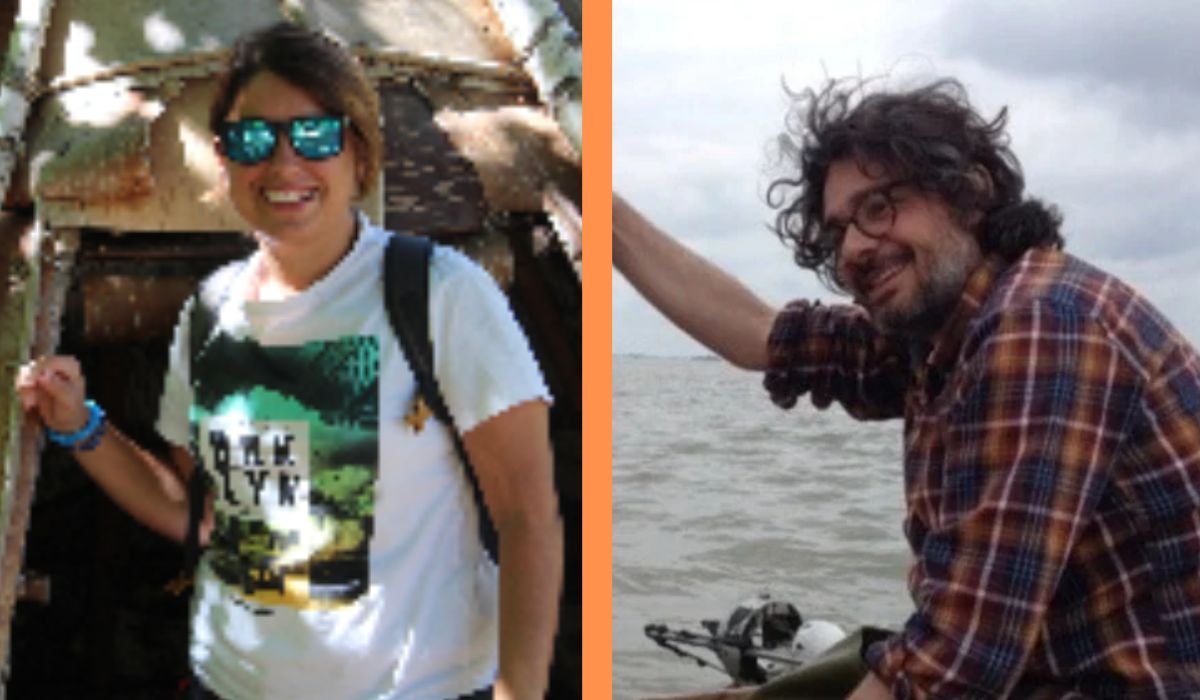
Daniele Brigolin is an Italian academic and researcher whose work connects Ecology, Environmental Science, Marine Ecosystems, and Sustainable Planning. He is associated with Iuav University of Venice, where his academic activity focuses on understanding how natural ecosystems respond to human activity and environmental change. His research is particularly relevant to coastal areas, aquaculture, ecosystem services, and the Venice Lagoon. Rather than studying Ecology only from a theoretical point of view, Daniele Brigolin has spent much of his career applying scientific models to real environmental problems. His publications explore questions such as how aquaculture affects marine environments, how coastal ecosystems function, and how ecological knowledge can support better environmental decisions. By 2026, his research profile reflects years of work across universities, international collaborations, and multidisciplinary environmental projects.
Quick Bio Information
| Information | Details |
|---|---|
| Full Name | Daniele Brigolin |
| Profession | Academic, Ecologist, and Researcher |
| Current Institution | Iuav University of Venice |
| Department | Department of Culture del Progetto |
| Academic Area | Ecology |
| Main Field | Environmental and Ecological Science |
| Research Specialty | Ecological Modelling |
| Major Research Area | Marine and Coastal Ecology |
| Key Environmental Focus | Venice Lagoon |
| Aquaculture Interest | Sustainable Marine Aquaculture |
| Additional Field | Ecosystem Services |
| Planning Interest | Marine Spatial Planning |
| Environmental Focus | Human–Ecosystem Relationships |
| Research Approach | Mathematical and Ecological Modelling |
| PhD Field | Environmental Sciences |
| PhD Institution | Ca’ Foscari University of Venice |
| Main Geographic Focus | Mediterranean Coastal Environments |
| Academic Activities | Research, Teaching, and Scientific Collaboration |
Who Is Daniele Brigolin?
Daniele Brigolin is best known for his academic work in Ecology and for research that combines environmental science with quantitative modelling. He works with ecological systems that are affected by many interacting forces, including climate conditions, food production, coastal development, fisheries, and human settlement. His profile at Iuav University of Venice places him within the Department of Culture del Progetto. The university’s institutional research archive contains around 70 research records associated with him, showing a substantial body of scientific work. His research is especially useful because it connects ecological understanding with practical management. Instead of simply describing an ecosystem, his work often asks how scientists can model its behavior and use those results to improve planning and sustainability.
Education And Environmental Science Background
Daniele Brigolin’s academic development is closely connected with Environmental Sciences. He completed doctoral-level studies at Ca’ Foscari University of Venice, where his research interests developed around marine systems, aquaculture, and ecological modelling. His PhD work helped establish themes that would continue throughout his later career, particularly the relationship between food-production activities and surrounding ecosystems. Environmental Science is naturally interdisciplinary, bringing together Biology, Chemistry, Ecology, Mathematics, and environmental management. This combination is visible in Brigolin’s later research. His work does not treat environmental problems as isolated biological questions. Instead, it often studies how physical processes, organisms, human activities, and management decisions interact within one connected system.
Beginning Of His Research Career
Brigolin’s early scientific work already showed a strong interest in models that could describe complicated marine environments. Records of his research date back to the 2000s, including work related to modelling seasonal changes in seagrasses in the Venice Lagoon. Later studies examined aquaculture impacts, sediment processes, fish production, and marine ecosystems. This progression is important because it shows continuity in his scientific interests. Over time, his research moved from individual ecological processes toward broader questions involving ecosystem services, environmental management, and planning. His career therefore represents more than a collection of separate studies. Much of his work follows one central question: how can ecological science provide useful information for managing environments where natural processes and human activities exist together?
Academic Career At Ca’ Foscari University
Before his current role at Iuav University of Venice, Daniele Brigolin developed an important part of his academic career at Ca’ Foscari University of Venice. His work there included Ecology research involving biodiversity, coastal environments, environmental sustainability, and the effects of human activities on natural systems. The university environment also gave him opportunities to combine research with teaching and collaboration. Venice offers a particularly meaningful setting for this type of work because the city and its lagoon form a complex social and ecological system. Tourism, fisheries, aquaculture, navigation, urban development, conservation, and climate-related pressures all interact within the same region. Studying Ecology in this setting allows researchers such as Brigolin to examine environmental questions that have both scientific and practical importance.
Daniele Brigolin At Iuav University Of Venice
At Iuav University of Venice, Daniele Brigolin’s work sits at an interesting meeting point between Ecology and Planning. Iuav is strongly associated with Architecture, Urban Studies, Design, and spatial planning, meaning ecological research can directly support questions about how territories should be managed. Brigolin’s institutional affiliation is with the Department of Culture del Progetto. His role gives him the opportunity to connect ecological knowledge with disciplines concerned with cities, landscapes, coastlines, and environmental decision-making. This is especially valuable today because sustainable planning requires more than designing physical spaces. Planners increasingly need to understand biodiversity, ecosystem resilience, climate risks, natural resources, and the environmental consequences of human development.
Main Research Interests
Daniele Brigolin’s research covers several connected fields, but Ecological Modelling is one of the clearest themes running through his academic work. He has also studied Marine Ecology, Coastal Ecosystems, Aquaculture, Ecosystem Services, environmental assessment, food webs, sediment processes, and Marine Spatial Planning. These subjects may sound different, but they are strongly connected. Aquaculture depends on healthy marine ecosystems. Coastal planning affects habitats and ecosystem services. Climate change can alter food webs and water conditions. Human activity can change the way sediments, nutrients, and organisms interact. Brigolin’s research often brings these processes together, helping scientists and planners understand not only what is happening within an ecosystem but also what may happen when environmental conditions or human pressures change.
Ecological Modelling And Its Importance
Ecological Modelling uses mathematical relationships and computer-based methods to represent how ecosystems work. In simple terms, researchers build models that help them study processes that would be difficult to observe completely in the real world. Brigolin has used modelling approaches in areas such as fish growth, aquaculture impacts, ecosystem services, sediment processes, and coastal management. A model can help scientists test different possibilities without physically changing an ecosystem. For example, researchers may examine what could happen if aquaculture production increases or if climate conditions change. Models are not predictions with perfect certainty. Their value comes from organizing scientific information into a framework that can be tested, compared, and improved. This makes modelling particularly helpful for environmental planning, where decisions often need to be made before every future condition is known.
Marine And Coastal Ecology
Marine and Coastal Ecology form another major part of Daniele Brigolin’s research profile. Coastal environments are among the most heavily used ecosystems in the world because they support settlements, transport, tourism, fishing, aquaculture, recreation, and wildlife. These competing uses create difficult management questions. Brigolin’s research examines the ecological side of these challenges, particularly in Mediterranean environments. His published work has considered aquaculture suitability, ecosystem functioning, shellfish farming, fish production, and coastal environmental pressures. This research matters because marine management cannot focus on only one activity. A location that appears suitable for aquaculture, for example, may also contain valuable habitats or support fishing and conservation. Ecological research helps reveal these connections before management decisions are made.
Research On The Venice Lagoon
The Venice Lagoon holds a particularly important place in Daniele Brigolin’s research. It is a highly complex coastal ecosystem shaped by centuries of human activity while still supporting significant biological diversity and ecosystem services. Brigolin has contributed to research examining ecological functioning, sediments, food webs, shellfish, fish growth, and environmental management in the lagoon. One published study examined early diagenetic processes in Venice Lagoon sediments and their relationship with Hypoxia, a condition in which dissolved oxygen becomes unusually low. His research has also contributed to discussions about how ecological models can support lagoon management. Recent work associated with his research profile continues this direction, including modelling ecosystem services in the Venice Lagoon under climate and demographic pressures.
Aquaculture And Environmental Sustainability
Aquaculture is one of the strongest and most consistent themes in Brigolin’s scientific career. Marine aquaculture produces fish, shellfish, and other aquatic organisms, but its environmental effects depend heavily on where and how farms operate. Brigolin’s research has explored methods for evaluating these effects and improving sustainability. His publications include work on farm-scale aquaculture models, finfish site suitability, mussel farming, oyster growth, and shellfish carbon budgets. This research demonstrates why aquaculture cannot be judged only by how much food it produces. Scientists also need to understand nutrient release, sediment effects, carrying capacity, interactions with wild species, and competition for marine space. Modelling provides one way to bring these factors together and evaluate potential consequences before management choices are finalized.
Shellfish Farming And Carbon Research
An interesting part of Daniele Brigolin’s more recent research concerns shellfish farming and carbon. He has contributed to studies evaluating the carbon dynamics of species such as clams and mussels. A 2021 research output examined a bioenergetic model for assessing the carbon sequestration potential of Manila clam farming in the Venice Lagoon. Later research also explored the CO2 budget of mussel farms across the Mediterranean Sea. These topics are increasingly important because claims about the environmental benefits of food-production systems need to be supported by careful scientific accounting. Shellfish can interact with carbon in several ways through growth, shell formation, respiration, harvesting, and ecosystem processes. Research of this type helps create a more detailed picture rather than simply describing shellfish farming as environmentally positive or negative.
Ecosystem Services And Nature-Based Thinking
Ecosystem Services are the benefits that people receive from natural systems, including food production, water regulation, recreation, coastal protection, habitat support, and cultural value. Brigolin has worked on research connecting ecological models with the assessment of these services. In a 2023 contribution concerning lagoon management, he and his colleagues discussed how modelling can help identify management measures for the Venice Lagoon. This approach is increasingly relevant to Nature-Based Solutions, where natural processes are considered part of responses to environmental and social challenges. Instead of treating ecosystems as empty spaces available for development, ecosystem-service research asks what those environments already provide and what may be lost or improved under different management choices.
Marine Spatial Planning And Management
Marine Spatial Planning is essentially a way of organizing activities taking place at sea and along coasts. Fisheries, aquaculture, conservation zones, shipping, tourism, renewable energy, and other uses can compete for the same space. Daniele Brigolin’s research contributes to this field by providing ecological information that can inform those decisions. His work on aquaculture site suitability and protected marine environments shows how ecological modelling can support spatial planning. The goal is not simply to identify where an activity can physically fit. Good planning also asks whether an activity is environmentally suitable, how it may interact with existing uses, and whether important ecosystems could be affected. This combination of Ecology and Planning is particularly relevant to Brigolin’s position at Iuav.
International Research And Scientific Collaboration
Modern environmental problems rarely fit within national borders, and Brigolin’s academic profile reflects an international approach to research. Throughout his career, he has collaborated with researchers from different institutions and participated in European research activities concerning aquaculture, marine ecosystems, conservation, and environmental planning. His publication record contains studies involving Mediterranean locations beyond Italy, including work related to Algeria, Morocco, and broader Mediterranean aquaculture systems. International collaboration is valuable in Ecology because coastal environments share many pressures while still having important local differences. Comparing methods and results across regions allows researchers to understand which solutions may work broadly and which need to be adapted to specific ecological and social conditions.
Publications And Academic Contribution
Daniele Brigolin has developed a substantial publication record covering more than two decades of ecological research. The current Iuav institutional archive lists around 70 research records connected with his profile. Rather than focusing only on the number of publications or citations, the themes across this work provide a clearer picture of his contribution. His research repeatedly connects scientific modelling with practical environmental problems. Topics range from seagrass and fish growth to aquaculture impacts, ecosystem functioning, coastal management, carbon budgets, and ecosystem services. This broad but connected body of work shows how Ecology can support evidence-based planning. His contribution is especially relevant in regions such as Venice, where protecting ecological systems must be balanced with human settlement, economic activities, food production, and changing climate conditions.
Teaching And The Wider Value Of His Work
Teaching is an important part of an academic career because research becomes more valuable when scientific knowledge is shared with future researchers and professionals. At Iuav, Brigolin’s ecological expertise fits within an educational environment where environmental knowledge can influence planning, landscape management, and sustainability. Students working in planning-related fields increasingly need to understand how ecosystems function because environmental decisions can have consequences lasting for decades. Brigolin’s research provides practical examples of this relationship. The Venice Lagoon, aquaculture sites, protected marine areas, and coastal ecosystems can all serve as real-world cases showing why ecological evidence matters when societies decide how to use land and water.
Why Daniele Brigolin’s Research Matters In 2026
The relevance of Daniele Brigolin’s work is particularly clear in 2026, when climate change, biodiversity loss, sustainable food production, and coastal resilience remain major environmental challenges. His current research record includes a 2026 study concerning a process-based model for multiple ecosystem services in the Venice Lagoon under climate-change and demographic pressures. This illustrates how his longstanding interests in modelling and lagoon ecology continue to address present-day concerns. Coastal environments need management approaches that account for both ecological processes and human needs. Brigolin’s career demonstrates how scientists can contribute by building tools that help explain environmental systems, compare possible management choices, and make uncertainty easier to understand.
Conclusion
Daniele Brigolin has built an academic career around understanding the relationship between Ecology, human activity, and environmental management. From his Environmental Sciences background to his work at Ca’ Foscari University and Iuav University of Venice, Ecological Modelling has remained a central part of his research. His studies of the Venice Lagoon, Marine Aquaculture, Coastal Ecology, Ecosystem Services, shellfish production, and Marine Spatial Planning show a consistent interest in applying science to practical problems. What makes his research especially valuable is its interdisciplinary nature. It connects biological processes with food systems, planning, climate pressures, and human decisions. As environmental challenges become more complex, this type of integrated ecological research is increasingly important for creating coastal systems that can remain productive, resilient, and environmentally healthy.
FAQs About Daniele Brigolin
Who Is Daniele Brigolin?
Daniele Brigolin is an Italian academic and Ecology researcher associated with Iuav University of Venice. His work focuses mainly on Ecological Modelling, Marine and Coastal Ecology, Aquaculture, Ecosystem Services, and environmental management.
Where Does Daniele Brigolin Work?
Daniele Brigolin works at Iuav University of Venice and is affiliated with its Department of Culture del Progetto. His work connects Ecology with environmental and spatial-planning questions.
What Did Daniele Brigolin Study?
His advanced academic training is in Environmental Sciences. He completed PhD-level study at Ca’ Foscari University of Venice, with research interests closely connected to aquaculture sustainability and ecological modelling.
What Does Daniele Brigolin Research?
His main research areas include Ecological Modelling, Marine Ecology, Coastal Ecosystems, Aquaculture, Ecosystem Services, Marine Spatial Planning, environmental assessment, and human–ecosystem interactions.
Why Is The Venice Lagoon Important To His Work?
The Venice Lagoon serves as an important real-world system for Brigolin’s research. He has contributed to studies involving lagoon ecosystem functioning, sediment processes, aquaculture, food webs, ecosystem services, and environmental management.
Has Daniele Brigolin Researched Aquaculture?
Yes. Aquaculture is one of the most established themes of his career. His research has addressed fish farming, shellfish farming, farm-scale models, environmental impacts, aquaculture site suitability, and carbon dynamics.
What Is Ecological Modelling In His Research?
Ecological Modelling uses mathematical and computational methods to represent ecosystem processes. Brigolin has applied these approaches to questions involving aquaculture, coastal ecosystems, fish growth, environmental impacts, and ecosystem services.
Why Is Daniele Brigolin’s Work Important?
His work helps connect ecological knowledge with practical environmental decisions. By studying how ecosystems respond to aquaculture, climate pressures, human activity, and management choices, his research can contribute to more informed and sustainable coastal planning.
Learn more and explore exciting content on: Aw Ai Ti Biography: Career, Research, and Contributions to AI










Leave a Reply