
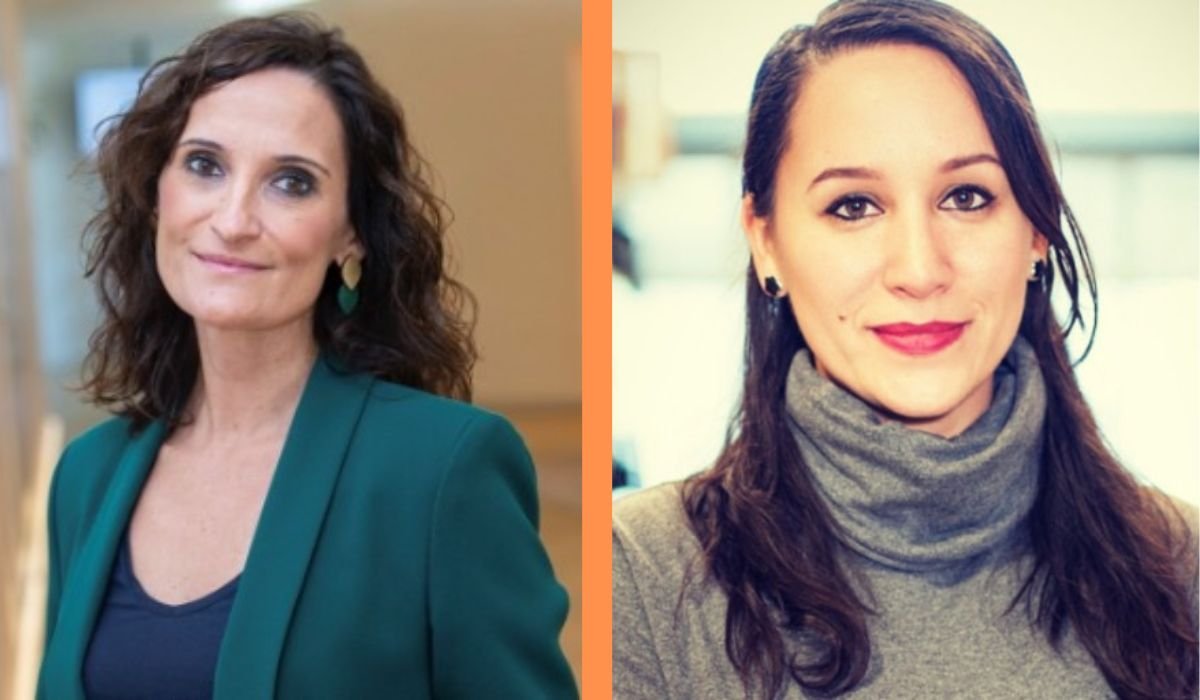
Ferrer Torres, better known professionally as Daysha Ferrer Torres, PhD, is a biomedical scientist whose work brings together Gastroenterology, Cancer Biology, Stem Cell Research, and Human Organoid Technology. She currently serves as an Assistant Professor in Medicine-Gastroenterology at the University of Colorado Anschutz Medical Campus. Her research is especially focused on understanding the human esophagus, how esophageal tissue responds to injury, and how long-term cellular changes may contribute to diseases including cancer. By 2026, her work has developed from basic laboratory science into a broader research program using patient-derived models to study human disease in ways that may eventually support better prevention, diagnosis, and treatment.
Quick Bio Information
| Quick Bio | Information |
|---|---|
| Full Name | Daysha Ferrer Torres |
| Professional Name | Daysha Ferrer Torres, PhD |
| Field | Biomedical Science |
| Current Position | Assistant Professor |
| Department | Medicine-Gastroenterology |
| Institution | University of Colorado Anschutz Medical Campus |
| Undergraduate Degree | BS |
| Undergraduate Institution | University of Puerto Rico System |
| BS Year | 2011 |
| Graduate Degree | PhD |
| Graduate Institution | University of Michigan |
| PhD Year | 2017 |
| Postdoctoral Field | Cell And Developmental Biology And Cancer Biology |
| Postdoctoral Institution | University of Michigan |
| Research Focus | Esophageal Biology And Disease |
| Research Methods | Stem Cells, Organoids And Human Tissue Models |
| Languages | English And Spanish |
| Major Recognition | MOSAIC Scholar, NIDDK-AAMC |
| Current Research Leadership | Head Of The Esophagogastric Laboratory |
Who Is Ferrer Torres?
Daysha Ferrer Torres is a scientist rather than a physician providing routine clinical care. Her career is built around laboratory and translational research designed to answer important questions about how human tissues develop, remain healthy, respond to injury, and change during disease. At CU Anschutz, she is part of the Division of Gastroenterology and Hepatology. University materials also identify her with the Katy O. and Paul M. Rady Esophageal and Gastric Center of Excellence, connecting her research directly with a multidisciplinary effort to understand diseases affecting the esophagus and stomach. Her scientific background makes her work unusually interdisciplinary because it connects cell biology, developmental biology, cancer research, Gastroenterology, and newer human-model systems.
Education And Academic Foundation
Ferrer Torres began her university education in Puerto Rico. According to her official faculty profile, she earned a Bachelor of Science from the University of Puerto Rico System in 2011. She later continued her education at the University of Michigan, one of the major research universities in the United States, where she completed her PhD in 2017. This progression gave her the scientific foundation needed for a career that requires expertise in molecular processes, cell behavior, experimental design, disease mechanisms, and advanced laboratory models. Her university profile does not publicly identify her date of birth or age, so reliable biographical coverage should focus on her documented academic and professional record rather than speculate about private details.
PhD Training At The University Of Michigan
Her years at the University of Michigan became an important part of the Ferrer Torres research story. The institution provided a setting where Cancer Biology, Gastroenterology, surgery, developmental science, genetics, and tissue research could intersect. One of her notable early studies examined biological differences in esophageal tissue and reported higher levels of GSTT2 in tissues from African Americans, linking this factor with protection against DNA damage. The paper appeared in Gastroenterology and helped establish an important theme that would continue in her later research: understanding why disease biology and tissue responses may differ among populations rather than assuming every patient’s tissue behaves identically.
Postdoctoral Research And Scientific Development
After completing her doctorate, Ferrer Torres continued at the University of Michigan for postdoctoral training involving Cell And Developmental Biology And Cancer Biology. Her official CU profile records the fellowship through 2023. Postdoctoral training is a particularly important stage for scientists because it allows them to develop specialized methods and move toward independent research. For Ferrer Torres, this period involved advanced human tissue models, stem-cell biology, disease mechanisms, and organoid research. It also helped connect her previous cancer expertise with a growing interest in the structure and behavior of the human esophagus.
Mapping The Human Esophagus
One of Ferrer Torres’s most significant publications is the 2022 study “Mapping the Adult Human Esophagus In Vivo And In Vitro,” on which she was first author. The researchers created a detailed reference of cell populations found in the normal adult human esophagus and developed a biobank of patient-derived cultures. The work identified different epithelial cell populations and compared laboratory-grown tissue with cells found in the body. Importantly, researchers demonstrated that esophageal cultures could be maintained as two-dimensional systems or as three-dimensional organoids. This created a valuable platform for studying the human esophagus without depending entirely on animal models.
What Organoid Research Means
Organoids are small, three-dimensional laboratory-grown tissue structures that reproduce selected characteristics of real organs. They are not complete miniature organs, but they can reproduce important cell types, organization, and biological responses. This makes them especially useful when scientists want to observe human tissue under controlled conditions. Ferrer Torres’s work uses patient-derived esophageal organoids to investigate questions that may be difficult to answer with conventional cell cultures. Modern research increasingly sees esophageal organoids as valuable tools for disease modeling, drug screening, cancer research, and regenerative science, although researchers must still account for limitations such as incomplete tissue environments and variation between culture methods.
Research On Esophageal Injury And Population Differences
A major part of Ferrer Torres’s independent research concerns differences in how esophageal tissues respond to injury. NIH records for her K99/R00 project describe the use of an ancestrally diverse stem-cell and organoid biobank together with high-content imaging to investigate injury responses. The project was motivated in part by differences observed in rates of esophageal damage, metaplasia, and esophageal adenocarcinoma among population groups. Rather than treating race itself as a simple biological cause, this research uses human cell models to investigate molecular and genetic factors that may contribute to observed differences. The broader goal is to understand disease mechanisms more precisely and eventually help build more representative biomedical models.
Ferrer Torres And Esophageal Cancer Research
Cancer Biology remains closely connected to Ferrer Torres’s work. CU Anschutz states that her laboratory studies how esophageal diseases may progress toward cancer using patient-derived organoids. This approach can help researchers observe how cells change after repeated injury and investigate pathways involved in abnormal tissue development. Esophageal adenocarcinoma is particularly important in this research area because it can develop after a sequence of tissue changes, including Barrett’s Esophagus in some patients. Understanding the molecular steps behind that progression may help scientists identify biological markers or processes that can eventually be targeted earlier in disease development.
Mutant P53 And Cancer Biology
Ferrer Torres has also contributed to research involving P53, one of the most widely studied proteins in Cancer Biology. P53 normally plays an important role in controlling damaged or abnormal cells, while certain mutations can disrupt those protective functions. A 2024 Molecular Cancer Research paper co-authored by Ferrer Torres examined how GRAIL1 can stabilize misfolded mutant P53 through a mechanism involving chaperone regulation rather than its expected ubiquitin-ligase function. Her earlier collaborations also explored mutant P53 during the progression of Barrett’s Esophagus toward esophageal adenocarcinoma. Together, these studies show how her work connects detailed molecular mechanisms with larger questions about cancer development.
Research On Eosinophilic Esophagitis
Her publication record extends beyond cancer. Ferrer Torres contributed to a 2023 study in the Journal of Allergy and Clinical Immunology examining Eosinophilic Esophagitis, often shortened to EoE. This chronic inflammatory condition affects the esophagus and can cause symptoms such as difficulty swallowing. The research investigated how IL-13 activates STAT3-dependent signaling networks involved in the proliferation of esophageal epithelial cells. This type of work helps explain disease at a cellular level: instead of simply observing inflammation, researchers investigate the signaling instructions that cause esophageal cells to behave differently during disease.
Work With Human Liver Organoids
Although Ferrer Torres is strongly associated with esophageal research, her collaborative scientific work has also included other organoid systems. She co-authored a 2023 Journal of Hepatology study evaluating human liver organoids as a platform for predicting Drug-Induced Liver Injury, or DILI. Researchers tested organoids in high-throughput screening and organ-on-chip environments to study responses to compounds known to harm the liver. The research demonstrated the broader usefulness of advanced human models: rather than relying only on simple cell lines, scientists can use more complex systems that reproduce aspects of human organ function and potentially improve early drug-safety research.
MOSAIC Scholar Recognition
In 2022, Ferrer Torres was recognized as a MOSAIC Scholar through NIDDK-AAMC. MOSAIC is connected with the NIH K99/R00 career-development pathway, which helps promising postdoctoral scientists transition toward independent faculty research careers. Her NIH-supported project reflects that transition clearly. The K99 phase supported additional training, while the R00 phase supports development of an independent research program. This recognition is important not simply as an award on a résumé, but because it provided a structured path for Ferrer Torres to develop expertise, mentorship, leadership ability, and an independent research direction centered on human esophageal disease.
Awards And Scientific Communication
Ferrer Torres has received recognition at several stages of her scientific career. Her CU profile lists the Early Career Award from the Society for In Vitro Biology in 2021, an honor designed to recognize early-career scientists contributing significantly to in vitro biology or related technology. She was also recognized as a Distinguished Alumni of the University of Michigan’s Cancer Biology program in 2019. In 2018, she received a Postdoc 180 award for Scientific Communication. The latter is especially interesting because modern scientists need more than technical ability. Explaining complex research clearly to fellow researchers, students, patients, funders, and the public is increasingly important for turning laboratory discoveries into meaningful impact.
Leadership At CU Anschutz
Ferrer Torres’s career has now moved beyond postdoctoral science into research leadership. Her official profile lists her as Associate Director of Research and Innovation at the Rady Center of Excellence, while 2026 CU Anschutz materials identify her as Head of the Esophagogastric Laboratory. The university has also described her as a principal investigator within the Rady Esophageal and Gastric Center of Excellence. These responsibilities place her in a position to build research programs, mentor developing scientists, establish collaborations, and connect laboratory findings with wider clinical and translational questions involving gastroesophageal disease.
Why Ferrer Torres’s Research Matters
The value of Ferrer Torres’s work lies in the way it links fundamental biology with real human disease. Traditional laboratory models cannot always reproduce the diversity of human tissue or explain why patients respond differently to injury. Patient-derived organoids offer another layer of information because they allow researchers to preserve important biological features while carrying out controlled experiments. Ferrer Torres’s emphasis on diverse human tissue models is particularly relevant as biomedical science moves toward more representative research and precision medicine. Her work does not promise immediate cures, but it helps establish the biological knowledge and experimental tools from which better disease prevention, drug testing, and personalized approaches may eventually grow.
Ferrer Torres In 2026
As of 2026, Daysha Ferrer Torres represents a generation of investigators combining several fields rather than remaining inside one narrow scientific specialty. Her work spans Gastroenterology, Cancer Biology, Stem Cell Science, Organoid Technology, tissue injury, molecular signaling, and translational research. Her progression from the University of Puerto Rico to doctoral and postdoctoral work at the University of Michigan and then to an independent faculty and laboratory leadership role at CU Anschutz also illustrates the long training pathway behind modern biomedical research. Just as importantly, her work increasingly asks not only how disease develops, but whether differences among human populations can be studied more accurately using diverse patient-derived models.
Final Thoughts
The Ferrer Torres biography is primarily the story of a scientist working to make laboratory models more closely reflect real human biology. Daysha Ferrer Torres has built her career around questions involving the esophagus, tissue injury, inflammation, cancer development, stem cells, and organoids. Her academic record, NIH-supported research, peer-reviewed publications, and leadership at CU Anschutz show a steady development from scientific training toward an independent research program. As human organoid systems continue to improve, her work on diverse patient-derived esophageal models could become increasingly relevant to understanding why gastroesophageal diseases develop differently from one person to another.
FAQs About Ferrer Torres
Who Is Ferrer Torres?
Ferrer Torres refers to Daysha Ferrer Torres, PhD, a biomedical scientist and Assistant Professor in Medicine-Gastroenterology at the University of Colorado Anschutz Medical Campus. Her research focuses strongly on the human esophagus, organoids, tissue injury, and Cancer Biology.
Where Did Ferrer Torres Study?
She earned a BS from the University of Puerto Rico System in 2011 and a PhD from the University of Michigan in 2017. She later completed postdoctoral training at the University of Michigan involving Cell And Developmental Biology And Cancer Biology.
What Does Ferrer Torres Research?
Her research centers on human esophageal biology and disease, with particular attention to stem cells, patient-derived organoids, tissue injury, disease progression, Cancer Biology, and differences in biological responses among diverse populations.
Where Does Daysha Ferrer Torres Work?
As of 2026, she is an Assistant Professor in the Division of Gastroenterology and Hepatology at the University of Colorado Anschutz Medical Campus. CU materials also identify her as Head of the Esophagogastric Laboratory.
What Is Ferrer Torres Known For?
She is particularly known for research involving human esophageal models and organoids. Her first-author 2022 study mapped major cell populations in the adult human esophagus and developed patient-derived laboratory cultures for studying normal tissue and disease.
What Awards Has Ferrer Torres Received?
Her official faculty profile lists honors including MOSAIC Scholar recognition in 2022, the Society for In Vitro Biology Early Career Award in 2021, Distinguished Alumni recognition in 2019, and a Postdoc 180 Scientific Communication award in 2018.
Is Ferrer Torres A Medical Doctor?
The university identifies her as Daysha Ferrer Torres, PhD, rather than MD. Her professional work focuses on biomedical research and Gastroenterology-related science. Her PhD and postdoctoral training prepared her for an academic research career rather than routine clinical medical practice.
How Old Is Daysha Ferrer Torres?
Reliable university and research profiles reviewed for this biography do not publicly provide her date of birth or current age. For accuracy, an age should not be estimated or presented as fact without a trustworthy public source.
Learn more and explore exciting content on: Karoline Leavitt Biography: Age, Husband, Family, Career, and Life Story







Leave a Reply