
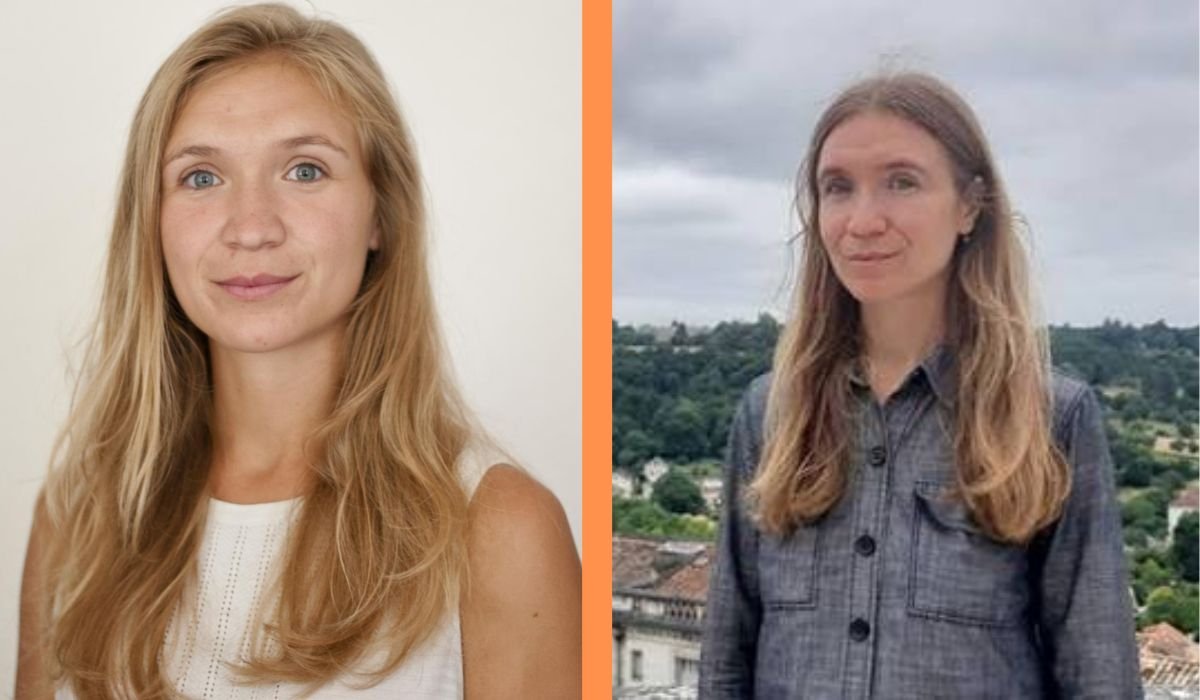
Marylou Gabrié is a researcher whose work brings together Machine Learning, Statistical Mechanics, Applied Mathematics, and Computational Physics. She is especially interested in a difficult problem shared by many areas of modern science: how to efficiently explore complex probability distributions when traditional computational methods become slow or unreliable. As of 2026, Gabrié is an Assistant Professor at the Laboratoire de Physique de l’École Normale Supérieure, commonly known as LPENS, and is also connected with the Centre de Science des Données at ENS. Her research is particularly focused on Generative Models and Sampling Problems, with applications that reach into Bayesian Inference, Molecular Simulation, and modern Artificial Intelligence. Her academic path has included doctoral research with leading Statistical Physics researchers, postdoctoral work in applied mathematics, a faculty position at École Polytechnique, and her present work at ENS.
Quick Bio Information
| Information | Details |
|---|---|
| Full Name | Marylou Gabrié |
| Profession | Academic Researcher And Assistant Professor |
| Current Institution | École Normale Supérieure |
| Current Laboratory | Laboratoire de Physique de l’ENS |
| Laboratory Abbreviation | LPENS |
| Academic Location | Paris, France |
| Main Field | Statistical Physics And Machine Learning |
| Research Area | Machine Learning |
| Research Area | Statistical Mechanics |
| Research Area | MCMC And Sampling |
| Research Interest | Generative Models |
| Related Field | Bayesian Inference |
| Previous Institution | École Polytechnique |
| Previous Research Center | Centre de Mathématiques Appliquées |
| Previous Position Period | 2022–2024 |
| PhD Collaborators And Supervisors | Florent Krzakala And Lenka Zdeborová |
| Postdoctoral Mentor | Eric Vanden-Eijnden |
| Current ENS Affiliation | Centre de Science des Données |
| Current Research Direction | Machine Learning For Computational Problems In Statistical Physics |
These details are based primarily on Gabrié’s official academic homepage and current ENS records.
Who Is Marylou Gabrié?
Marylou Gabrié is an academic scientist working at the meeting point of Physics and Artificial Intelligence. Rather than treating Machine Learning only as a tool for prediction or classification, she studies how learning algorithms can help solve difficult scientific computation problems. Her official profile describes her work as lying at the boundary between Machine Learning and Statistical Mechanics. This is important because Statistical Mechanics is concerned with understanding systems made of many interacting parts, while modern Machine Learning systems can also involve huge numbers of interacting variables. Gabrié studies mathematical and computational methods that can connect these two worlds. Her work is therefore relevant not only to physicists but also to researchers interested in probability, optimization, Bayesian Statistics, Generative AI, Molecular Science, and scientific computing.
Education And Academic Background
Marylou Gabrié’s academic development was strongly shaped by Physics, Mathematics, Statistical Mechanics, and computational methods. Public academic information about her focuses much more heavily on her scientific training and research than on personal biography. During her doctoral period, she worked with Florent Krzakala and Lenka Zdeborová, two researchers known for contributions to Statistical Physics, inference, and Machine Learning. That environment placed Gabrié close to research attempting to understand learning systems through mathematical and physical principles. Instead of approaching neural networks simply as practical software, this line of research asks deeper questions about why learning happens, how complex models behave, and whether concepts from Statistical Physics can explain their performance. Her later research continued naturally from this foundation, increasingly moving toward Sampling, Generative Models, and difficult computational problems.
PhD Research And Early Scientific Work
Gabrié’s PhD period played an important role in establishing the direction of her later career. Her work with Florent Krzakala and Lenka Zdeborová placed her within a research community using Statistical Mechanics to study Machine Learning. Early scientific questions in this area include understanding neural networks, high-dimensional inference, optimization, and the behavior of complex probabilistic systems. This background matters because many modern AI problems are high-dimensional: a model may contain millions or billions of parameters, while scientific probability distributions may depend on huge numbers of possible configurations. Physics provides tools for reasoning about similarly complicated systems. Gabrié’s early work therefore helped build a bridge between Statistical Physics and Machine Learning that remains visible in her current research. Her later publications on Sampling, Generative Models, Variational Inference, and Diffusion Models can be understood as extensions of this broad scientific interest.
Postdoctoral Research And Career Development
After her doctoral work, Marylou Gabrié continued her research as a postdoctoral researcher working with Eric Vanden-Eijnden. Vanden-Eijnden is known for work involving Applied Mathematics, stochastic processes, scientific computing, and rare events, making this stage particularly relevant to Gabrié’s developing interest in advanced Sampling Problems. Postdoctoral research often gives scientists an opportunity to expand beyond the methods used during their PhD, and Gabrié’s later work shows a strong combination of Statistical Physics, Mathematical Modeling, and Machine Learning. Problems involving rare events, complicated energy landscapes, and difficult probability distributions require both theoretical understanding and practical algorithms. This combination became a recognizable feature of her research program and helped prepare the way for her later independent academic positions.
Academic Career At École Polytechnique
From 2022 to 2024, Marylou Gabrié served as an Assistant Professor at the Centre de Mathématiques Appliquées, or CMAP, at École Polytechnique. This position strengthened the applied mathematical side of her work while allowing her to continue developing research around Machine Learning and statistical systems. Her presence at École Polytechnique was not limited to specialist research. Institutional material from the university also records her giving a Machine Learning presentation during an outreach event encouraging girls to consider careers in Mathematics and Computer Science. During this period, her publications and scientific activity increasingly explored learned Sampling Methods, Molecular Simulation, and Generative Models. One 2024 paper, for example, studied Coarse-Grained Molecular Dynamics with Normalizing Flows, showing how modern Machine Learning architectures can contribute to molecular-level scientific computation.
Current Role At École Normale Supérieure
By 2026, Gabrié is an Assistant Professor at the Laboratoire de Physique de l’École Normale Supérieure in Paris. ENS lists her as an academic researcher in Statistical Physics, while her own homepage identifies her as both a member of LPENS and the Centre de Science des Données at ENS. The combination is significant because it reflects the interdisciplinary nature of her research. She works in a Physics environment but addresses problems directly connected with modern Data Science and Artificial Intelligence. The LPENS directory associates her with Statistical Physics and the Disordered Systems And Applications research group. This institutional setting gives her a natural base for studying complex probabilistic systems while maintaining strong connections with Machine Learning.
Machine Learning And Statistical Mechanics
The central idea behind much of Marylou Gabrié’s research is that Machine Learning and Statistical Mechanics can help each other. Statistical Mechanics was developed to understand how large collections of interacting particles produce larger-scale behavior. Machine Learning also deals with extremely complex systems containing many variables and interactions. Techniques from Physics can therefore provide useful ways of understanding learning algorithms, while Machine Learning can create new computational strategies for physical problems. Gabrié’s official research description emphasizes using Machine Learning methods to solve computational challenges in Statistical Physics. This makes her work different from mainstream commercial AI research. Her focus is not simply on creating applications for text, images, or consumer products. Instead, she studies the underlying mathematical and computational mechanisms that can help scientists explore complex systems more effectively.
MCMC And Sampling Research
Sampling is one of the most important themes in Marylou Gabrié’s work. In simple terms, Sampling means generating representative examples from a probability distribution. This sounds straightforward, but it becomes extremely difficult when a distribution has many separated regions, complex energy barriers, or an enormous number of dimensions. Markov Chain Monte Carlo, commonly shortened to MCMC, is one of the classic approaches to this problem. However, standard MCMC techniques can move slowly when a system becomes trapped in one region. Gabrié studies ways of making Sampling more efficient, including methods that combine traditional Monte Carlo ideas with learned representations. A 2026 paper co-authored by Gabrié examined efficient Monte Carlo Sampling of metastable systems using nonlocal collective-variable updates, directly addressing the problem of exploring systems that can remain trapped in long-lived states.
Generative Models And Normalizing Flows
Generative Models are another major part of Gabrié’s scientific interests. These Machine Learning systems learn the structure of a probability distribution and can then generate new samples that resemble the data or physical states used during training. Gabrié is particularly interested in whether these models can make challenging scientific Sampling tasks easier. Normalizing Flows are especially relevant because they transform relatively simple probability distributions into more complicated ones while maintaining a mathematically tractable relationship between them. In her work on Coarse-Grained Molecular Dynamics, Normalizing Flows were used as part of an approach for proposing changes to molecular configurations. This illustrates an important feature of Gabrié’s work: modern Machine Learning methods are not used only for prediction but are integrated directly into scientific simulation algorithms.
Diffusion Models And Variational Inference
Gabrié’s more recent work shows that she is also studying some of the most active theoretical areas in modern Generative AI. Her 2026 publication list includes research on Critical Slowing Down in Diffusion Models as well as work examining Annealing in Variational Inference and its ability to reduce Mode Collapse in Gaussian mixtures. Diffusion Models have become widely known because of their ability to generate complex data, but researchers are also interested in their mathematical behavior, efficiency, and limits. Mode Collapse is another important problem because a model may represent only some regions of a true distribution while missing others. Gabrié’s involvement in these questions demonstrates how her background in Statistical Mechanics provides a useful perspective on current Machine Learning theory.
Applications In Molecular And Computational Science
The practical value of Gabrié’s research becomes especially clear in Molecular Simulation. Molecules can adopt many different configurations, and scientists often need to understand which configurations are likely, how transitions occur, and how physical properties change. Directly exploring every possibility can be computationally expensive. Advanced Sampling Methods attempt to focus computing effort more effectively. Gabrié’s work on Normalizing Flows and collective variables explores how Machine Learning can support this task. These techniques could help researchers build more efficient simulation workflows while preserving the physical information needed for reliable scientific conclusions. Her research therefore demonstrates a broader trend in scientific Machine Learning: rather than replacing Physics, AI can be combined with physical knowledge to improve calculations that would otherwise be extremely demanding.
Publications And Scientific Contributions
Marylou Gabrié has developed a publication record covering Machine Learning theory, Statistical Physics, Sampling, Neural Networks, Generative Models, Molecular Dynamics, and related computational problems. Her 2026 publication list shows active work on Diffusion Models, Variational Inference, and Monte Carlo Sampling. Earlier publications similarly reflect her long-running effort to connect learning algorithms with physical and probabilistic systems. What makes this record especially interesting is its thematic consistency. Although the individual techniques change, many of the papers revolve around the same underlying challenge: how can researchers understand and efficiently explore complex high-dimensional systems? This question connects her earlier work on neural-network theory with her newer research on modern Generative Models and scientific Sampling.
Research Collaborations And Academic Community
Gabrié’s career has involved collaborations across Physics, Mathematics, Machine Learning, and computational science. Her doctoral work connected her with Florent Krzakala and Lenka Zdeborová, while her postdoctoral period involved Eric Vanden-Eijnden. More recent publications include collaborations with researchers working on Statistical Physics, computational chemistry, probabilistic inference, and advanced Sampling Methods. This interdisciplinary network matters because the problems she studies rarely belong to only one traditional academic field. Developing an improved Monte Carlo algorithm may require knowledge of Physics and numerical mathematics, while understanding Generative Models may require expertise in Probability and Machine Learning. Gabrié’s career illustrates how modern scientific research increasingly develops through collaboration between fields rather than inside narrow disciplinary boundaries.
Teaching And Scientific Mentorship
As an Assistant Professor, Marylou Gabrié’s role includes the wider academic responsibilities associated with research and higher education. Her public activities show involvement in teaching, scientific communication, and the academic community. During her time at École Polytechnique, she participated in an event aimed at encouraging young women to explore Mathematics and Computer Science, where she presented Machine Learning to students. At ENS, she works within an active Statistical Physics research environment containing doctoral students, postdoctoral researchers, and faculty members. Her academic role therefore extends beyond publishing papers: it also places her within the process of training researchers, communicating complex scientific ideas, and helping develop new work at the intersection of Machine Learning and Physics.
Achievements And Importance Of Her Work
Marylou Gabrié’s most meaningful achievements are best understood through the research program she has built rather than through a simple list of awards. She has established an academic career across respected French institutions, including École Polytechnique and École Normale Supérieure, while contributing to rapidly developing research areas such as Generative Modeling, MCMC, Statistical Machine Learning, and Molecular Simulation. Her work helps connect older and highly established ideas from Statistical Mechanics with newer Machine Learning techniques. That connection is increasingly important as AI becomes a scientific tool rather than only a technology for processing conventional data. By investigating when learned Sampling methods work, where they fail, and how they can be improved, Gabrié contributes to a deeper and more reliable understanding of Machine Learning in science.
Why Marylou Gabrié’s Research Matters In 2026
In 2026, scientific interest in Generative AI extends far beyond image or text generation. Researchers increasingly want to use Generative Models to explore molecules, materials, physical states, Bayesian probability distributions, and other systems that are difficult to simulate directly. This makes questions about Sampling quality, Mode Collapse, slow exploration, and theoretical reliability increasingly important. Gabrié’s recent research addresses precisely these problems. Her work on Diffusion Models studies their theoretical behavior, while her work on Variational Inference investigates how Annealing can help avoid incomplete representations of complex distributions. Her Monte Carlo research addresses metastability, another classic barrier to efficient Sampling. Together, these projects position her work within an important scientific effort to make Machine Learning not only powerful, but mathematically understood and dependable.
Final Thoughts
Marylou Gabrié has developed an academic career centered on one of the most interesting connections in modern science: the relationship between Machine Learning and Statistical Physics. From her doctoral research with Florent Krzakala and Lenka Zdeborová to her postdoctoral work with Eric Vanden-Eijnden, her position at École Polytechnique, and her current role at ENS, her career shows a consistent interest in difficult computational and probabilistic questions. In 2026, her work spans Monte Carlo Sampling, Generative Models, Diffusion Models, Variational Inference, Normalizing Flows, and Molecular Simulation. What makes Marylou Gabrié’s research particularly valuable is the way it combines theory with practical scientific computation. Instead of viewing Artificial Intelligence as separate from traditional science, her work demonstrates how Machine Learning, Mathematics, and Physics can strengthen one another when used carefully and thoughtfully.
Frequently Asked Questions About Marylou Gabrié
Who Is Marylou Gabrié?
Marylou Gabrié is an academic researcher and Assistant Professor at the Laboratoire de Physique de l’École Normale Supérieure in Paris. Her research combines Machine Learning with Statistical Mechanics and focuses particularly on Generative Models and Sampling Problems.
Where Does Marylou Gabrié Work?
As of 2026, Marylou Gabrié works at École Normale Supérieure, where she is affiliated with LPENS and the Centre de Science des Données. ENS also lists her within Statistical Physics.
What Does Marylou Gabrié Research?
Her main research areas include Machine Learning, Statistical Mechanics, MCMC, Generative Models, Sampling Methods, Bayesian Inference, and computational approaches relevant to physical and molecular systems.
Did Marylou Gabrié Work At École Polytechnique?
Yes. Gabrié states on her official academic homepage that she was an Assistant Professor at the Centre de Mathématiques Appliquées at École Polytechnique from 2022 to 2024.
Who Did Marylou Gabrié Work With During Her PhD?
Her official biography says she worked with Florent Krzakala and Lenka Zdeborová during her PhD. Both are well known for research connecting Statistical Physics, inference, and Machine Learning.
What Is MCMC In Marylou Gabrié’s Research?
MCMC, or Markov Chain Monte Carlo, is a family of techniques used to obtain samples from complicated probability distributions. Gabrié studies how such Sampling can be improved, particularly in systems where ordinary methods may become trapped or move too slowly.
Does Marylou Gabrié Study Diffusion Models?
Yes. Her 2026 publication list includes research examining Critical Slowing Down in Diffusion Models, showing that her current work includes theoretical questions related to modern Generative Models.
Why Is Marylou Gabrié’s Work Important?
Her research helps scientists understand how modern Machine Learning can improve difficult computational tasks in Physics and related sciences. By connecting Statistical Mechanics with Generative Models and advanced Sampling Methods, her work contributes to making scientific Machine Learning more efficient and theoretically understandable.
Learn more and explore exciting content on: David Patterson Biography: Life, Career, Education, and Achievements









Leave a Reply