
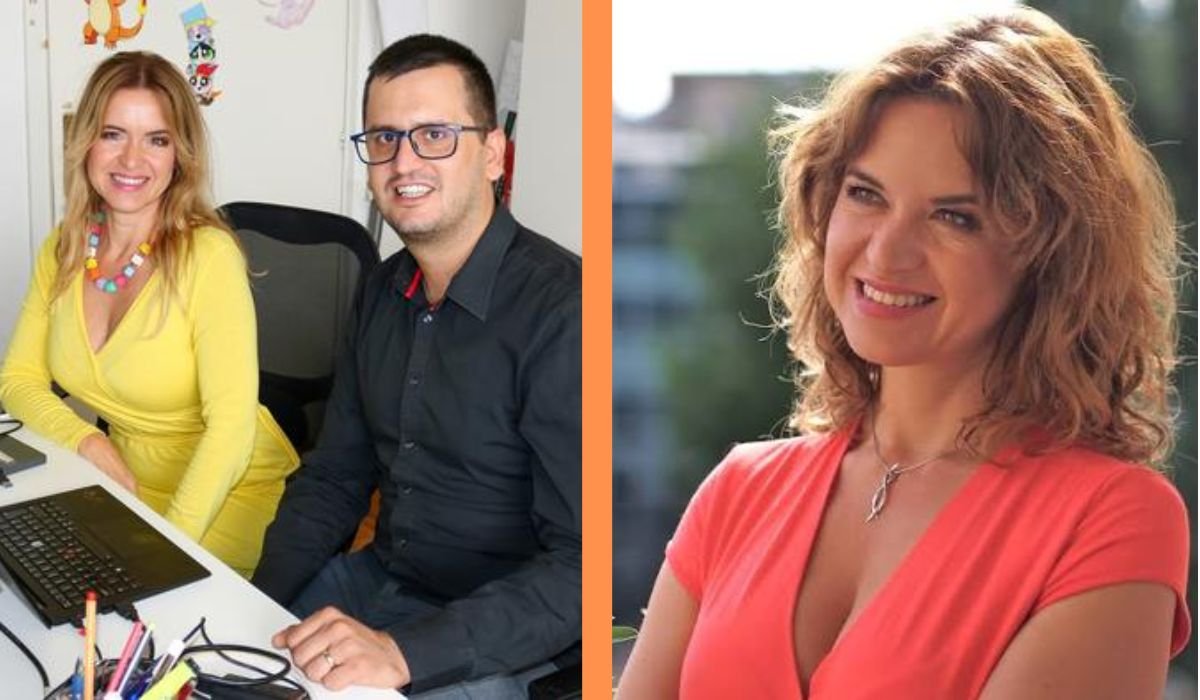
Iva Tolic is a Croatian scientist whose work has helped researchers understand one of the most important processes in biology: how cells divide. Known professionally as Iva Marija Tolić, she has built an international career in Cell Biology and Biophysics, with a special focus on Microtubules, Motor Proteins, Chromosomes, and the Mitotic Spindle. Her scientific journey has taken her from Zagreb to Harvard, Copenhagen, Florence, and the Max Planck Institute in Dresden before bringing her back to Croatia. Today, her work at the Ruđer Bošković Institute combines Biology with Physics, Mathematics, advanced Microscopy, and Computer Science. Rather than simply observing cells, Tolic and her collaborators try to understand the physical rules that allow cellular structures to move, organize, and divide with remarkable accuracy.
Quick Bio Information
| Bio Detail | Information |
|---|---|
| Full Name | Iva Marija Tolić |
| Known As | Iva Tolic |
| Date Of Birth | June 24, 1974 |
| Age In 2026 | 52 Years |
| Birthplace | Zagreb, Croatia |
| Nationality | Croatian |
| Profession | Scientist And Academic |
| Main Field | Biophysics And Cell Biology |
| Education | Molecular Biology |
| Alma Mater | University Of Zagreb |
| Doctorate | PhD In Biology, 2002 |
| Main Research | Mitosis And Cell Division |
| Research Interests | Microtubules, Motor Proteins, Mitotic Spindle, Cell Aging |
| Major Institution | Ruđer Bošković Institute |
| Previous Institution | Max Planck Institute Of Molecular Cell Biology And Genetics |
| Academic Position | Professor |
| EMBO Member | Since 2018 |
| Notable Award | Lieben Prize |
| Birth City And Current Research Base | Zagreb, Croatia |
Early Life And Background
Iva Tolic was born on June 24, 1974, in Zagreb. Her path toward science developed early. Official information from the Ruđer Bošković Institute records that she attended the Mathematical and Informatics Educational Centre in Zagreb and completed secondary school in 1992. Her talent for Mathematics had already become visible before university: the institute’s profile records first-place results in republic-level Mathematics competitions in 1988 and 1989. She also received the University of Zagreb Rector’s Award in 1994. This mathematical background is particularly interesting when viewed alongside her later career because modern Biophysics often requires researchers to think about cells not only as biological systems but also as physical and mathematical systems.
Education At The University Of Zagreb
Tolic studied Molecular Biology at the University of Zagreb and completed her diploma in 1996. She then continued her scientific training while working as a research assistant with Nenad Trinajstić at the Ruđer Bošković Institute. During this stage, she developed experience that connected Molecular Biology with quantitative scientific thinking. Her education eventually moved beyond traditional descriptions of biological processes. Questions about forces, movement, structure, and mechanics became increasingly important in her work, laying the foundation for her later specialization in Cell Biophysics.
PhD And Harvard Research
An important international step came when Iva Tolic conducted part of her doctoral work with Ning Wang at the Harvard School of Public Health in Boston between 1999 and 2001. Her doctoral research examined the physical organization of cells, including cellular force fields and Cytoskeletal tension. She ultimately earned her PhD in Biology from the University of Zagreb in 2002. This period is important for understanding her later research style. Instead of treating Biology and Physics as separate subjects, she learned to use quantitative approaches to investigate how cells behave mechanically. That interdisciplinary thinking would become one of the defining features of her scientific career.
Postdoctoral Scientific Training
After her doctoral research, Tolic expanded her knowledge through postdoctoral work in Europe. She trained at the Niels Bohr Institute in Copenhagen, where her work involved the Microrheology of cells. Microrheology helps researchers study the physical properties of very small or complex materials, including the interior of living cells. She later worked at the European Laboratory for Non-Linear Spectroscopy in Florence with Francesco Pavone. There, her research included Lymphocyte movement and Laser Microsurgery of the Mitotic Spindle. These experiences gave her access to methods that allowed researchers not only to image cellular structures but also to manipulate them and study how cells respond.
Career At The Max Planck Institute
Tolic later established herself as an independent researcher at the Max Planck Institute of Molecular Cell Biology and Genetics in Dresden, Germany. She spent about a decade there leading research in Cell Biology. This was a major period in her development as a scientist because she was able to build an independent research program around the mechanics of cellular organization. Her work increasingly focused on Microtubules, Motor Proteins, and Mitosis. Rather than asking only what structures exist inside a dividing cell, her research examined how those structures move, interact, generate forces, and coordinate with one another.
Return To Zagreb
After her years abroad, Iva Tolic returned to Zagreb and continued her career at the Ruđer Bošković Institute. By 2026, the institute identifies her as the head of the Laboratory of Cell Biophysics, a senior scientific adviser with permanent appointment, and a professor. Her return is an important part of her professional story because she brought extensive international research experience back to Croatia. She has also participated in university teaching and mentoring, helping connect laboratory research with the education of younger scientists. Her work demonstrates how a researcher can develop an international scientific network while maintaining a strong research base in her home country.
What Iva Tolic Researches
The central theme of Iva Tolic’s research is the Biophysics of Cell Division. Every time a cell divides, it must organize and distribute its chromosomes correctly. A temporary structure called the Mitotic Spindle plays a central role in this process. The spindle contains Microtubules, which are tiny protein-based tubes that can grow, shrink, move, and interact with chromosomes. Tolic’s laboratory investigates how these structures organize themselves and how forces inside the spindle allow chromosomes to move. Her team uses Cell Biology, Molecular Genetics, advanced Microscopy, Laser Microsurgery, theoretical models, and computational approaches to study these questions.
Microtubules And Chromosome Movement
Microtubules may be microscopic, but their role during cell division is enormous. Chromosomes must be correctly connected and separated so that the resulting cells receive the right genetic material. Tolic’s research has helped reveal how Microtubules search for and interact with structures called Kinetochores, which form on chromosomes. Work associated with her laboratory showed how Microtubule pivoting can contribute to Kinetochore capture during Mitosis. This offered researchers a more detailed view of how the spindle solves a difficult spatial problem: finding chromosomes inside a three-dimensional cellular environment and creating the connections needed for accurate separation.
Motor Proteins And Cellular Forces
Another important area of Iva Tolic’s research involves Motor Proteins. These molecular machines interact with cellular structures and help create movement and force. One Motor Protein studied in her research is Cytoplasmic Dynein. Research involving fission yeast provided insights into how Dynein activity can be controlled through interactions with proteins that anchor it within the cell. This type of work matters because cell division is not simply a passive process. The spindle is a dynamic mechanical system in which Microtubules, Motor Proteins, and other molecules constantly generate, resist, and balance forces.
Bridging Fibers And The Mitotic Spindle
One of the best-known themes of Tolic’s modern research is the study of Bridging Fibers. These structures are bundles of non-Kinetochore Microtubules that connect regions associated with sister K-Fibers within the Mitotic Spindle. Her laboratory’s research has helped explain how these fibers contribute to the organization and mechanical balance of the spindle. For a general reader, the easiest way to understand their importance is to imagine the spindle as a carefully engineered structure. Chromosomes cannot simply be pulled in opposite directions without coordination. Forces must be distributed and balanced. Bridging Fibers appear to form an important part of this mechanical organization.
A New View Of Spindle Architecture
Tolic’s recent research has moved beyond viewing the Mitotic Spindle as a simple symmetrical structure. Her EMBO research profile highlights work on spindle formation, force generation, Bridging Fibers, and the chirality of the spindle. Chirality refers to a form of handedness or twist in a structure. Studying this feature provides a fresh way of thinking about how Microtubules are arranged in three dimensions. This work illustrates the broader value of her approach: advanced Microscopy provides detailed observations, while Physics and mathematical modeling help researchers interpret why those patterns appear and what they mean for Cell Division.
Research On Cell Aging
Iva Tolic has also contributed to research concerning Cell Aging. Work involving fission yeast challenged earlier assumptions about replicative aging in this organism. Fission yeast is valuable to researchers because it provides a relatively simple model for studying fundamental biological processes. Findings from Tolic and collaborators suggested that these cells did not follow the expected pattern of aging under normal conditions in the way some theories had proposed. The research is a good example of how model organisms can be used to test broad biological ideas and, when the evidence demands it, challenge assumptions that once appeared well established.
Research And Cancer Biology
Understanding Mitosis has implications beyond basic Cell Biology. Errors during chromosome separation can contribute to abnormal chromosome numbers and genomic instability, features closely connected with Cancer Biology. Tolic has explained publicly that her group wants to understand how the spindle functions, what happens when that system fails, and how these mechanisms may be relevant to cancer. This does not mean that her laboratory is simply searching for a direct cancer cure. Its work addresses something more fundamental: the cellular machinery upon which normal and abnormal cell division depend. That basic knowledge can help create a stronger scientific foundation for future biomedical research.
Awards And Scientific Achievements
Iva Tolic’s work has received considerable recognition. She was included in Cell’s “40 Under 40” feature in 2014 and received recognition connected with the European Life Science Awards that year. In 2015, she received the Young Investigators’ Medal and Prize from the European Biophysics Societies’ Association. Her honors also include Croatia’s National Science Award and the Lieben Prize. She became an EMBO Member in 2018, an important distinction within European Life Sciences. She has also received major European Research Council support, including participation in ambitious collaborative research. These honors reflect both the scientific quality of her research and its international reach.
Scientific Memberships And Recognition
Beyond individual awards, Tolic has become involved in major scientific communities. She is an EMBO Member and a member of Academia Europaea. The Ruđer Bošković Institute also lists her involvement with organizations including the Croatian Biophysical Society and the Croatian Society of Biochemistry and Molecular Biology. A notable recent development is that in 2026 the Ruđer Bošković Institute announced her election as an academician of the Croatian Academy of Sciences and Arts. This adds another significant national recognition to a career that already includes substantial European and international scientific involvement.
Teaching And Mentoring
Research is only one part of Iva Tolic’s academic contribution. Her institutional profile also documents teaching activities connected with Croatian universities and supervision of doctoral research. She has taught subjects related to Cytoskeleton function and Cell Biophysics and has contributed to postgraduate education. Mentoring is especially important in highly interdisciplinary fields because young researchers must often learn techniques from Biology, Microscopy, Physics, Mathematics, and Computing at the same time. Through teaching and supervision, the knowledge developed in her laboratory can therefore influence a wider generation of researchers rather than remaining limited to individual publications.
Personal Life And Family
Iva Tolic was born into a family with strong intellectual and cultural connections. Public biographical information identifies her parents as Benjamin Tolić, a journalist and diplomat, and Dubravka Oraić Tolić, a Croatian academic and scholar. She married Nenad Brgić in 2014 and is reported to be the mother of two children. Compared with the extensive public information about her scientific work, relatively little of her private family life is documented, so a responsible biography should avoid speculation. Her public professional story is much better understood through her education, research, teaching, scientific collaborations, and contributions to Cell Biology.
Why Iva Tolic’s Work Matters
What makes Iva Tolic’s career particularly interesting is the way she approaches Biology through several scientific languages at once. A dividing cell can be studied biologically by identifying its proteins, physically by measuring its forces, mathematically by modeling its behavior, and visually through high-resolution Microscopy. Tolic’s laboratory brings these perspectives together. Her work on Microtubules, Bridging Fibers, Motor Proteins, spindle architecture, and chromosome movement has helped scientists build a more detailed picture of Mitosis. The broader lesson is that some of Biology’s hardest questions cannot be answered by one discipline alone.
Final Thoughts
Iva Tolic’s biography shows how modern Biology increasingly depends on collaboration between different scientific fields. Beginning with Molecular Biology and Mathematics in Zagreb, she developed her expertise through research experiences at Harvard, Copenhagen, Florence, and the Max Planck Institute before returning to Croatia. Her studies of Microtubules, Motor Proteins, Bridging Fibers, spindle architecture, and Cell Division have helped researchers understand the remarkable mechanical organization inside living cells.
Her career is also significant beyond individual discoveries. Through international collaboration, European research funding, teaching, mentoring, and leadership at the Ruđer Bošković Institute, Tolic has helped strengthen Cell Biophysics as an interdisciplinary field. As research continues to reveal connections between faulty Cell Division, chromosome instability, and disease, understanding the fundamental machinery of Mitosis remains highly relevant. Iva Tolic’s work continues to contribute to that deeper understanding of how life operates at the cellular level.
FAQs About Iva Tolic
Who Is Iva Tolic?
Iva Tolic is a Croatian Biophysicist, Cell Biologist, professor, and research leader. She is known internationally for studying the physical principles behind Cell Division, particularly the behavior of Microtubules, Motor Proteins, Chromosomes, and the Mitotic Spindle.
When Was Iva Tolic Born?
Iva Marija Tolić was born on June 24, 1974, in Zagreb, Croatia. She turned 52 in June 2026.
Where Did Iva Tolic Study?
She studied Molecular Biology at the University of Zagreb, completing her diploma in 1996. She conducted part of her doctoral research with Ning Wang at the Harvard School of Public Health and received her PhD in Biology from the University of Zagreb in 2002.
What Does Iva Tolic Research?
Her research focuses on Cell Division and the Mitotic Spindle. Major subjects include Microtubules, Motor Proteins, Kinetochores, chromosome movement, Bridging Fibers, spindle mechanics, and aspects of Cell Aging.
Where Does Iva Tolic Work?
In 2026, Iva Tolic is based at the Ruđer Bošković Institute in Zagreb, Croatia. She leads the Laboratory of Cell Biophysics and holds senior scientific and academic responsibilities there.
What Are Bridging Fibers?
Bridging Fibers are Microtubule bundles within the Mitotic Spindle that are associated with sister K-Fibers. Research from Tolic’s laboratory has helped show how they contribute to spindle mechanics, organization, and the balancing of forces during chromosome separation.
Is Iva Tolic An EMBO Member?
Yes. Iva Tolic was elected an EMBO Member in 2018. EMBO Membership recognizes leading researchers in the Life Sciences and connects scientists across the European and international research community.
Why Is Iva Tolic Important In Cell Biology?
Her work has improved scientific understanding of how Microtubules and other spindle structures organize and generate forces during Cell Division. By combining Biology with Physics, advanced Microscopy, Mathematics, and computational approaches, her research provides a more detailed mechanical picture of how cells successfully separate their chromosomes.
Learn more and explore exciting content on: Shinjae Biography: Age, Education, Acting Career, and Personal Life










Leave a Reply