
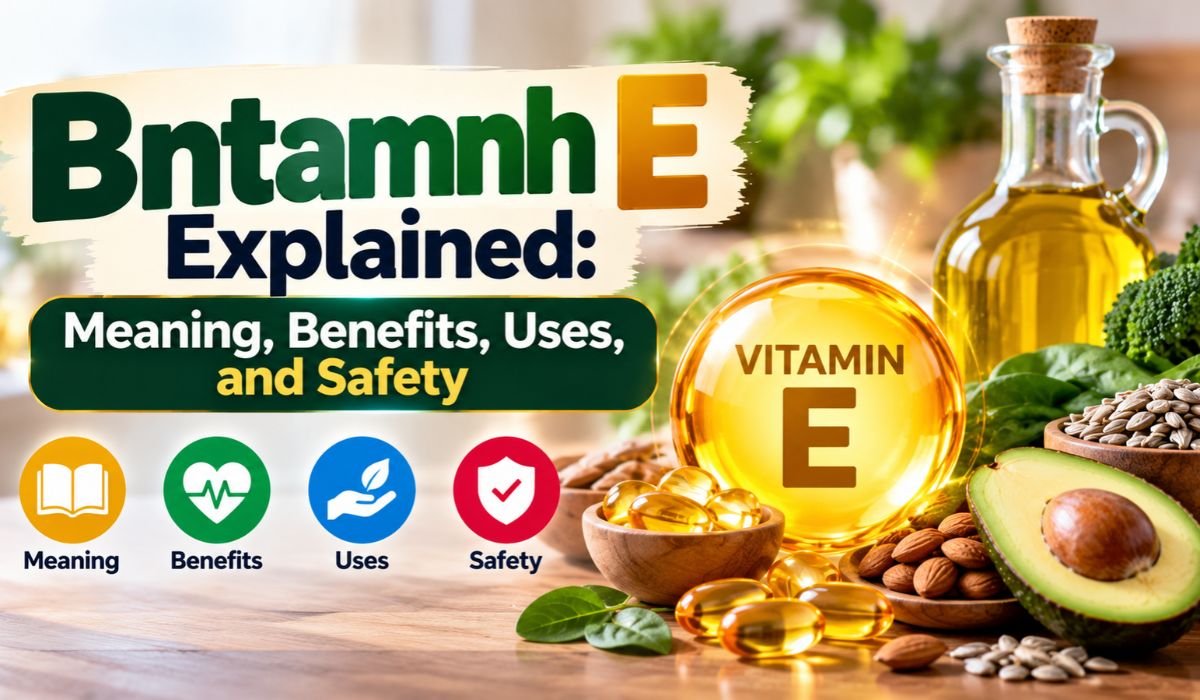
Have you ever searched for Bntamnh E and wondered whether it is a new vitamin, a health supplement, or something completely different? You’re not alone. Unfamiliar health terms often appear on websites, product descriptions, and search results, leaving readers unsure what they actually mean.
Bntamnh E is not a recognized medical or nutritional name. Some online articles connect it with Vitamin E, an essential nutrient that supports normal immune function and helps protect cells from oxidative damage. However, that connection should not be accepted without checking the original context or product ingredients.
Understanding Vitamin E is useful because it plays an important role in everyday nutrition. It occurs naturally in nuts, seeds, vegetables, and certain oils. Although supplements are widely available, not everyone needs them.
This guide explores the possible meaning of Bntamnh E, its suggested connection to Vitamin E, nutritional benefits, food sources, supplement uses, and important safety considerations.
Quick Bio Information About Bntamnh E
The following reference table summarizes established Vitamin E facts and explains how they relate to the uncertain term Bntamnh E.
| Information | Details |
|---|---|
| Search Term | Bntamnh E |
| Official Nutrient Name | Not established |
| Possible Association | Vitamin E |
| Recognized Nutrient | Vitamin E |
| Nutrient Category | Fat-soluble vitamin |
| Main Dietary Form | Alpha-tocopherol |
| Primary Function | Antioxidant protection |
| Additional Role | Normal immune function |
| Natural Sources | Nuts, seeds, vegetable oils |
| Vegetable Sources | Spinach and broccoli |
| Common Supplements | Capsules, softgels, liquids |
| Adult Daily Requirement | 15 mg |
| Breastfeeding Requirement | 19 mg daily |
| Absorption | Requires normal fat absorption |
| Deficiency | Uncommon in healthy individuals |
| Deficiency Risks | Nerve and muscle problems |
| Excessive Supplement Risk | Increased bleeding |
| Important Interaction | Blood-thinning medicines |
| Preferred Daily Source | Balanced diet |
| Medical Advice | Recommended before high-dose use |
What Is Bntamnh E?
Bntamnh E is an unfamiliar term that does not have an established definition in standard medical or nutritional terminology. It may appear in online discussions, search results, or product-related content.
Some websites describe Bntamnh E as another spelling of Vitamin E. However, there is no established scientific evidence confirming that the two terms are officially interchangeable.
Unusual spellings can sometimes result from typing errors, translation problems, or copied website content. These are possible explanations rather than verified origins of this particular term.
When encountering Bntamnh E on a product, the safest approach is to examine its ingredients. A recognized nutrient name provides more reliable information than an unfamiliar marketing term.
Is Bntamnh E the Same as Vitamin E?
Bntamnh E is sometimes associated with Vitamin E, but the spelling itself does not prove that connection. Vitamin E is a scientifically recognized nutrient, while Bntamnh E has no established nutritional classification.
Vitamin E may appear on ingredient labels under names such as alpha-tocopherol, d-alpha-tocopherol, or alpha-tocopheryl acetate.
These names identify particular forms of Vitamin E used in foods, supplements, and cosmetic products.
If a product described as Bntamnh E contains one of these ingredients, readers can evaluate its Vitamin E content. Without that information, its identity remains uncertain.
This distinction is important because nutritional benefits and safety recommendations apply to verified ingredients, not simply to a product’s name.
Understanding Vitamin E and How It Works
Vitamin E is a fat-soluble nutrient, meaning the body absorbs it alongside dietary fat. It belongs to a family of compounds called tocopherols and tocotrienols.
Alpha-tocopherol is the form recognized as meeting human Vitamin E requirements.
One of Vitamin E’s primary functions is antioxidant protection. During normal metabolism, the body produces unstable molecules known as free radicals. Excessive oxidative activity can damage cellular structures.
Vitamin E helps protect cell membranes from this type of damage. It also contributes to normal immune function and communication between cells.
Because the body requires Vitamin E for several essential processes, maintaining adequate intake is important. However, consuming large supplemental doses does not automatically provide additional health benefits.
Different Forms and Types of Vitamin E
Vitamin E is not a single chemical compound. It includes eight related forms, divided into four tocopherols and four tocotrienols.
Although these compounds share certain characteristics, they are not nutritionally identical. Alpha-tocopherol is especially important because it is the form the body preferentially maintains for meeting Vitamin E requirements.
Supplement labels may also distinguish between natural and synthetic Vitamin E. Natural alpha-tocopherol is commonly identified as d-alpha-tocopherol, while synthetic forms may appear as dl-alpha-tocopherol.
Their biological activities differ, which matters when comparing supplement doses. The amount printed on a bottle should therefore be interpreted using its stated units and ingredients.
Understanding these differences helps consumers avoid assuming that every Vitamin E product delivers the same nutritional activity.
Health Benefits of Vitamin E
Vitamin E contributes to several normal body functions. Its best-established benefit is helping protect cell membranes from oxidative damage.
It also supports immune-cell activity. Adequate Vitamin E intake helps the immune system perform its normal functions, although taking extra supplements has not been shown to prevent ordinary infections reliably.
Vitamin E is present in skin tissues, where it contributes to antioxidant defenses. However, supplements should not be considered a proven treatment for wrinkles, scars, or other cosmetic concerns.
Eye health is another area of interest. Certain combinations of antioxidants and minerals, including Vitamin E, have been studied for specific stages of age-related macular degeneration. These findings do not mean Vitamin E alone prevents eye disease.
Maintaining adequate intake supports health, but claims about curing diseases require much stronger evidence.
Best Natural Food Sources of Vitamin E
For most people, food is the simplest way to obtain Vitamin E. Nuts, seeds, and vegetable oils are particularly useful sources.
A one-ounce serving of sunflower seeds provides approximately 7.4 mg of Vitamin E, while the same amount of almonds contains around 6.8 mg.
Sunflower oil provides approximately 5.6 mg per tablespoon. Hazelnuts, peanut butter, spinach, and broccoli also contribute smaller amounts.
These foods offer additional nutrients, including healthy fats, fiber, and minerals. This makes them useful parts of a varied diet rather than isolated sources of one vitamin.
Adding almonds to breakfast, sunflower seeds to salads, or cooked spinach to meals can help improve daily Vitamin E intake without relying on supplements.
How Much Vitamin E Do You Need Daily?
Vitamin E requirements depend on age and life stage. According to established US dietary recommendations, most adults need 15 mg of alpha-tocopherol daily.
Children require smaller amounts, ranging from 6 mg to 11 mg depending on age. Teenagers aged fourteen and older generally need 15 mg.
Pregnant adults also require 15 mg daily, while breastfeeding adults need approximately 19 mg.
These amounts represent recommended dietary intake, not supplement prescriptions.
For adults, the US tolerable upper intake level is 1,000 mg daily from supplemental forms of alpha-tocopherol. This is a maximum safety threshold rather than an ideal amount, and certain risks may occur below it.
Most healthy adults should focus on meeting nutritional requirements through food instead of approaching upper limits.
Bntamnh E Supplements and Their Uses
If Bntamnh E is being used to describe a Vitamin E supplement, its actual ingredients and dosage determine how it should be evaluated.
Vitamin E supplements are available as capsules, softgels, liquids, and combination products. Some multivitamins also contain Vitamin E.
Supplementation may be appropriate for individuals with diagnosed deficiency or medical conditions that interfere with fat absorption.
However, routine high-dose Vitamin E supplementation is not generally recommended for otherwise healthy people.
Before purchasing a product, check its Supplement Facts panel, serving size, nutrient form, and amount per serving.
Consumers should also examine whether other supplements already provide Vitamin E. Combining multiple products can increase total intake without offering additional proven benefits.
Who May Need Additional Vitamin E?
Vitamin E deficiency is uncommon among healthy people who eat varied diets and absorb dietary fat normally.
However, certain medical conditions can interfere with absorption. Disorders affecting fat digestion or transport may prevent the body from obtaining enough Vitamin E.
Some inherited conditions and serious digestive disorders can also increase deficiency risk.
Symptoms of significant deficiency may include muscle weakness, impaired coordination, nerve problems, and vision difficulties.
These symptoms can have many causes, so they should not be used to diagnose Vitamin E deficiency without medical evaluation.
People with suspected deficiency may require professional testing and carefully selected supplementation. Taking large doses independently can delay proper diagnosis or create unnecessary risks.
Vitamin E for Skin and Hair Health
Vitamin E frequently appears in skincare products because of its antioxidant properties and role in skin conditioning.
Some moisturizers contain Vitamin E derivatives that help support the formulation and condition the skin. However, the effectiveness of a skincare product depends on its complete ingredient combination.
Applying concentrated Vitamin E oil can cause irritation or allergic contact dermatitis in some individuals.
Haircare products may also contain Vitamin E, but strong clinical evidence that Vitamin E oil directly stimulates hair growth is lacking.
Adequate nutrition supports normal skin and hair function, particularly when correcting a genuine deficiency.
For cosmetic concerns, realistic expectations matter. Vitamin E is a useful nutrient, but it is not a guaranteed solution for hair loss, scars, or visible skin aging.
Bntamnh E Safety and Possible Side Effects
Safety depends on what a product actually contains. If Bntamnh E refers to Vitamin E, ordinary dietary intake is generally considered safe.
Concentrated supplements require greater caution, especially at high doses.
Some users may experience digestive discomfort or other unwanted effects. More importantly, excessive supplemental Vitamin E can interfere with normal blood clotting and increase bleeding risk.
People taking anticoagulant or antiplatelet medicines, including warfarin or aspirin, should discuss Vitamin E supplementation with a healthcare professional.
Individuals preparing for surgery or receiving certain medical treatments may also require special precautions.
High-dose antioxidant supplements have not consistently demonstrated benefits for preventing cardiovascular disease or cancer. Taking more than the body needs should never be assumed to improve health.
How to Choose a Safe Vitamin E Product
Choosing a supplement begins with reading the complete label rather than relying on advertising.
Look for a clearly identified Vitamin E ingredient, the amount per serving, recommended directions, and manufacturer information.
Products from reputable manufacturers with independent quality verification may offer additional reassurance about ingredient identity and manufacturing standards.
Be cautious of supplements promising instant results, guaranteed disease prevention, or dramatic cosmetic improvements.
An unfamiliar name such as Bntamnh E deserves additional scrutiny because consumers cannot determine its contents from the term alone.
Check expiration dates, storage instructions, and possible interactions with existing medicines.
When a product’s ingredients remain unclear, avoiding it is safer than guessing what it contains.
Common Myths About Bntamnh E
One misconception is that Bntamnh E represents a newly discovered vitamin. No established scientific classification supports that claim.
Another misunderstanding is that more Vitamin E always produces better results. In reality, excessive supplementation can create health risks.
Some people also assume that natural supplements are automatically harmless. Natural ingredients can still interact with medicines or cause adverse reactions.
Vitamin E is sometimes promoted as a treatment for numerous diseases, but its established nutritional functions should not be confused with proven medical treatments.
Food-based Vitamin E intake is generally preferable for healthy individuals because it provides essential nutrients alongside other beneficial dietary components.
Understanding these distinctions helps readers evaluate health claims more confidently.
Practical Tips for Getting Enough Vitamin E
Maintaining adequate Vitamin E intake usually begins with simple dietary habits.
Include nuts, seeds, leafy vegetables, and appropriate vegetable oils in regular meals. A varied diet helps provide Vitamin E alongside other important nutrients.
If supplementation is medically recommended, follow the prescribed amount and avoid combining products without checking their total Vitamin E content.
Store supplements according to their labels, away from excessive heat and moisture.
Anyone experiencing possible deficiency symptoms should seek medical evaluation rather than attempting treatment with high-dose products.
The most useful approach is to focus on consistent nutrition, sensible supplement choices, and reliable health information.
Final Thoughts
Bntamnh E is an unusual term without an established scientific definition. Although some online sources associate it with Vitamin E, that connection should be verified through ingredient information rather than assumed.
Vitamin E itself is an essential nutrient that supports antioxidant defenses, immune function, and normal cellular health.
Foods such as almonds, sunflower seeds, spinach, and vegetable oils can help most people meet their daily requirements.
Supplements may be useful in specific medical situations, but unnecessary high doses can introduce risks.
Ultimately, understanding the difference between a confusing product name and a recognized nutrient is the most important step toward making informed health decisions.
FAQs About Bntamnh E
What Does Bntamnh E Mean?
Bntamnh E is not an officially recognized nutritional term. Some online content associates it with Vitamin E, but its exact meaning cannot be confirmed from the spelling alone. Checking the original context or product ingredients is essential.
Is Bntamnh E the Same as Vitamin E?
Not necessarily. Vitamin E is an established nutrient, while Bntamnh E has no verified scientific identity. A product containing alpha-tocopherol or a recognized Vitamin E derivative can be evaluated based on that ingredient.
What Are the Main Benefits of Vitamin E?
Vitamin E helps protect cells from oxidative damage and supports normal immune function. It also contributes to healthy cellular processes. However, taking additional supplements does not automatically improve health or prevent disease.
Which Foods Are Rich in Vitamin E?
Sunflower seeds, almonds, hazelnuts, sunflower oil, spinach, and fortified foods are useful sources. Including these foods in a balanced diet can help most healthy people meet their daily nutritional requirements.
Can I Take Vitamin E Every Day?
Vitamin E is needed daily, but that does not mean everyone needs a supplement. Most adults require 15 mg per day and can obtain it through food. Supplement use should reflect individual nutritional and medical needs.
What Happens If You Take Too Much Vitamin E?
Excessive supplemental Vitamin E may increase bleeding risk and cause other unwanted effects. People taking blood-thinning medicines face particular concerns. High-dose supplements should not be used without appropriate medical guidance.
Does Vitamin E Help With Hair Growth?
There is insufficient strong clinical evidence that applying Vitamin E oil or taking supplements reliably increases hair growth in people without deficiency. Balanced nutrition supports normal hair health, but persistent hair loss may require medical evaluation.
How Can I Identify a Genuine Vitamin E Supplement?
Check the Supplement Facts label for recognized Vitamin E ingredients, clear dosage information, manufacturer details, and appropriate quality verification. Avoid products with unclear contents or exaggerated medical claims.
Learn more and explore exciting content on: Pyntekvister Explained: Meaning, Origins, Uses, and Decorating Ideas















Leave a Reply