
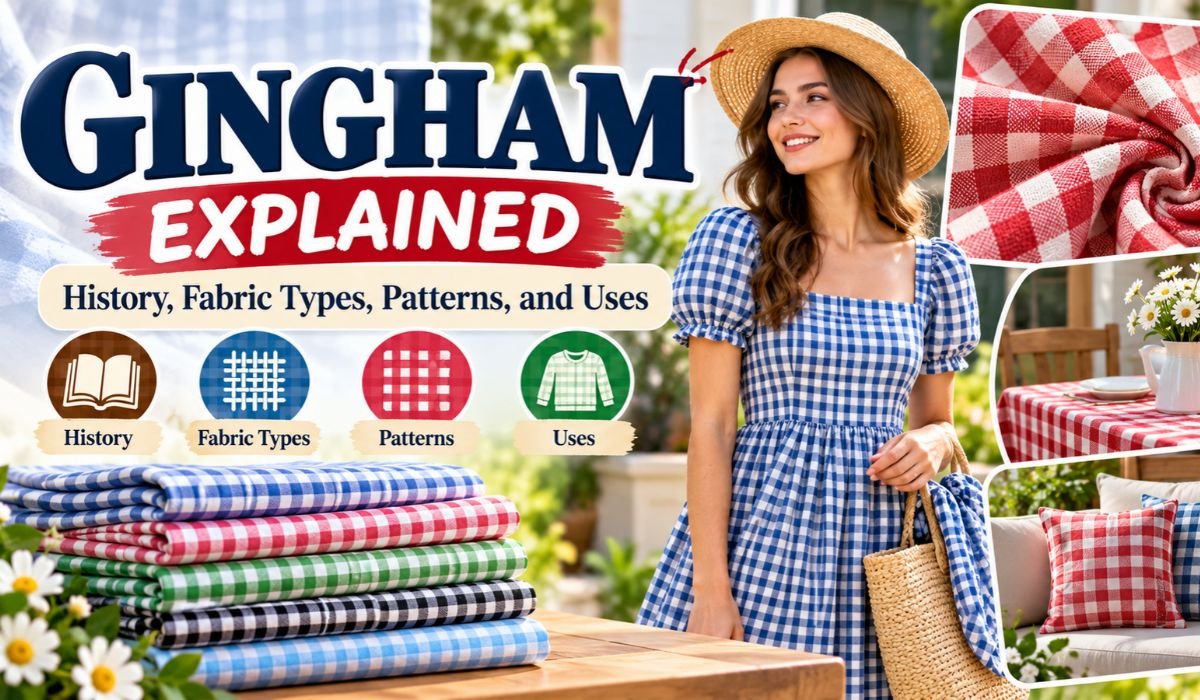
Gingham is one of those timeless fabrics that feels both familiar and stylish. Recognized by its neat checkered pattern, it has been used in clothing, home decoration, and everyday textiles for centuries. From classic summer dresses and button-down shirts to kitchen curtains and picnic tablecloths, Gingham brings a simple, cheerful appearance to almost anything.
Although many people recognize the pattern immediately, fewer understand its history, construction, and different varieties. Traditional Gingham is usually made with cotton yarns woven into regular checks, but modern versions also use blended fibers and printed designs.
Understanding Gingham helps shoppers, fashion enthusiasts, and sewing beginners choose suitable materials. This guide explores its origins, characteristics, fabric types, popular patterns, practical uses, and care requirements, along with its continuing appeal in 2026.
Quick Gingham Information
Fabric Name
Gingham
Alternative Name
Vichy Check
Traditional Material
Cotton
Weave Type
Plain Weave
Traditional Design
Regular Checks
Early European Form
Striped Fabric
European Trade History
17th Century
British Manufacturing
Manchester
French Association
Vichy
Common Colors
Blue, Red, Black, Green
Pattern Sizes
Small, Medium, Large
Modern Materials
Cotton and Blends
Fabric Production
Yarn-Dyed or Printed
Fashion Uses
Shirts, Dresses, Skirts
Home Uses
Curtains, Tablecloths
Seasonal Appeal
Especially Spring and Summer
Care Requirements
Fiber-Dependent
Common Style
Classic and Casual
What Is Gingham?
Gingham is traditionally a plain-woven textile made using colored and white yarns arranged to produce regular checks. The most familiar designs feature blue, red, green, pink, or black combined with white. The repeated squares create a balanced appearance that works well in clothing and household fabrics.
The name also describes the checkered pattern itself. This distinction matters because not every modern product labeled Gingham is manufactured using traditional yarn-dyed weaving. Some manufacturers print the design onto an existing fabric instead.
Gingham is also associated with the name Vichy Check, particularly in French and European fashion. Its recognizable appearance makes it easy to coordinate with solid colors, while the range of check sizes allows it to suit both subtle and bold designs.
The History and Origins of Gingham Fabric
The history of Gingham stretches back several centuries. The fabric entered European trade during the seventeenth century, when it was commonly associated with striped textiles rather than the checks familiar today. Over time, manufacturers began experimenting with different arrangements of colored yarns.
The origin of the word remains debated. One explanation connects it to the Malay word genggang, meaning striped, possibly through Dutch trading connections. Another theory associates the name with Guingamp, a town in Brittany, France. Neither explanation should be treated as completely settled.
During the eighteenth century, textile production in Manchester, England, helped popularize checked Gingham. The fabric also developed associations with Vichy, France. By the nineteenth and twentieth centuries, it had become familiar in practical clothing, school uniforms, and household textiles.
How Is Gingham Fabric Made?
Traditional Gingham uses a plain weave, one of the simplest textile constructions. During weaving, lengthwise warp yarns and crosswise weft yarns pass alternately over and under one another. This creates a stable fabric surface with a consistent structure.
Manufacturers arrange colored and white yarns in repeating groups. Where white yarns intersect, the fabric appears white. Where colored yarns intersect, the checks look stronger. Mixed intersections create lighter areas, producing the characteristic three-tone appearance often seen in traditional two-color Gingham.
Modern production may also involve printing a Gingham Pattern onto finished fabric. Although printed designs can look similar, their construction differs from yarn-dyed textiles. Yarn thickness, fabric density, finishing treatments, and fiber quality all influence the material’s softness, strength, and overall feel.
What Materials Are Used to Make Gingham?
Cotton is the material most closely associated with traditional Gingham Fabric. Its natural breathability, absorbency, and generally comfortable texture make it popular for shirts, dresses, children’s clothing, and summer garments. However, cotton can wrinkle and may shrink when washed incorrectly.
Cotton-polyester blends offer another option. Depending on their composition, these fabrics may wrinkle less and dry faster than pure cotton. Polyester fabrics can also carry printed Gingham designs, particularly in decorative products and garments requiring specific performance characteristics.
Linen and other fibers may feature Gingham checks as well. Linen offers a distinctive texture and good moisture management, while viscose can provide a softer drape. When choosing Gingham Material, the fiber composition is just as important as the pattern because it determines much of the fabric’s comfort, care, and durability.
Key Characteristics of Gingham Fabric
The defining feature of Gingham is its orderly arrangement of checks. Traditional designs typically use a balanced pattern with evenly spaced squares, creating a clean appearance that remains recognizable across different colors and sizes.
Other characteristics depend on the textile’s construction. Lightweight Cotton Gingham often feels breathable and comfortable, making it suitable for warm-weather clothing. Denser fabrics may offer greater structure, while thinner varieties can require lining when used for certain garments.
Gingham is also valued for its versatility. Small checks can appear understated, while larger patterns create stronger visual contrast. However, durability, wrinkle resistance, and softness cannot be judged from the checks alone. A tightly woven cotton fabric and a loosely constructed synthetic version may behave very differently despite sharing the same design.
Different Types of Gingham Patterns
Gingham Patterns are commonly distinguished by their check size. Small-check Gingham features tiny squares that create a subtle appearance, making it suitable for shirts, blouses, children’s garments, and accessories. From a distance, very fine checks may almost resemble a textured solid color.
Medium-check Gingham offers a more noticeable design without becoming overwhelming. It is frequently used for dresses, casual shirts, aprons, and household textiles. Large-check Gingham creates a bolder effect, especially on skirts, curtains, tablecloths, and decorative cushions.
Traditional two-color checks remain popular, but contemporary designs include unusual color combinations and different proportions. Check size also affects sewing: larger patterns require careful alignment at seams, while smaller checks can make minor mismatches less noticeable.
Popular Gingham Colors and Their Appeal
Blue-and-white Gingham is among the most familiar combinations. Its fresh appearance makes it popular for casual shirts, summer dresses, and traditional household textiles. Red-and-white checks are strongly associated with picnic settings, kitchen accessories, and country-inspired decoration.
Black-and-white Gingham offers a more graphic appearance that works well with neutral clothing and modern interiors. Pink, yellow, and green variations bring softer or brighter effects depending on their shades.
Color choice can influence how formal or playful the pattern feels, but it does not determine the fabric’s quality. A carefully made green Gingham shirt can be just as durable as a traditional blue version. For practical shopping, consider colorfastness, fabric composition, and how the chosen shades coordinate with existing clothing or furnishings.
Gingham vs. Plaid and Other Checkered Patterns
Gingham and plaid may look similar, but their patterns have important differences. Traditional Gingham usually features evenly sized checks formed by regularly alternating colored and white yarns. Plaid is a broader design category that can include multiple colors, varying stripe widths, and more complicated intersections.
Buffalo Check commonly uses larger, bold squares, often with strong color contrast. Tartan features repeating arrangements of colored bands, sometimes associated with particular Scottish traditions. Windowpane Check uses thin intersecting lines that resemble the outlines of windowpanes.
Understanding these distinctions helps buyers identify the right fabric. However, pattern names sometimes overlap in retail descriptions. Examining the actual design, fiber composition, and construction provides more reliable information than relying entirely on a product label.
Common Uses of Gingham Fabric in Fashion
Gingham has maintained a place in everyday fashion because it combines visual interest with a familiar, approachable style. Gingham Dresses are especially popular in casual wardrobes, including sundresses, shirt dresses, and relaxed designs.
Gingham Shirts also have a long history. The pattern became associated with British mod fashion during the 1960s and later appeared widely in men’s casual and smart-casual clothing. During the 2010s, blue-and-white checked shirts attracted particular attention in American fashion coverage.
Beyond shirts and dresses, Gingham appears in skirts, blouses, shorts, scarves, bags, and hair accessories. It is also familiar in children’s clothing and some British school uniforms. Its suitability depends on the garment’s fabric weight, fit, and construction rather than the check pattern alone.
How to Style Gingham Clothing
Styling Gingham Clothing is relatively straightforward because the checks already provide visual detail. A blue-and-white Gingham shirt pairs naturally with dark jeans, chinos, or plain trousers. Neutral pieces allow the pattern to remain the main feature without making the outfit feel crowded.
Gingham dresses can be worn with simple sandals, trainers, or understated accessories for a relaxed appearance. Black-and-white checks can also work with tailored pieces for a smarter outfit, depending on the garment’s shape and fabric.
Combining Gingham with other patterns is possible, although varying their scale usually creates a more balanced result. For example, small checks can work alongside broader stripes when the colors complement each other. Personal comfort and proportion matter more than rigid fashion rules.
Gingham Fabric in Home Decor and Interior Design
Gingham is widely used in home decoration because its repeated checks introduce pattern without requiring elaborate designs. It appears in curtains, cushion covers, tablecloths, napkins, bedding, aprons, and kitchen towels.
Red-and-white Gingham is often associated with traditional kitchens and picnic-inspired dining spaces. Blue, beige, and muted green checks can complement farmhouse, cottage, and country-style interiors. Black-and-white designs may create a stronger contemporary contrast.
Pattern scale matters when decorating. Large checks can dominate smaller spaces, while fine checks provide quieter visual texture. Combining Gingham with plain fabrics, natural wood, and simple accessories can create a coordinated appearance. For heavily used household items, washable construction and colorfastness are particularly important.
Advantages and Disadvantages of Gingham Fabric
One of Gingham’s greatest advantages is its versatility. The same basic check pattern can appear in lightweight summer clothing, structured shirts, decorative accessories, and household textiles. Its regular design also makes it recognizable without depending on complicated colors or embellishments.
Cotton Gingham can provide good comfort and breathability, while some blended versions offer easier maintenance. The wide variety of check sizes allows buyers to choose between subtle and bold appearances.
There are limitations, however. Cotton varieties may wrinkle or shrink, while printed designs can fade with repeated washing. Large checks may require extra fabric when matching patterns across seams. Some lightweight versions can also be slightly transparent. These disadvantages vary by material and manufacturing quality, so individual products should be assessed carefully.
How to Wash, Care for, and Choose Gingham
Proper Gingham Fabric Care begins with reading the manufacturer’s label. Cotton garments may tolerate regular machine washing, but delicate finishes, blended fibers, or decorative details can require gentler treatment. Washing similar colors together and avoiding excessive heat may help preserve appearance.
Drying recommendations also depend on fiber composition. Some cotton fabrics can shrink under high heat, while certain synthetic materials may be sensitive to hot ironing. Using the appropriate temperature and storing garments clean and dry helps maintain their condition.
When buying Gingham, inspect the weave, color consistency, and check alignment. Consider whether the fabric is yarn-dyed or printed, particularly for sewing projects. Lightweight materials suit many shirts and dresses, while more substantial textiles may work better for structured garments or home furnishings. Choosing the right fabric is ultimately more important than choosing a fashionable color.
Final Thoughts on Gingham Fabric
Gingham has remained recognizable for centuries because its simple checked design offers remarkable flexibility. From its early striped forms to modern clothing and interior textiles, the fabric reflects changing manufacturing techniques and fashion preferences.
Its appeal goes beyond appearance. Understanding fiber composition, weave construction, check size, and care requirements makes it easier to choose Gingham for practical everyday use.
Whether used in a comfortable cotton shirt, a summer dress, or a decorative tablecloth, Gingham continues to demonstrate how a straightforward textile pattern can remain useful, adaptable, and stylish across generations.
FAQs About Gingham
What Is Gingham Fabric Made Of?
Traditional Gingham is commonly made from cotton yarns woven into a checked design. Modern products may use polyester, cotton-polyester blends, linen, or other fibers. The material determines properties such as breathability, softness, and washing requirements.
Is Gingham a Fabric or a Pattern?
Gingham can refer to both. Traditionally, it describes a yarn-dyed woven textile with regular checks. Today, the term also identifies similar patterns printed onto different fabrics.
Is Gingham the Same as Plaid?
Not exactly. Gingham traditionally uses regular checks with a limited color combination. Plaid includes a broader range of designs featuring intersecting bands that may vary in color and width.
Is Gingham Fabric Breathable?
Cotton Gingham is generally breathable, making it suitable for warm-weather clothing. However, breathability depends on fiber composition, fabric density, and finishing treatments. Synthetic versions may perform differently.
Does Gingham Shrink After Washing?
Some Cotton Gingham fabrics can shrink, particularly when exposed to excessive washing or drying temperatures. Preshrunk materials may be more stable. Always check the care label before washing.
Can Gingham Be Worn in Winter?
Yes. Although Gingham is strongly associated with summer, it can be worn throughout the year. Heavier fabrics, layered shirts, and lined garments make checked clothing suitable for cooler weather.
Why Is Gingham Called Vichy Check?
The name reflects the pattern’s historical association with Vichy, France, where checked textiles became part of regional manufacturing and fashion traditions. The term remains familiar in European clothing descriptions.
Learn more and explore exciting content on: LK210 Port Authority Explained: Features, Fabric, Fit, and Benefits















Leave a Reply