
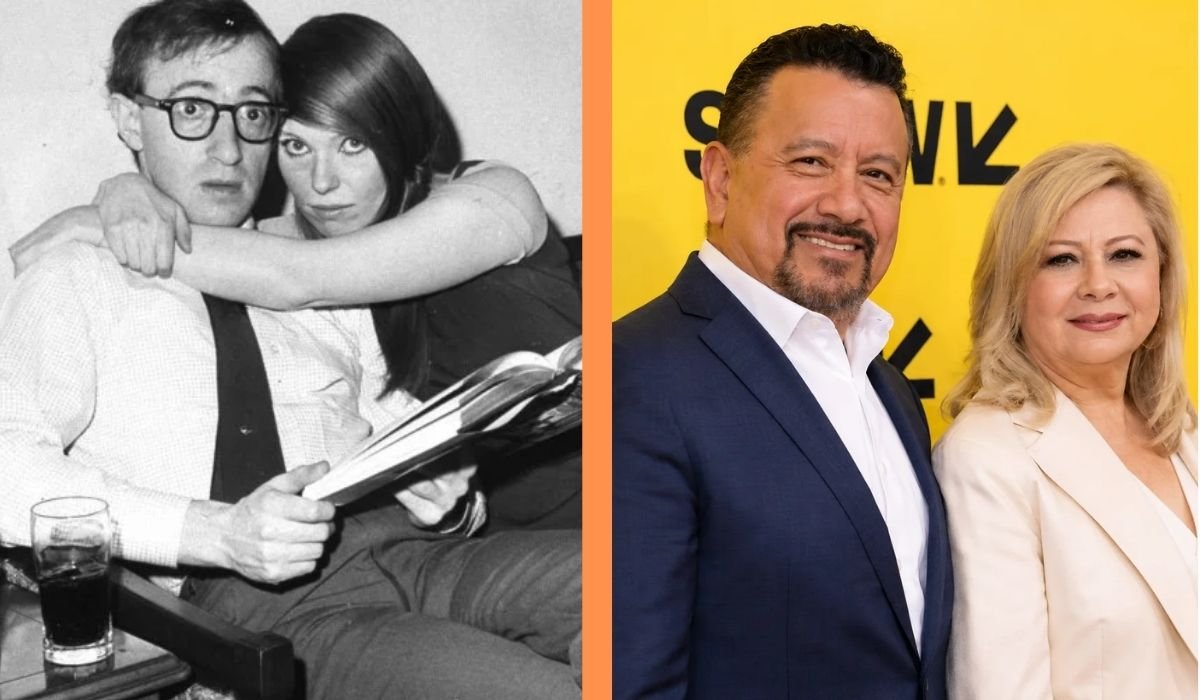
Harlene Rosen occupies an unusual place in American entertainment history. She never built a career around fame, rarely spoke publicly about her private life, and spent decades outside the celebrity world. Yet her name remains closely connected to Woody Allen because she was his first wife, marrying him years before Annie Hall, Manhattan, or the filmmaking career that made him internationally famous. Their relationship began when both were very young, developed alongside Allen’s earliest work as a comedy writer, and eventually ended in a difficult separation followed by a legal dispute over jokes he made about her. Rosen’s story is therefore more than a small detail in a famous filmmaker’s biography. It offers a glimpse into Allen’s pre-fame years while also raising broader questions about privacy, comedy, and what happens when a private person becomes material for a public performer.
Quick Bio Information
| Information | Details |
|---|---|
| Full Name | Harlene Rosen, also identified as Harlene Susan Rosen in some biographical records |
| Known For | Being Woody Allen’s first wife |
| Nationality | American |
| Birth Year | Not reliably established in authoritative public records |
| Birthplace | Commonly associated with New York City |
| Early Home | Connected with Brooklyn, New York |
| Education | Studied Philosophy at Hunter College |
| Former Husband | Woody Allen |
| Marriage Year | 1956 |
| Age At Marriage | Commonly reported as about 17 |
| Woody Allen’s Age | About 20 |
| Separation | Generally placed around 1959 |
| Divorce | Sources differ, with several references placing finalization around 1961 or 1962 |
| Children With Woody Allen | None publicly documented |
| Public Career | No major public entertainment career is documented |
| Legal Dispute | Filed a defamation action connected with Allen’s public remarks about her |
| Later Public Appearance | Contributed a message to biographer David Evanier in 2015 |
| Current Life | Largely private and not reliably documented |
Who Is Harlene Rosen?
Harlene Rosen is best known as Woody Allen’s First Wife, but describing her only through that relationship misses some important context. She met Allen before he had become a major film director, when he was still developing as a writer and comedian in New York. Rosen herself was intellectually curious and studied philosophy at Hunter College. The Guardian reported that Allen met Rosen through Jewish social circles in Flatbush and described her as the daughter of a shoe-shop owner and a philosophy student. That educational background becomes particularly interesting because Allen later spoke about how his exposure to the books and ideas around Rosen helped expand his own intellectual interests.
Early Life And Education
Reliable details about Harlene Rosen’s Early Life are limited, which is important to acknowledge. Unlike someone who actively pursued a public career, Rosen did not leave behind a large collection of interviews, autobiographical material, or detailed public profiles. What is better documented is her connection to Brooklyn and her education. The Guardian identifies her as a Hunter College philosophy student, while an academic reference on American humorists also describes Rosen as a 17-year-old philosophy major at Hunter when she married Allen. That makes claims about her education considerably stronger than the unsupported birth dates, net-worth estimates, and career descriptions frequently repeated on modern celebrity websites.
Meeting Woody Allen
The relationship between Harlene Rosen And Woody Allen belongs to a very different chapter of Allen’s life from the one most movie audiences know. He was born Allen Stewart Konigsberg in Brooklyn in 1935 and began writing jokes professionally while still young. According to The Guardian, Rosen and Allen met through Flatbush Jewish social clubs. Their relationship therefore developed through the local social world of their youth rather than Hollywood or the film industry. Allen was already unusually focused on comedy writing, but he had not yet established himself as a successful stand-up performer or filmmaker. Understanding that timeline matters because Rosen was married not to the celebrated director audiences later knew, but to an ambitious young comedy writer still trying to build a professional identity.
Their Young Romance
The couple’s relationship moved quickly. Most substantial accounts describe Rosen as a teenager when she married Allen, while Allen was around 20. Looking back decades later, Rosen herself reportedly characterized their beginning as a youthful romance that became much harder once marriage introduced adult responsibilities. Her later comments are especially valuable because so much of the historical narrative had previously come from Allen or his biographers rather than Rosen. Instead of presenting their relationship simply as either happy or disastrous, her recollection suggested something more human: two very young people shared affection, creativity, struggles, arguments, learning, and the difficult transition into adulthood.
Marriage In 1956
Harlene Rosen And Woody Allen Married In 1956, and that year is one of the strongest points in their timeline. A published chronology of Allen’s career records March 15, 1956, as their wedding date and says Rosen joined him while he was working in Los Angeles before they returned to New York. The same period found Allen working intensively in television comedy, years before his first significant film work. Rosen was reportedly around 17, while Allen was about 20. The marriage was therefore closely tied to the beginning of their adult lives rather than to Allen’s later celebrity status.
Married Life
There is no reliable day-by-day account of Harlene Rosen’s Marriage To Woody Allen, and responsible biography should resist inventing one. What can be established is that Rosen continued her studies while Allen pursued comedy. Her education may also have affected him intellectually. Allen later explained that exposure to philosophy through his first wife helped stimulate his interest in writers and philosophical questions. The Guardian similarly reports that Rosen’s intellectual world encouraged him to work through major books and ideas he previously had not explored seriously. That connection adds an often-overlooked dimension to Rosen’s place in Allen’s biography: she was present during a formative period in which the young comedy writer began broadening the cultural and philosophical interests that would later become recognizable themes in his work.
Separation And Divorce
The exact Harlene Rosen Divorce chronology deserves careful wording because published references do not completely agree. Several accounts place their separation around 1959. The Guardian’s older profile lists Rosen as married to Allen in 1956 and divorced in 1962, while another scholarly chronology records a 1961 divorce. This conflict is precisely why definitive claims based on a single biography website should be avoided. What is clear is that their relationship had broken down by the end of the 1950s and that the legal end of the marriage followed later. They had no publicly documented children together.
Allen’s Comedy Material
Ending the marriage did not immediately remove Rosen from Allen’s professional world. As his stand-up career developed, Allen turned marriage and divorce into comedy material. Rosen became recognizable within some of those routines, and he used insulting descriptions of his former wife as part of his stage persona. From a performer’s perspective, autobiographical exaggeration had long been part of stand-up comedy. From Rosen’s perspective, however, an identifiable private individual was being discussed before audiences without having chosen to participate. That distinction eventually became important. The episode is one reason the Harlene Rosen And Woody Allen story remains relevant beyond simple celebrity curiosity.
The Defamation Dispute
The most serious post-marriage development was the Harlene Rosen Lawsuit. Accounts of Allen’s life consistently report that Rosen pursued defamation action after public remarks he made about her. Allen himself later discussed a million-dollar lawsuit in connection with an offensive joke about Rosen. Some secondary accounts date formal legal action to 1967 and identify NBC alongside Allen, although the precise procedural timeline is less consistently documented than the basic existence of the dispute. The safest conclusion is that Rosen objected strongly enough to Allen’s public portrayal of her to use the legal system rather than allowing herself to remain indefinitely part of his comedy material.
Why The Lawsuit Matters
The dispute remains one of the most revealing aspects of Harlene Rosen’s Story because it highlights the boundary between autobiographical entertainment and another person’s privacy. Comedians often use marriages, relatives, friendships, and breakups as material, but the people appearing in those stories may experience that humor very differently. Rosen had not built a public career and did not have Allen’s platform to answer audiences night after night. Legal action gave her another way to object. Rather than treating the case simply as an amusing anecdote from Allen’s early career, it can be understood as an early example of a question that remains relevant today: how much control should a performer have when turning a recognizable private individual’s painful experiences into entertainment?
Life Away From Fame
After the marriage and public dispute, Harlene Rosen’s Life became remarkably private. Reliable modern information about her employment, later relationships, residence, or family circumstances is scarce. That absence should not be treated as an invitation to fill gaps with assumptions. There is no trustworthy basis for the net-worth estimates, detailed professional histories, or current addresses sometimes attached to her name online. Rosen never became known as an actress, television personality, author, or celebrity commentator. In an era when a connection to a famous person can become a career of its own, her disappearance from the publicity cycle is arguably one of the most distinctive features of her biography.
The 2015 Message
One important exception came in 2015, when biographer David Evanier was preparing Woody: The Biography. Evanier later explained that he had searched for Rosen for more than a year before finding her and said she sent him a message intended for Allen’s 80th birthday. Rosen reflected warmly as well as honestly on their youth, acknowledging creativity, affection, sadness, personal growth, and the difficulty of marriage. Evanier specifically highlighted Rosen’s decision to speak after so many years as one of the distinctive elements of his biography. The message matters because it gave readers a rare glimpse of Rosen speaking about the relationship in her own voice rather than appearing only through someone else’s account.
Her Influence On Allen
A particularly interesting aspect of Harlene Rosen’s Biography is her connection to Allen’s developing intellectual interests. Rosen’s philosophy studies exposed him to material that was far removed from the comic books and popular entertainment he had enjoyed earlier. Allen later became famous for films filled with references to philosophy, existential anxiety, literature, mortality, religion, psychoanalysis, and European cinema. It would be too strong to claim that Rosen created those interests, but credible reporting suggests that she played a meaningful role during the period in which he began exploring them seriously. That makes her more than simply “Woody Allen’s First Wife” in the chronology of his early adulthood.
What Remains Unknown
Many commonly searched questions about Harlene Rosen do not have reliable public answers. Her exact birth date remains uncertain in authoritative sources. Her current residence, financial position, later marital history, and detailed career path are also not sufficiently documented to present confidently. Even the final divorce year varies among respected references. This uncertainty is worth stating because high-quality biography is not measured by how many fields can be filled in. Sometimes accuracy requires leaving information unknown. For a person who spent most of her life outside public attention, acknowledging the limits of the historical record is more respectful and more useful than repeating unsupported information simply because it appears frequently online.
Why Harlene Rosen Still Matters
Interest in Harlene Rosen And Woody Allen continues because her story reveals an overlooked part of Allen’s beginnings. She knew him before international recognition, Academy Awards, major films, and decades of controversy. Their relationship coincided with his transformation from a young gag writer into an increasingly serious comedy professional. Rosen’s education also appears to have intersected with his developing interest in philosophy and culture. At the same time, the later conflict demonstrated that proximity to a rising celebrity could impose unwanted attention on someone who had never asked to become publicly famous. That tension between historical relevance and personal privacy is central to understanding why Rosen should be written about carefully.
Harlene Rosen In 2026
As of 2026, there is still no substantial, dependable public account documenting Rosen’s present-day circumstances. Searches often produce pages claiming exact information about her age, career, family, wealth, or location, but repetition is not verification. The strongest modern approach is therefore to distinguish the documented historical record from internet speculation. What readers can confidently understand is that Rosen was Allen’s first wife, studied philosophy, married him while very young, experienced a difficult breakup, objected legally to his later public treatment of her, and eventually contributed a reflective message decades after their marriage. Everything beyond that deserves appropriate caution.
Final Thoughts
Harlene Rosen’s Story is unusual precisely because so much of it happened before celebrity culture permanently recorded every relationship. She entered Woody Allen’s life when both were young, married him before his rise as a filmmaker, pursued her education while he built a comedy career, and later challenged the way he used their private history in public performances. She then largely stepped away from public attention.
Her 2015 message adds an important final layer. Decades after conflict had defined much of the published story, Rosen presented a more complicated memory containing affection, pain, learning, and maturity. It reminds us that youthful relationships cannot always be reduced to a divorce date or lawsuit.
For readers looking for Who Harlene Rosen Is, the most accurate answer is therefore also the simplest. She was Woody Allen’s first wife and an important figure in his formative years, but she was also a private individual whose life cannot fairly be reduced to her famous former husband. The limited information available in 2026 should encourage careful reporting rather than speculation.
FAQs About Harlene Rosen
Who Is Harlene Rosen?
Harlene Rosen is an American woman best known as Woody Allen’s first wife. They married in 1956, years before Allen became internationally famous as a filmmaker. She studied philosophy at Hunter College and later maintained an overwhelmingly private life.
How Old Was Harlene Rosen When She Married Woody Allen?
Reliable accounts commonly describe Rosen as about 17 years old when she married Allen in 1956. Allen was approximately 20 at the time. Some later sources give slightly different ages, which is why exact claims should be treated cautiously.
When Did Harlene Rosen And Woody Allen Divorce?
Their relationship is generally reported to have ended around 1959, but sources differ on when the divorce became legally final. The Guardian lists 1962, while another published chronology gives 1961. The disagreement should be acknowledged rather than hidden.
Did Harlene Rosen And Woody Allen Have Children?
No children from Harlene Rosen and Woody Allen’s marriage are identified in reliable public biographies. Allen’s documented children are connected to later relationships.
Why Did Harlene Rosen Sue Woody Allen?
Rosen pursued defamation action after Allen made public jokes and comments about her following the breakdown of their marriage. Allen himself later referred to her seeking one million dollars in connection with the dispute.
What Did Harlene Rosen Study?
Rosen studied philosophy at Hunter College in New York. Her intellectual interests appear to have played a part in exposing the young Allen to philosophy and serious literature during an important stage of his development.
Did Harlene Rosen Speak About Woody Allen Again?
Yes. Biographer David Evanier said Rosen sent him a personal message for Allen ahead of his 80th birthday in 2015. The message reflected on both the difficult and affectionate parts of their early years together.
Where Is Harlene Rosen Now?
Reliable information about Harlene Rosen’s current residence, career, relationships, or everyday life is not publicly established as of 2026. She has maintained considerable privacy, so claims offering precise current details without strong sourcing should be treated cautiously.
Learn more and explore exciting content on: Glynn Daly: The Life and Legacy of Scotland’s Beloved Entertainer





Leave a Reply