
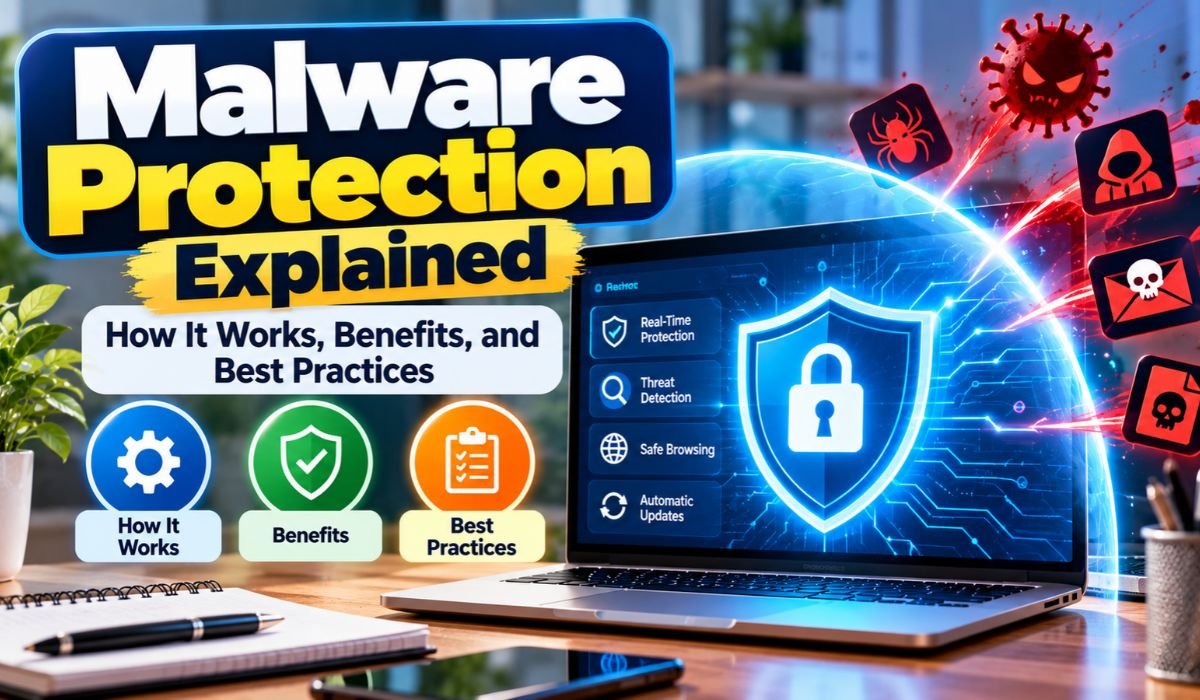
Every day, people use computers, smartphones, and online services to manage personal information, communicate, and handle financial activities. However, these everyday activities also create opportunities for cybercriminals to steal information, damage files, and gain unauthorized access to devices. This is where Malware Protection becomes essential.
Malware Protection refers to security technologies and safe digital practices that help detect, prevent, and remove malicious software. Modern threats are becoming increasingly sophisticated, making reliable cybersecurity important for individuals, families, and businesses.
In 2026, protecting digital information involves more than installing antivirus software. Effective security combines real-time monitoring, regular updates, secure browsing, strong authentication, and reliable backups. Understanding how these protective measures work can help users make better decisions and reduce their exposure to online threats.
What Is Malware Protection?
Malware Protection is the process of protecting computers, smartphones, networks, and digital information against malicious software. Malware includes harmful programs designed to steal information, disrupt operations, monitor users, or gain unauthorized system access. Protection software identifies suspicious files and activities before they cause damage whenever possible.
Modern security solutions combine several detection methods, including known malware signatures, behavioral monitoring, and threat intelligence. Some tools also provide ransomware protection, web filtering, and automatic threat removal.
Malware Protection is not limited to a single application. It also includes responsible online behavior, secure device settings, regular software updates, and data recovery planning. Together, these measures create a stronger defense against cyber threats.
Quick Bio Information About Malware Protection
The following quick-reference boxes summarize essential Malware Protection facts.
Category
Cybersecurity
Primary Purpose
Prevent malicious software
Main Threat
Malware infections
Common Malware
Viruses and Trojans
Major Financial Threat
Ransomware
Privacy Threat
Spyware
Detection Method
Signature scanning
Advanced Detection
Behavior analysis
Active Defense
Real-time monitoring
Threat Handling
Quarantine and removal
Network Defense
Firewalls
Web Defense
Malicious site filtering
Email Defense
Phishing detection
Device Coverage
Computers and phones
Business Security
Endpoint protection
Recovery Method
Clean backups
Important Maintenance
Security updates
Security Limitation
No perfect protection
Why Is Malware Protection Important?
Malware attacks can create serious problems, ranging from stolen passwords to complete business shutdowns. A single infected device may expose personal documents, banking information, customer records, or confidential company data. Some attacks also spread through connected networks, affecting multiple systems.
Reliable Malware Protection reduces these risks by identifying suspicious activity and blocking many known threats. For businesses, it supports operational stability, protects customer information, and helps meet security obligations.
Individuals benefit through improved privacy, safer online transactions, and reduced chances of losing valuable files. Although no security solution guarantees complete safety, combining protective tools with good habits significantly improves digital security.
How Does Malware Protection Work?
Malware Protection works through detection, prevention, and response. Signature-based detection compares suspicious files against known malicious patterns. Behavioral analysis examines what applications actually do, helping identify unusual activities such as unauthorized file encryption or attempts to disable security settings.
Real-time protection continuously checks files, downloads, and processes for potential threats. When suspicious software is detected, the security application may block execution, quarantine the file, or request further investigation.
Some advanced systems use machine learning to identify patterns associated with malware. However, automated detection can produce false alarms or miss unfamiliar threats. For this reason, modern cybersecurity combines multiple techniques rather than relying on a single detection method.
Common Types of Malware You Should Know
Malware exists in several forms, each designed for different malicious purposes. Computer viruses attach themselves to files or programs and spread when infected content runs. Worms can replicate across vulnerable networks without requiring the same level of user interaction.
Trojans appear to be legitimate software but contain harmful functions. Ransomware encrypts important files or steals information to pressure victims into paying money. Spyware secretly collects information, while unwanted adware can interfere with browsing and compromise privacy.
Rootkits conceal malicious activity, and backdoors allow unauthorized access. Botnet malware enables attackers to control infected devices remotely. Fileless attacks often abuse legitimate operating system tools, making detection more challenging.
Understanding these differences helps users recognize why comprehensive Malware Protection matters.
How Does Malware Infect Computers and Mobile Devices?
Malware commonly reaches devices through deceptive emails, unsafe downloads, malicious advertisements, compromised websites, and vulnerable applications. Cybercriminals frequently disguise infected attachments as invoices, delivery notifications, or important account messages.
Some attacks rely on social engineering, encouraging people to install harmful software voluntarily. Others exploit outdated operating systems or applications with known security weaknesses. Untrusted browser extensions and unofficial mobile applications can also introduce threats.
Not every infection requires someone to download an obvious malicious file. Certain attacks exploit vulnerabilities when a device processes specially crafted content.
Installing updates promptly, downloading applications from trustworthy sources, and checking unexpected messages can reduce these risks.
Common Signs That Your Device May Have Malware
An infected device may behave differently from normal. Common warning signs include unexpected slowdowns, frequent crashes, unfamiliar applications, unwanted advertisements, and sudden browser redirects. Users might also notice unusual network activity, unexplained account changes, or security features turning off unexpectedly.
Ransomware infections may make important documents inaccessible and display payment demands. Spyware, however, can operate quietly without producing noticeable symptoms.
These signs are not definitive proof of malware because hardware problems and ordinary software errors can cause similar behavior. Running an updated security scan is a sensible first step when suspicious activity appears. Persistent or serious problems may require professional investigation.
Types of Malware Protection Tools and Software
Modern cybersecurity relies on several complementary tools. Antivirus and anti-malware applications scan files, monitor processes, and remove recognized threats. Firewalls help control network connections, while web protection systems block access to known malicious destinations.
Email security tools identify suspicious attachments, fraudulent messages, and dangerous links. Businesses often use Endpoint Protection Platforms to manage security across employee devices.
Endpoint Detection and Response systems provide deeper monitoring, investigation, and incident response capabilities. Larger organizations may also use Security Information and Event Management platforms to analyze activity across networks.
Cloud-based security services can extend protection to remote employees and distributed systems. The right combination depends on the user’s security needs.
Malware Protection vs. Antivirus: What’s the Difference?
Antivirus and Malware Protection are closely related, but the terminology has changed over time. Traditional antivirus programs originally focused on detecting computer viruses through known signatures. Anti-malware solutions developed to address a wider range of threats, including spyware, ransomware, and Trojans.
Today, reputable antivirus products generally protect against many malware categories. Consequently, the terms often describe overlapping capabilities rather than completely different technologies.
Most everyday users do not need several antivirus applications running simultaneously. Multiple real-time scanning engines can cause conflicts and reduce performance. A reliable security solution, combined with updated software and responsible browsing habits, is usually more useful than installing numerous overlapping products.
Key Features of Effective Malware Protection Software
Effective Malware Protection Software should provide real-time scanning, automatic updates, suspicious behavior detection, and dependable threat removal. Ransomware protection is particularly valuable because it may detect unauthorized encryption attempts before extensive damage occurs.
Web and email protection can help prevent users from encountering malicious content. Clear security notifications and simple quarantine controls make threats easier to manage.
Performance also matters. Security applications should provide strong protection without unnecessarily slowing down everyday activities.
When comparing products, users should consider independent testing results, device compatibility, privacy practices, and support options. Features alone do not prove that a product delivers effective protection.
Benefits of Malware Protection for Individuals and Businesses
The primary benefit of Malware Protection is reducing the likelihood and impact of harmful software infections. For individuals, this means stronger protection for personal documents, saved passwords, financial information, and private communications.
Businesses gain additional benefits through improved endpoint visibility, reduced operational disruption, and faster incident investigation. Early detection can prevent an isolated problem from becoming a larger network incident.
Security tools can also support compliance efforts, although installing antivirus software alone does not satisfy every regulatory requirement.
Another important advantage is peace of mind. Users can work, communicate, and browse more confidently when reliable security controls are active. Nevertheless, awareness and regular maintenance remain essential.
Free vs. Paid Malware Protection: Which Is Better?
Free Malware Protection can be sufficient for many personal devices, particularly when reputable built-in security features are enabled and regularly updated. For example, Windows includes Microsoft Defender Antivirus, which provides real-time protection against many common threats.
Paid solutions may offer additional features such as centralized device management, expanded technical support, identity monitoring, or specialized ransomware defenses.
However, higher prices do not automatically mean better malware detection. Users should evaluate independent security testing, system performance, privacy policies, and their actual requirements.
For businesses managing multiple devices or sensitive information, commercial endpoint security platforms may provide valuable administration and response capabilities that basic consumer tools lack.
How to Protect Your Computer From Malware
Preventing malware requires consistent security habits. Keep operating systems, browsers, and applications updated because security patches address vulnerabilities that attackers may exploit. Enable real-time security protection and avoid disabling it simply to install unfamiliar software.
Download applications from trusted sources, inspect unexpected email attachments, and avoid suspicious links. Strong, unique passwords and multifactor authentication can reduce account compromise risks.
Regular backups are equally important. Maintain protected copies of valuable files, ideally including a disconnected or otherwise isolated backup that ransomware cannot easily modify.
For remote workers, secure device management and cautious use of public networks provide additional protection. These everyday practices complement security software and reduce avoidable exposure.
How to Remove Malware From an Infected Device
If malware is suspected, begin by avoiding sensitive activities on the affected device. Disconnecting it from the network may be appropriate when active compromise, ransomware, or unauthorized communication is suspected.
Run an updated scan using reputable security software and follow its quarantine or removal instructions. Review unfamiliar applications and browser extensions carefully, but avoid deleting unknown system files without verification.
If passwords may have been stolen, change them from a trusted, clean device and review important accounts for suspicious activity.
Persistent infections may require professional assistance or a clean operating system installation. Restore important files only from trustworthy backups, and install security updates before returning the device to normal use.
Malware Protection for Windows, Mac, Android, and iPhone
Different operating systems use different security approaches. Windows includes Microsoft Defender Antivirus and additional built-in protections. Keeping these features active and installing updates improves security.
Mac computers benefit from technologies such as Gatekeeper and XProtect, but they can still encounter malicious applications and phishing attacks.
Android devices use application permissions, sandboxing, and Google Play Protect to reduce harmful application risks. Installing apps from trusted sources remains important.
iPhones use strict application sandboxing and platform security controls. Conventional third-party antivirus applications cannot scan the entire iOS system like desktop antivirus software. Nevertheless, phishing, malicious websites, and account compromise remain concerns across all devices.
Malware Protection for Businesses and Remote Workers
Businesses face additional challenges because employees access company information through laptops, mobile devices, cloud applications, and home networks. A compromised endpoint can potentially expose sensitive organizational resources.
Endpoint management allows security teams to apply consistent policies, monitor devices, and respond to suspicious activity. Zero Trust principles encourage verification of user identity, device security, and access permissions rather than automatically trusting network connections.
Employee training is also essential. Workers should recognize phishing attempts, report suspicious messages, and understand incident response procedures.
Organizations should maintain tested backups, documented recovery plans, and appropriate access controls. Effective business security combines technology, operational preparation, and ongoing employee awareness.
The Role of AI and Machine Learning in Malware Protection
Artificial intelligence and machine learning increasingly support modern malware detection. These technologies analyze large amounts of security information and identify patterns that may indicate suspicious software or unauthorized activity.
Machine learning can help recognize previously unseen malware characteristics, while behavioral analytics may identify unusual system actions. Automated systems can also assist security teams by prioritizing alerts and reducing repetitive investigation work.
However, AI-powered protection has limitations. Attackers can adapt their techniques, and legitimate activities may sometimes trigger false alerts.
The most effective approach combines automated analysis, established security controls, updated threat intelligence, and human expertise rather than depending entirely on AI.
Common Malware Protection Mistakes to Avoid
One common mistake is assuming that installing antivirus software guarantees complete protection. Security tools reduce risk, but they cannot prevent every attack or compensate for every unsafe decision.
Ignoring software updates creates another weakness because attackers frequently exploit known vulnerabilities. Downloading cracked applications, trusting unexpected attachments, and granting unnecessary permissions can also increase exposure.
Some users disable security warnings when software installations fail, potentially allowing harmful programs to run. Others overlook backups until important files become inaccessible.
Avoiding these mistakes requires consistent attention rather than advanced technical knowledge. Simple habits, maintained over time, often provide substantial security benefits.
How to Choose the Best Malware Protection Software
Choosing Malware Protection Software begins with understanding your devices and security requirements. A home user may prioritize straightforward scanning, automatic updates, and minimal performance impact. A business may require centralized management, detailed reporting, and incident response capabilities.
Look for independent malware detection evaluations and consider how effectively a product handles ransomware, phishing, and emerging threats. Compatibility, customer support, privacy policies, and renewal pricing also deserve attention.
Avoid security products that rely on exaggerated claims or frightening warnings to encourage purchases.
The best solution is one that provides dependable protection, works well with your devices, and is maintained consistently.
Final Thoughts on Malware Protection
Malware Protection is an essential part of staying safe in today’s connected world. Whether someone uses a computer for personal activities or manages an entire business network, malicious software can threaten privacy, financial information, and important digital resources.
Understanding common malware threats, recognizing warning signs, and choosing reliable security tools are important steps toward stronger cybersecurity.
In 2026, effective protection requires more than traditional antivirus scanning. Real-time monitoring, secure browsing, software updates, strong authentication, and dependable backups all contribute to a safer digital environment.
The most valuable lesson is that cybersecurity works best as an ongoing practice. By combining trustworthy technology with responsible online habits, individuals and organizations can reduce malware risks and respond more effectively when threats appear.
FAQs About Malware Protection
What Is Malware Protection in Simple Words?
Malware Protection means using security software and safe digital habits to stop harmful programs from damaging devices, stealing information, or accessing systems without permission. It includes detecting threats, blocking suspicious activity, removing infections, and helping users recover safely.
Is Malware Protection the Same as Antivirus?
Modern antivirus software is an important part of Malware Protection, and the terms often overlap. However, comprehensive protection also includes secure browsing, software updates, network controls, backups, and other preventive measures.
Is Free Malware Protection Good Enough?
Reputable free or built-in protection can be sufficient for many everyday users, especially when combined with regular updates and careful online behavior. Additional paid features may be useful for specialized security needs or business environments.
Can Malware Protection Stop Ransomware?
Malware Protection can detect and block many ransomware attacks, particularly through behavioral monitoring and suspicious encryption detection. However, no solution guarantees complete prevention. Secure backups and updated software remain essential.
Does Windows Have Built-In Malware Protection?
Yes. Modern Windows versions include Microsoft Defender Antivirus and other security features. These provide real-time threat detection, malware scanning, and protection against many common malicious programs when properly configured.
Can Macs and Smartphones Get Malware?
Yes. Macs, Android phones, and iPhones face different security risks. Their built-in protections reduce exposure, but harmful applications, phishing attacks, compromised accounts, and exploited vulnerabilities can still create security problems.
How Often Should I Scan My Computer for Malware?
Keep real-time protection enabled continuously. Scheduled scans provide additional reassurance, while immediate scans are advisable after suspicious downloads, unexpected system behavior, or security warnings. Scanning frequency depends on the software and device usage.
Can Malware Protection Detect Every Threat?
No. Even advanced security products cannot identify every new or carefully disguised threat. Strong protection requires multiple defensive layers, timely updates, secure authentication, user awareness, and reliable data backups.
Learn more and explore exciting content on: Trupeek Com Explained: Technology, Business, Finance, and Digital Trends
















Leave a Reply