
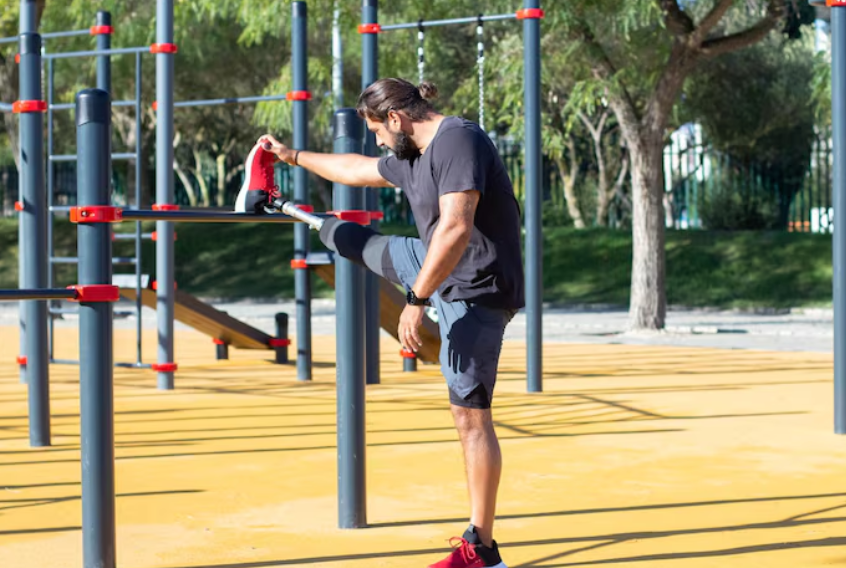
A park playground is one of the few public spaces where a six year old and a town planner actually have the same job. Both are trying to figure out what makes a space work. Good park playground equipment in Australia does more than fill a fenced square with colour. It brings out families more often, develops gross motor skills very early on, and provides a community gathering spot – all at zero cost to use. This manual really gets into detail about how to plan an effective one – backed up by all the relevant research and national standards that inform every local council decision.
The Standard Every Public Playground Must Meet
AS 4685:2021 governs all public playgrounds in Australia – setting out general safety requirements as well as very specific guidelines for swings, slides, runways, carousels, and rocking equipment. Surfacing falls under its own standard, AS 4422, which determines impact ratings matched to each item of equipment’s fall height. Omitting either standard won’t be just a minor paperwork problem. It’s really the difference between a park that keeps kids safe – and one waiting for an incident report.
What Good Planning Actually Looks Like
A planning team that gets this right usually works through the same checklist, in roughly this order:
- Age banding first, so toddlers and school age kids are not sharing the same climbing structure
- Fall height matched to surfacing thickness under every single piece
- Shade coverage over at least part of the play area, not just the car park
- Sightlines kept open so a parent on a bench can see the whole space at once
- A mix of active equipment (climbing, spinning, running) and quiet equipment (sensory panels, seating)
- Clear access paths for wheelchairs and prams from the car park to the equipment
Public Playground Costs At A Glance
| Project Scale | Typical Scope | Rough Budget Range |
| Small neighbourhood upgrade | Single structure replacement | Under $50,000 |
| Mid-size park refresh | Multi-play precinct, new surfacing | $150,000 to $300,000 |
| Major regional project | Full park masterplan, inclusive design | $500,000 plus |
These numbers shift by region and site condition, but they track with real council tenders processed across NSW and WA in recent years.
The Part Planners Often Get Wrong
A playground built purely from a catalogue photo rarely fits its site. Local climate changes material choice. A coastal park requires corrosion-resistant steel. A site exposed to direct summer sunlight demands shade structures incorporated into the budget right away – not an afterthought when users begin complaining. The finest park play equipment is ultimately selected once someone has actually seen the site and evaluated its sun exposure, drainage characteristics, and pedestrian flow patterns – not pre-emptively.
One More Thing Worth Saying Plainly
Risk is not our adversary today. An unchallenging play area instructs a child on little about assessing his or her personal limitations – and the national guidelines actually state this quite clearly itself. The objective of sound planning isn’t a completely safe patch of rubber flooring. It’s a space that lets kids test themselves up to limits an engineer has previously evaluated.












Leave a Reply