
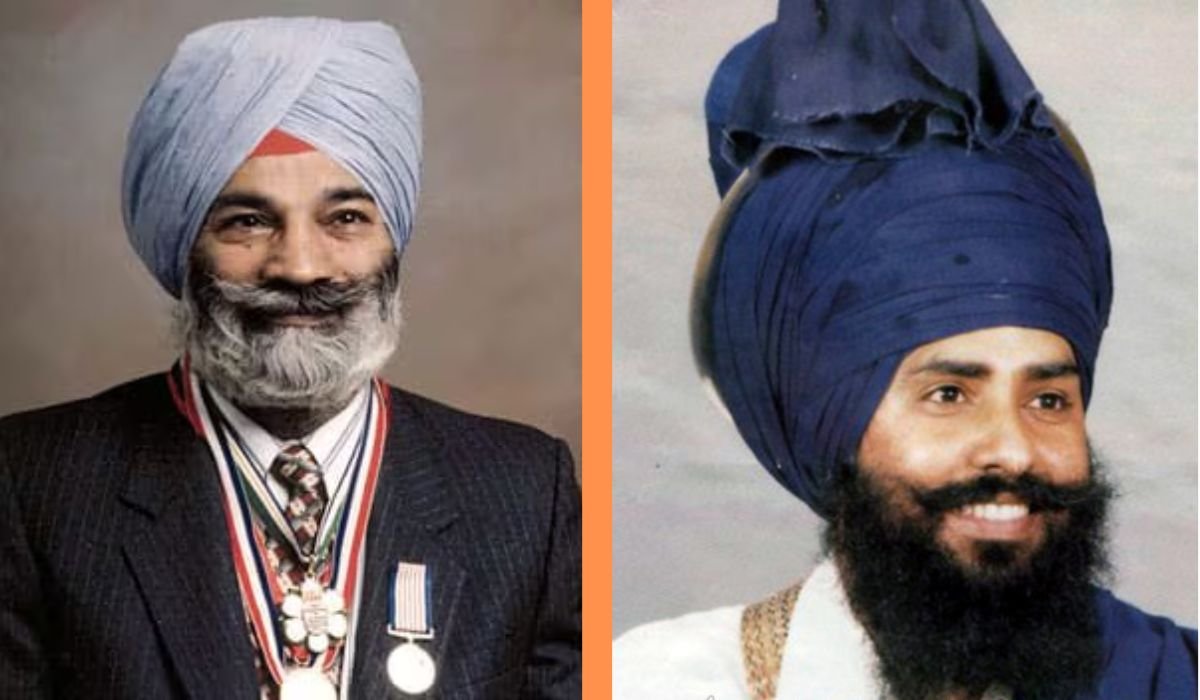
Talwinder Singh Parmar remains one of the most controversial figures connected with the violent period surrounding the Khalistan movement and the 1985 Air India Flight 182 bombing. Born in Punjab and later settled in Canada, Singh Parmar became a leading figure in Babbar Khalsa, a Sikh separatist militant organization. His name later became closely associated with the investigation into the bombing of Air India Flight 182, which killed all 329 people aboard. Parmar was never convicted in a criminal trial for that bombing, as he died in 1992, but Canadian investigations and judicial findings later identified him as a central figure in the conspiracy. Understanding his biography therefore requires more than simply listing allegations. It requires looking at his background, the political environment of the period, his activities in Canada and India, the Air India investigation, and the questions that remain disputed.
Quick Bio Information
| Bio Detail | Information |
|---|---|
| Full Name | Talwinder Singh Parmar |
| Also Known As | Hardev Singh Parmar |
| Common Search Name | Singh Parmar |
| Date Of Birth | February 26, 1944 |
| Birthplace | Panchhat, Kapurthala, Punjab |
| Country At Birth | British India |
| Later Nationality | Canadian |
| Religion | Sikh |
| Immigration To Canada | May 1970 |
| Organization | Babbar Khalsa |
| International Organization | Babbar Khalsa International |
| Political Context | Khalistan Movement |
| Known For | Leadership In Babbar Khalsa And Connection To The Air India Investigation |
| Major Historical Case | Air India Flight 182 |
| Flight 182 Death Toll | 329 |
| Narita Bombing Death Toll | 2 |
| Year He Left Canada | 1988 |
| Date Of Death | October 15, 1992 |
| Age At Death | 48 |
| Place Of Death | Punjab, India |
Who Was Singh Parmar?
Talwinder Singh Parmar was a Punjab-born Canadian who became prominent within the militant wing of the Khalistan separatist movement. His historical importance comes mainly from his leadership position in Babbar Khalsa and from evidence examined during investigations into Air India Flight 182. The movement for Khalistan sought an independent Sikh state, but it included many different political organizations, activists, and factions whose methods and views were not identical. Parmar became associated with its violent militant side. Canadian authorities had become concerned about him well before the Air India disaster, and intelligence agencies monitored his activities. Later Canadian investigations treated him as an important suspect, while subsequent official proceedings examined his relationships with other people associated with the bombing conspiracy.
Early Life And Family Background
Singh Parmar was born on February 26, 1944, in Panchhat, in the Kapurthala area of Punjab. At the time, the region formed part of British India; Indian independence and Partition followed in 1947. Publicly available records provide far more information about Parmar’s later political and militant activities than about his childhood, education, or early employment. This gap is important because a responsible biography should not fill missing years with speculation. He came from a Sikh family and eventually married. Historical accounts state that he had three children by the late 1970s. His family life, however, should be treated separately from his political activities because relatives should not be assumed to share responsibility for the actions attributed to him.
Singh Parmar’s Move To Canada
A major change in Parmar’s life came when he immigrated to Canada in May 1970. He later became a naturalized Canadian citizen and established his life within the country’s growing Sikh community. Canada had become home to a substantial Punjabi diaspora, including people with very different political opinions about developments in India. During the following decade, political disputes in Punjab increasingly influenced some diaspora organizations abroad. Parmar eventually became an influential activist within this environment. It is equally important not to treat his activities as representative of Canadian Sikhs as a whole. Sikh Canadians held, and continue to hold, a wide range of political positions, and many strongly rejected political violence.
Political Tensions And The Khalistan Movement
To understand Singh Parmar’s later activities, readers need some background on Punjab during the late 1970s and 1980s. One important event was the violent Sikh–Nirankari confrontation in Amritsar in April 1978, in which people were killed and many others injured. The incident intensified existing religious and political tensions. Over the following years, Punjab experienced assassinations, armed attacks, political unrest, counterinsurgency operations, and growing separatist militancy. Some organizations advocated for an independent Khalistan, while others pursued different Sikh political demands. Parmar became associated with the militant separatist current. This historical context helps explain how organizations such as Babbar Khalsa emerged, but political grievances or communal tensions do not justify attacks against civilians.
Singh Parmar And Babbar Khalsa
Parmar became closely associated with Babbar Khalsa, commonly referred to internationally as Babbar Khalsa International. He emerged as a leading figure in its activities outside India, particularly in Canada. The organization supported the creation of an independent Khalistan and became associated with violent attacks during the Punjab insurgency. Historical accounts connect Babbar Khalsa militants with attacks on Nirankaris, police personnel, political opponents, and others. Parmar’s leadership made him a person of growing interest to Indian and Canadian authorities. His international role was particularly significant because it demonstrated how the conflict in Punjab had developed a transnational dimension, with political activism, fundraising, organization, and security investigations extending well beyond India.
Murder Allegations And Arrest In West Germany
By the early 1980s, Indian authorities were seeking Singh Parmar in connection with serious criminal allegations. One important case concerned the November 1981 deaths of Punjab Police Inspector Pritam Singh Bajwa and Constable Surat Singh. Parmar was among those named in connection with the incident, and Indian authorities subsequently sought his arrest. He was arrested in West Germany in 1983 while India was seeking his extradition. Parmar was eventually released and returned to Canada in 1984. These events need careful wording: being accused, arrested, extradited, tried, acquitted, and convicted are legally different things. A reliable biography should therefore identify accusations as accusations instead of turning them into criminal convictions that never occurred.
Return To Canada And Security Concerns
After returning to Canada, Parmar remained under the attention of Canadian security authorities. His speeches, associations, travel, and communications contributed to growing concern about violent extremism. Canadian Security Intelligence Service surveillance became particularly important in the months before the Air India bombing. Authorities intercepted communications involving Parmar and watched some of his movements. The later Air India inquiry examined how this intelligence was collected, interpreted, preserved, and shared. This part of his biography is significant because it shifts the story away from a single individual and toward a larger question: Canadian authorities had warning signs concerning extremist activity, yet the information available to different agencies was not effectively turned into preventive action.
Air India Flight 182
The defining event associated with Singh Parmar occurred on June 23, 1985. Air India Flight 182 was destroyed by a bomb while flying over the Atlantic Ocean near Ireland. All 329 people aboard were killed, including 307 passengers and 22 crew members. Most of the victims were Canadian citizens, many from families with roots in India. The attack remains the deadliest terrorist attack in Canadian history. A second bomb connected with the same broader plot exploded at Narita International Airport in Japan while baggage was being transferred, killing two baggage handlers and injuring others. The two explosions showed that investigators were dealing with a coordinated international terrorist conspiracy rather than an isolated aviation accident.
Parmar’s Connection To The Air India Investigation
Investigators examined Parmar’s movements, communications, relationships, and activities in the period before the bombing. Particularly significant was surveillance involving Parmar and Inderjit Singh Reyat near Duncan, British Columbia, in June 1985, when Canadian intelligence officers heard an explosion in a wooded area. Later investigations examined whether this event was connected with testing related to the bombing conspiracy. Telephone interceptions and associations among suspects also became important pieces of the wider investigation. Parmar was arrested after the Air India disaster but was not successfully prosecuted for the bombing. Therefore, it would be inaccurate to describe him as someone criminally convicted of murdering the Flight 182 victims.
What Later Investigations Concluded
Parmar died years before the major Air India criminal trial and Canada’s later public inquiry, but his alleged role continued to be examined. In the 2005 Air India trial judgment in British Columbia, the evidence concerning the conspiracy and Parmar’s role received substantial attention. Later, the federal Commission of Inquiry into the Investigation of the Bombing of Air India Flight 182, led by former Supreme Court of Canada Justice John C. Major, published its extensive final report in 2010. The inquiry examined events before and after the bombing, intelligence practices, policing, aviation security, terrorist financing, and the relationship between intelligence and evidence. Importantly, this was a federal commission of inquiry led by a former Supreme Court justice; it should not simply be described as a Supreme Court investigation.
CSIS And RCMP Failures
One of the most important lessons from the Singh Parmar story concerns institutional failure. The Air India inquiry examined serious problems involving CSIS, the RCMP, intelligence sharing, evidence preservation, and the handling of leads. Canadian authorities possessed information about extremist threats before the bombing, but intelligence did not always translate into effective law-enforcement action. The later inquiry also explored tension between intelligence agencies seeking information for national security purposes and police officers trying to gather evidence suitable for criminal prosecution. This distinction became crucial after the disaster. The Air India case ultimately became not only a story about terrorism but also a major case study in how intelligence and policing systems can fail when agencies do not coordinate effectively.
Life After The Air India Bombing
Parmar continued to attract attention after 1985. He was investigated in connection with additional alleged extremist activity, although not every allegation resulted in charges or convictions. By 1988, he had left Canada and was reported to have gone to Pakistan. Accounts of his activities during the final years of his life become less straightforward and should be approached cautiously. He was later reported back in India during the final phase of the Punjab insurgency. Various violent incidents were attributed to militant organizations operating during this period, but the quality of evidence connecting particular individuals to particular attacks differs greatly. For that reason, a modern biography should resist presenting every historical allegation involving Parmar as equally established.
Singh Parmar’s Death
Talwinder Singh Parmar died in Punjab on October 15, 1992, at the age of 48. The official police account said he was killed during an armed encounter. That explanation later became controversial. Subsequent accounts alleged that Parmar had already been taken into custody, interrogated, and then killed, with his death presented publicly as an encounter. Claims concerning statements he allegedly made during interrogation have also generated debate about other possible participants in the Air India conspiracy. Because the circumstances cannot be described responsibly through one uncontested narrative, the clearest approach is to distinguish the original police version from later allegations and investigations challenging it.
Legacy And Continuing Controversy
Singh Parmar’s legacy remains deeply contentious decades after his death. Some supporters of the Khalistan cause have portrayed him as a martyr, while Canadian authorities, victims’ families, and many others strongly reject efforts to glorify him. This controversy resurfaced publicly in Canada in 2023 when posters promoting a rally displayed Parmar and described him as a “shaheed,” or martyr. The episode drew condemnation and renewed discussion about extremist glorification, free expression, historical memory, and the trauma experienced by Air India families. It is also essential to separate support for Khalistan as a political idea from support for violence. Political advocacy and terrorism are not interchangeable, and treating an entire Sikh or Khalistan-supporting community as responsible for individual acts would be inaccurate.
The Victims And Lasting Impact
Any complete Singh Parmar biography must ultimately return to the people most affected by the events associated with his name. The destruction of Air India Flight 182 killed 329 people, while the related Narita explosion killed two more. Families lost parents, children, spouses, siblings, and friends. For years, many relatives argued that Canadian institutions had failed both before and after the attack. The tragedy eventually produced major examinations of national security, aviation safety, intelligence gathering, policing, and terrorism investigations. Looking at the case from the victims’ perspective provides an important correction to biographies that focus almost entirely on militants and conspirators. The lasting historical importance of the case comes not from Parmar’s notoriety but from the human cost of the attack and the lessons governments were forced to confront.
Final Thoughts
The life of Singh Parmar sits at the intersection of migration, Punjab’s political turmoil, the Khalistan movement, violent extremism, Canadian intelligence history, and one of the world’s most devastating aviation terrorist attacks. He rose from relative obscurity to become an important Babbar Khalsa figure and a major subject of Canadian and Indian security investigations. Yet accuracy requires careful language. Parmar was never criminally convicted for the Air India Flight 182 bombing, although later judicial findings, investigative work, and Canada’s public inquiry placed him centrally within the history of the conspiracy. His death also left important questions unresolved. In 2026, the most responsible way to understand Singh Parmar is therefore neither to glorify nor sensationalize him, but to examine the evidence carefully while remembering that the 329 people aboard Flight 182 and the two Narita victims remain at the heart of this history.
FAQs About Singh Parmar
Who Was Singh Parmar?
Singh Parmar, whose full name was Talwinder Singh Parmar, was a Punjab-born Canadian associated with Babbar Khalsa and the Khalistan separatist movement. He later became a central figure examined in investigations concerning the 1985 Air India Flight 182 bombing.
When Was Talwinder Singh Parmar Born?
Talwinder Singh Parmar was born on February 26, 1944, in Panchhat in the Kapurthala area of Punjab. At the time of his birth, the region was part of British India.
Did Singh Parmar Live In Canada?
Yes. Parmar immigrated to Canada in May 1970 and later became a naturalized Canadian citizen. His activities in Canada eventually attracted significant attention from Canadian security and law-enforcement agencies.
What Was Singh Parmar’s Connection To Babbar Khalsa?
Parmar became a prominent leader associated with Babbar Khalsa and its international activities. The organization supported the creation of an independent Khalistan and became associated with militant violence during the Punjab conflict.
Was Singh Parmar Convicted Of The Air India Bombing?
No. Parmar was never convicted in a criminal trial for the Air India Flight 182 bombing. He died in 1992, years before later proceedings and Canada’s major public inquiry. Subsequent judicial and official investigations nevertheless identified him as a central figure in the conspiracy.
How Many People Died On Air India Flight 182?
All 329 people aboard Air India Flight 182 died when the aircraft was destroyed on June 23, 1985. A related bomb exploded at Narita International Airport in Japan and killed two baggage handlers.
How Did Singh Parmar Die?
Parmar died in Punjab on October 15, 1992. Police initially reported that he was killed in an armed encounter. Later accounts challenged that version and alleged that he had been detained before his death, making the circumstances controversial.
Why Is Singh Parmar Still Discussed Today?
Parmar remains relevant because of the continuing historical examination of Air India Flight 182, Canada’s intelligence failures, the history of Punjab militancy, and controversies over attempts to commemorate him. The case continues to influence discussions about terrorism, public safety, intelligence sharing, and how victims of political violence are remembered.
Learn more and explore exciting content on: Daniele Brigolin Biography: Education, Research, and Academic Career











Leave a Reply