
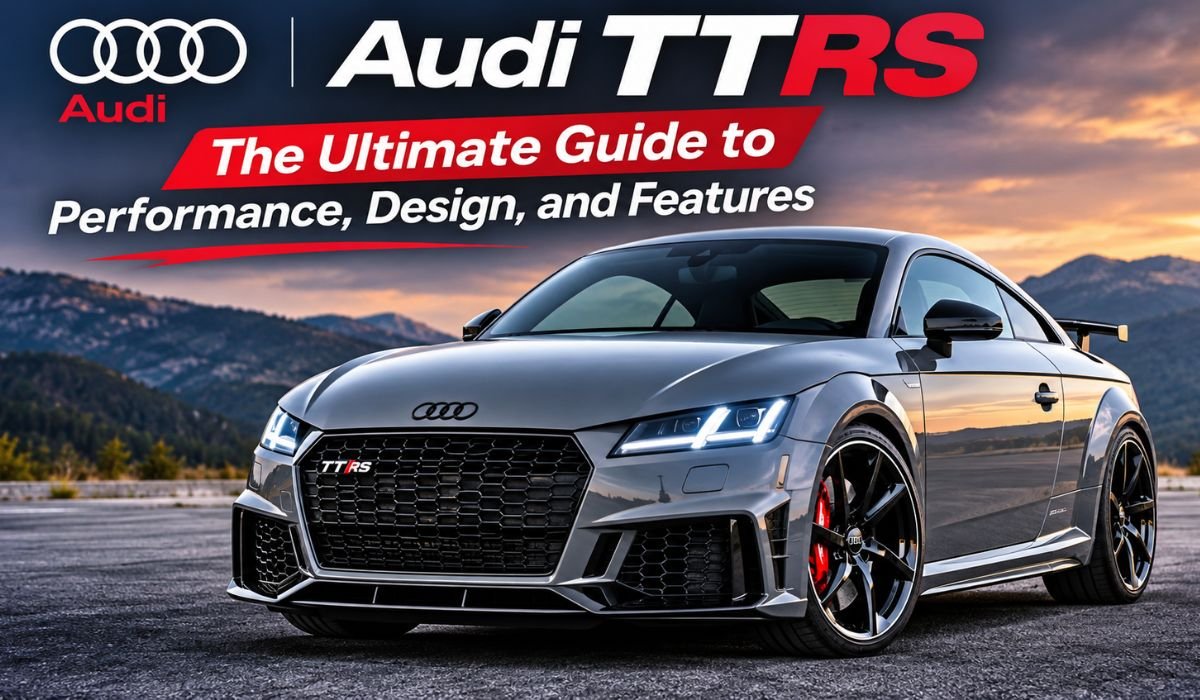
The Audi TTRS is one of the most exciting compact sports cars Audi has ever produced. Known for its powerful five-cylinder engine, distinctive design, and impressive acceleration, this performance-focused model delivers an unforgettable driving experience. Whether you’re interested in speed, luxury, or advanced technology, the Audi TT RS offers a combination that’s difficult to ignore.
Since the original Audi TT arrived in 1998, the model has attracted attention for its unique appearance and engaging handling. The high-performance TT RS took that reputation further with turbocharged power, quattro all-wheel drive, and motorsport-inspired engineering.
Although Audi discontinued the TT lineup in 2023, the Audi TTRS remains an appealing option for enthusiasts in 2026. This guide explores its history, specifications, performance, interior, technology, reliability, and ownership considerations.
Audi TTRS Quick Bio Information
| Feature | Details |
|---|---|
| Official Model Name | Audi TT RS |
| Common Name | Audi TTRS |
| Manufacturer | Audi |
| Performance Division | Audi Sport |
| Vehicle Category | Compact Luxury Sports Car |
| Original Audi TT Launch | 1998 |
| First TT RS Introduction | 2009 |
| Second-Generation TT RS | 2016 |
| Engine Type | Turbocharged Five-Cylinder |
| Engine Displacement | 2.5 Liters |
| Maximum Power | Up to 400 PS |
| Maximum Torque | Up to 480 Nm |
| Transmission | Seven-Speed S tronic |
| Drive System | quattro All-Wheel Drive |
| Acceleration | 0–100 km/h in Approximately 3.7 Seconds |
| Maximum Speed | Up to 280 km/h |
| Body Styles | Coupé and Roadster |
| Notable Technology | Audi Virtual Cockpit |
| Special Edition | TT RS Coupé Iconic Edition |
| Production Status | Discontinued in 2023 |
These figures primarily describe the later European TT RS generation. Engine output, equipment, acceleration, and maximum speed can vary by model year and market.
What Is the Audi TTRS?
The Audi TTRS is the highest-performance version of the Audi TT sports car. The RS designation stands for RennSport, a German term associated with racing sport. Audi uses this badge for vehicles developed with a stronger focus on performance, handling, and driving excitement.
Unlike the standard Audi TT, which emphasizes a balance of comfort and sporty driving, the TT RS offers a more powerful engine, upgraded chassis components, and distinctive exterior styling. It also sits above the Audi TTS in the model family.
The Audi TT RS was available as a fixed-roof Coupé and an open-top Roadster. Both versions were designed to provide impressive acceleration while retaining the premium materials and technology expected from Audi.
Its defining feature is the turbocharged five-cylinder engine. This unusual configuration gives the car a distinctive exhaust note and separates it from many competitors using conventional four-cylinder or six-cylinder engines.
History and Evolution of the Audi TTRS
The story of the Audi TTRS begins with the original Audi TT, introduced in 1998. Its rounded body, clean surfaces, and minimalist interior helped establish a recognizable identity in the sports-car market.
Audi expanded the lineup over time, introducing more powerful engines and improved technology. The first TT RS arrived in 2009, bringing a turbocharged five-cylinder engine and significantly stronger performance.
The second-generation TT RS appeared in 2016 with sharper styling, modern digital instruments, and an updated 2.5-liter engine producing 400 PS in its European specification.
Later updates refined the exterior design and equipment while preserving the model’s essential character.
Audi eventually ended TT production in 2023. The decision closed a chapter that had lasted approximately twenty-five years, leaving the TT RS as one of the most memorable versions of the original sports-car family.
Audi TTRS Engine and Performance Specifications
The engine is arguably the most important reason enthusiasts admire the Audi TTRS. Its 2.5-liter TFSI turbocharged five-cylinder unit delivers strong acceleration, responsive power, and a sound that distinguishes it from ordinary sports cars.
In the later European specification, the engine produces 400 PS, equivalent to approximately 394 mechanical horsepower, alongside 480 Nm of torque.
Power reaches the wheels through a seven-speed S tronic dual-clutch transmission and Audi’s quattro all-wheel-drive system. This combination allows rapid gear changes and strong traction during acceleration.
The five-cylinder configuration also produces a characteristic firing rhythm. Its distinctive sound has become an important part of the TT RS identity.
Rather than relying solely on impressive horsepower figures, the Audi TTRS combines its engine with a compact body and carefully developed drivetrain to deliver accessible performance.
Audi TTRS Acceleration, Top Speed, and Driving Experience
The Audi TT RS Coupé can accelerate from 0 to 100 km/h in approximately 3.7 seconds in the referenced specification. That level of performance places it among seriously quick compact sports cars.
Its maximum speed is normally electronically limited, with certain configurations allowing speeds of up to 280 km/h.
Acceleration is particularly impressive because the quattro system helps transfer engine power to the road. The dual-clutch transmission also contributes to quick, consistent gear changes.
On winding roads, the TT RS feels compact and responsive. Its relatively short wheelbase and performance-oriented suspension create an engaging driving experience.
However, its handling character differs from that of a traditional rear-wheel-drive sports car. The TT RS prioritizes traction, stability, and confident acceleration, making it especially appealing to drivers who value predictable performance.
Audi TTRS Exterior Design and Sporty Styling
The Audi TTRS combines the recognizable shape of the original TT with aggressive performance-inspired details. Its low roofline, wide stance, and compact proportions give it a distinctive appearance.
At the front, the RS-specific Singleframe grille and enlarged air intakes create a more purposeful look. Sharp lighting elements and sculpted bumpers reinforce its sporty identity.
The rear design features a prominent spoiler, performance-inspired diffuser, and large exhaust outlets. These elements help distinguish the TT RS from less powerful TT models.
Audi offered various exterior colors and wheel designs depending on the production year. Nardo Grey became particularly associated with the model’s understated performance styling.
The Coupé emphasizes a sleek, enclosed silhouette, while the Roadster adds the enjoyment of open-air driving. Both maintain the visual character that made the Audi TT famous.
Audi TTRS Interior Design and Comfort
Inside, the Audi TT RS offers a driver-focused environment with premium materials and a relatively simple dashboard layout.
Supportive sport seats help keep occupants comfortable during enthusiastic driving. Depending on the model and equipment, buyers could find leather upholstery, contrasting stitching, and distinctive RS interior details.
The flat-bottom steering wheel and conveniently positioned controls reinforce the car’s performance-oriented character.
Although the front seats provide reasonable comfort, the Coupé’s rear seats are very small and best suited to occasional use or additional storage. The Roadster has a two-seat layout.
Luggage space is also limited compared with conventional passenger cars, although the Coupé offers useful practicality for weekend trips.
Overall, the cabin successfully combines everyday comfort with the focused atmosphere expected from a high-performance sports car.
Audi TTRS Technology and Infotainment Features
One of the most recognizable interior technologies in the Audi TTRS is the Audi Virtual Cockpit.
This digital instrument display places important information directly in front of the driver. Depending on the configuration, it can show navigation, vehicle information, and performance-related displays.
The TT RS also features infotainment controls integrated into its minimalist dashboard design. Available equipment varies by model year and market.
Another important innovation was the introduction of Matrix OLED rear lights on the TT RS. This lighting technology demonstrated Audi’s interest in combining advanced design with modern electronics.
Audi drive select further allows drivers to adjust certain vehicle settings, including throttle response and other supported systems.
Although the infotainment interface is older than those in newer Audi vehicles, its driver-focused design remains one of the TT RS cabin’s strongest characteristics.
Audi TTRS quattro All-Wheel Drive System
Audi’s quattro all-wheel-drive technology plays an essential role in the TT RS driving experience.
The system distributes engine torque between the front and rear axles according to driving conditions. This helps the vehicle maintain traction during acceleration and supports stability when road conditions change.
For drivers, one of the most noticeable advantages is the ability to accelerate confidently without excessive wheelspin.
The system also contributes to the car’s predictable handling characteristics. However, all-wheel drive cannot overcome the physical limitations of tires, road surfaces, or braking systems.
Combined with the turbocharged engine and quick-shifting transmission, quattro helps make the Audi TTRS both exciting and manageable.
Audi TTRS Suspension, Brakes, and Handling
The Audi TT RS uses performance-focused suspension and braking components designed to support its powerful engine.
Its suspension setup emphasizes responsive handling, while available adaptive suspension equipment can provide different driving characteristics depending on the selected settings.
The braking system is engineered to manage the demands of a high-performance vehicle. Certain versions offered upgraded braking equipment, although specifications vary.
Steering response is direct, and the car’s compact dimensions make it feel agile on suitable roads.
Nevertheless, the TT RS can ride firmly, particularly when fitted with larger wheels and performance tires.
Drivers considering the car for daily use should evaluate its suspension comfort on local roads rather than judging it solely by acceleration figures.
Audi TTRS Fuel Economy and Running Costs
Fuel economy is an important consideration for anyone planning to own an Audi TTRS.
Its turbocharged five-cylinder engine can deliver reasonable efficiency during relaxed driving, but fuel consumption increases considerably under heavy acceleration.
Official economy figures differ between model years, markets, and testing procedures, making direct comparisons difficult.
Owners should also budget for premium-quality fuel that meets Audi’s requirements, performance tires, insurance, and scheduled maintenance.
Replacement brakes and specialized components may cost more than equivalent parts for a standard Audi TT.
For buyers in 2026, the total cost of ownership deserves as much attention as the purchase price. A cheaper vehicle with poor maintenance history may ultimately prove more expensive than a well-maintained example.
Audi TTRS Safety Features and Driver Assistance
The Audi TT RS includes safety technologies designed to support vehicle control and occupant protection.
Depending on the model year and market, equipment includes electronic stability control, anti-lock brakes, airbags, tire-pressure monitoring, and parking assistance.
Some vehicles also offer additional convenience and driver-assistance features through optional equipment packages.
However, the TT RS should not be expected to provide the same range of advanced assistance systems found in many newer luxury vehicles.
Prospective buyers should inspect the exact equipment fitted to a particular car and verify its condition.
Good tires, properly maintained brakes, and responsible driving remain essential regardless of the vehicle’s electronic safety systems.
Audi TTRS Coupé Iconic Edition and Special Features
The Audi TT RS Coupé iconic edition represents a particularly interesting chapter in the model’s history.
Introduced near the end of TT production, this limited-edition version celebrated the sports car’s distinctive appearance and performance heritage.
The iconic edition featured a Nardo Grey exterior, exclusive aerodynamic elements, and special design details that differentiated it from the regular TT RS.
Its appearance was enhanced by distinctive wheels, contrasting accents, and a prominent rear wing.
The interior also received special materials and decorative features that reinforced its limited-edition identity.
Audi announced a production run of just 100 vehicles for the European market, adding to the edition’s exclusivity.
For collectors and enthusiasts, the iconic edition represents a celebration of the TT RS rather than a completely different mechanical platform.
Audi TTRS Price, Reliability, and Used-Car Buying Guide
Since Audi discontinued the TT RS, buyers in 2026 generally need to explore the used-car market.
Prices vary significantly depending on the country, production year, mileage, condition, and optional equipment. Limited-edition examples may command higher asking prices, but their future value is not guaranteed.
Reliability depends heavily on maintenance history and how the vehicle has been driven.
Prospective buyers should pay particular attention to engine condition, transmission operation, cooling-system components, suspension wear, and braking performance.
A complete service history is especially valuable. Vehicles with extensive aftermarket modifications may require additional inspection.
An independent pre-purchase assessment by a qualified Audi specialist can help identify expensive problems before purchase.
The Audi TTRS can be a rewarding used sports car, but buyers should approach ownership with realistic expectations about maintenance and running costs.
Final Thoughts on the Audi TTRS
The Audi TTRS remains one of Audi’s most distinctive compact performance cars. Its turbocharged five-cylinder engine, quattro all-wheel drive, impressive acceleration, and recognizable design create a driving experience that continues to appeal to enthusiasts.
Beyond outright speed, the TT RS offers an appealing combination of engineering, premium interior quality, and everyday usability. Its compact proportions and distinctive engine character help it stand apart from many modern sports cars.
The end of production in 2023 has also given the model a special place in Audi’s performance history. The iconic edition further highlights the significance of its final years.
For anyone considering an Audi TTRS in 2026, choosing a carefully maintained example is more important than focusing on horsepower or appearance alone.
With the right expectations and proper maintenance, the Audi TT RS continues to offer an enjoyable combination of performance, style, and character.
FAQs About Audi TTRS
What Does Audi TTRS Stand For?
Audi TTRS refers to the Audi TT RS, the highest-performance version of the TT model family. The RS designation comes from the German term RennSport, which reflects Audi’s performance-oriented engineering philosophy.
How Fast Is the Audi TTRS?
The later Audi TT RS Coupé can accelerate from 0 to 100 km/h in approximately 3.7 seconds. Depending on its specification, the maximum speed can reach 280 km/h. Actual performance varies with vehicle condition, tires, weather, and driving conditions.
What Engine Does the Audi TTRS Have?
The modern Audi TT RS uses a 2.5-liter turbocharged five-cylinder petrol engine. This engine is particularly famous for its distinctive sound, strong torque delivery, and impressive acceleration.
Is the Audi TTRS All-Wheel Drive?
Yes. The Audi TT RS uses Audi’s quattro all-wheel-drive system. It helps distribute engine power between the axles, improving traction during acceleration and supporting stable handling.
Is the Audi TTRS Reliable?
A properly maintained Audi TT RS can provide rewarding ownership, but reliability depends on its age, condition, servicing, and previous use. Buyers should inspect the engine, transmission, cooling system, brakes, and suspension before purchasing a used example.
How Much Does an Audi TTRS Cost?
The price depends on the model year, mileage, condition, location, and equipment. Since production ended in 2023, buyers generally shop for used examples. Current market listings are necessary to establish an accurate price range.
Why Was the Audi TTRS Discontinued?
Audi ended production of the TT model family in 2023 as its product strategy evolved. The decision brought the TT RS’s production history to an end after years of performance-focused development.
Is the Audi TTRS Worth Buying in 2026?
The Audi TT RS remains attractive to enthusiasts who appreciate strong acceleration, distinctive engine sound, premium styling, and quattro traction. However, potential owners should consider insurance, maintenance expenses, vehicle condition, and everyday practicality before buying.
Learn more and explore exciting content on: Emmanuel Pacquiao Jr: Biography, Age, Boxing Career, and Family Life















Leave a Reply